
SWI/SNF 复合物改变作为胰腺癌免疫治疗疗效的生物标志物。
SWI/SNF complex alterations as a biomarker of immunotherapy efficacy in pancreatic cancer.
机构信息
Center for Personalized Cancer Therapy, Department of Medicine, and.
Division of Hematology/Oncology, Department of Medicine, UCSD, La Jolla, California, USA.
出版信息
JCI Insight. 2021 Sep 22;6(18):e150453. doi: 10.1172/jci.insight.150453.
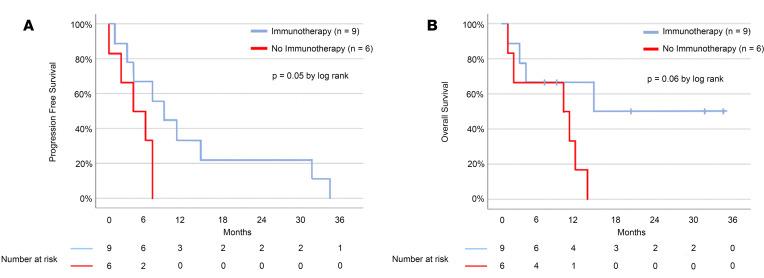
BACKGROUNDImmune checkpoint inhibitors (ICIs) fail to demonstrate efficacy in pancreatic cancer. Recently, genomic biomarkers have been associated with response to ICIs: microsatellite instability high (MSI-H) and tumor mutation burden (TMB) > 10 mutations/Mb. Alterations in Switch/Sucrose Nonfermentable (SWI/SNF) chromatin remodeling genes may predispose to improved outcomes with immunotherapy. The current study examined a possible role for SWI/SNF complex abnormalities in pancreatic cancer responsiveness to ICIs.METHODSA database of 6831 cancer patients that had undergone next-generation sequencing (NGS) was filtered for advanced pancreatic cancer, SWI/SNF alterations, and outcomes depending on immunotherapy treatment.RESULTSNine patients had metastatic pancreatic adenocarcinoma harboring SWI/SNF chromatin remodeling gene alterations and had received ICIs: 7 had an ARID1A alteration (77%); 2, ARID1B (22%); 3, SMARCA4 (33%); 1, SMARCB1 (11%); and 1, PBRM1 (11%). Three patients possessed more than 1 SWI/SNF complex alteration. Only 3 tumors were microsatellite unstable. Eight of 9 patients (89%) achieved an objective response, including a complete remission, with the 2 longest responses ongoing at 33+ and 36+ months. Median progression-free and overall survival was 9 and 15 months, respectively. Responses occurred even in the presence of microsatellite stability, low TMB, and/or low PD-L1 expression.CONCLUSIONA small subset of patients with pancreatic cancer have genomic alterations in SWI/SNF chromatin remodeling components and appear to be responsive to ICIs, suggesting the need for prospective trials.TRIAL REGISTRATIONClinicalTrials.gov, NCT02478931.FUNDINGJoan and Irwin Jacobs Fund, NIH P30 CA023100 (RK) and LRP KYGF9753 (GPB), the Gershenson, Duarte, and anonymous patient families (GPB).
背景
免疫检查点抑制剂(ICIs)在胰腺癌中未能显示出疗效。最近,基因组生物标志物与对 ICI 的反应相关:微卫星不稳定高(MSI-H)和肿瘤突变负担(TMB)> 10 突变/Mb。Switch/Sucrose Nonfermentable(SWI/SNF)染色质重塑基因的改变可能使免疫治疗的预后更好。本研究探讨了 SWI/SNF 复合物异常在胰腺癌细胞对 ICI 反应中的可能作用。
方法
对 6831 名接受下一代测序(NGS)的癌症患者的数据库进行筛选,以获得晚期胰腺癌、SWI/SNF 改变以及根据免疫治疗治疗的结果。
结果
9 名患有转移性胰腺腺癌的患者携带 SWI/SNF 染色质重塑基因改变,并接受了 ICI 治疗:7 名患者存在 ARID1A 改变(77%);2 名 ARID1B(22%);3 名 SMARCA4(33%);1 名 SMARCB1(11%);和 1 名 PBRM1(11%)。3 名患者具有超过 1 种 SWI/SNF 复合物改变。只有 3 个肿瘤为微卫星不稳定。9 名患者中的 8 名(89%)获得了客观反应,包括完全缓解,最长反应持续时间为 33+和 36+个月。中位无进展生存期和总生存期分别为 9 个月和 15 个月。即使存在微卫星稳定性、低 TMB 和/或低 PD-L1 表达,也会发生反应。
结论
一小部分胰腺癌患者具有 SWI/SNF 染色质重塑成分的基因组改变,似乎对 ICI 有反应,这表明需要进行前瞻性试验。
试验注册
ClinicalTrials.gov,NCT02478931。
资金
Joan 和 Irwin Jacobs 基金、NIH P30 CA023100(RK)和 LRP KYGF9753(GPB)、Gershenson、Duarte 和匿名患者家属(GPB)。


 Zotero 插件