
蒽醌类化合物作为抗耐甲氧西林金黄色葡萄球菌生物膜的潜在药物
Anthraquinones as Potential Antibiofilm Agents Against Methicillin-Resistant .
作者信息
Song Zhi-Man, Zhang Jun-Liang, Zhou Kun, Yue Lu-Ming, Zhang Yu, Wang Chang-Yun, Wang Kai-Ling, Xu Ying
机构信息
Shenzhen Key Laboratory of Marine Bioresource and Eco-Environmental Science, Shenzhen Engineering Laboratory for Marine Algal Biotechnology, College of Life Sciences and Oceanography, Shenzhen University, Shenzhen, China.
Department of Chemistry, The University of Hong Kong, Pokfulam, Hong Kong, China.
出版信息
Front Microbiol. 2021 Sep 3;12:709826. doi: 10.3389/fmicb.2021.709826. eCollection 2021.
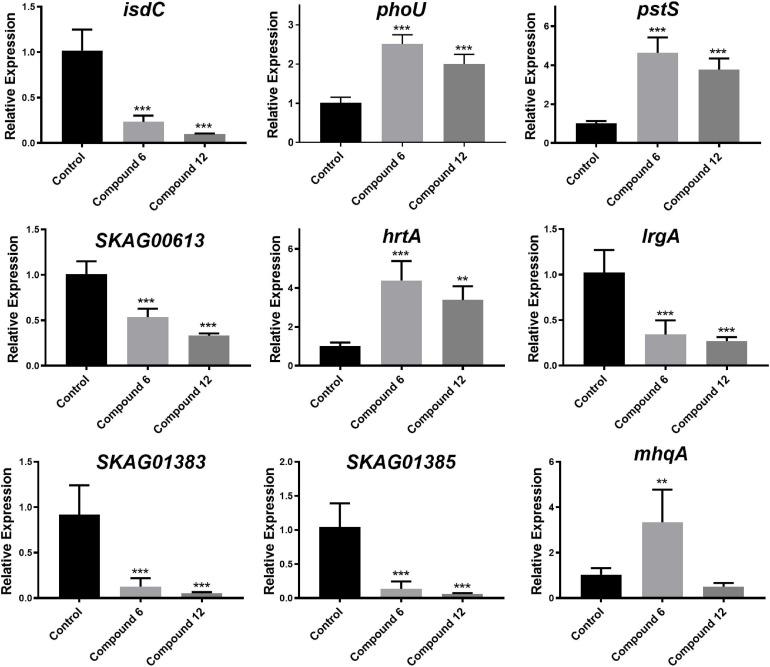
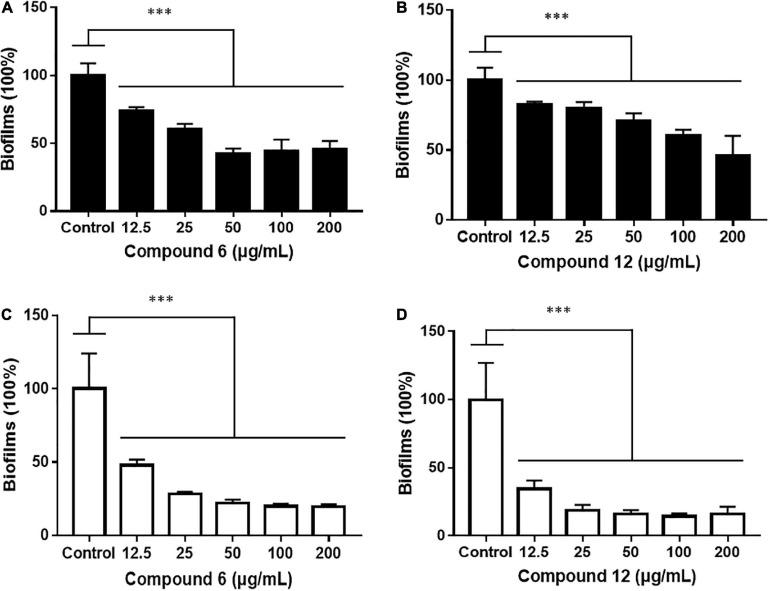
Biofilms formed by methicillin-resistant (MRSA) are one of the contributing factors to recurrent nosocomial infection in humans. There is currently no specific treatment targeting on biofilms in clinical trials approved by FDA, and antibiotics remain the primary therapeutic strategy. In this study, two anthraquinone compounds isolated from a rare actinobacterial strain R62, 3,8-dihydroxy-l-methylanthraquinon-2-carboxylic acid () and 3,6,8-trihydroxy-1-methylanthraquinone-2-carboxylic acid (), together with their 10 commercial analogs - were evaluated for antibacterial and antibiofilm activities against MRSA, which led to the discovery of two potential antibiofilm anthraquinone compounds anthraquinone-2-carboxlic acid () and rhein (). The structure-activity relationship analysis of these anthraquinones indicated that the hydroxyl group at the C-2 position of the anthraquinone skeleton played an important role in inhibiting biofilm formation at high concentrations, while the carboxyl group at the same C-2 position had a great influence on the antibacterial activity and biofilm eradication activity. The results of crystal violet and methyl thiazolyl tetrazolium staining assays, as well as scanning electron microscope and confocal scanning laser microscopy imaging of compounds and treatment groups showed that both compounds could disrupt preformed MRSA biofilms possibly by killing or dispersing biofilm cells. RNA-Seq was subsequently used for the preliminary elucidation of the mechanism of biofilm eradication, and the results showed upregulation of phosphate transport-related genes in the overlapping differentially expressed genes of both compound treatment groups. Herein, we propose that anthraquinone compounds and could be considered promising candidates for the development of antibiofilm agents.
耐甲氧西林金黄色葡萄球菌(MRSA)形成的生物膜是导致人类医院感染复发的因素之一。目前在FDA批准的临床试验中,尚无针对生物膜的特异性治疗方法,抗生素仍然是主要的治疗策略。在本研究中,对从稀有放线菌菌株R62中分离出的两种蒽醌化合物3,8 - 二羟基 - 1 - 甲基蒽醌 - 2 - 羧酸()和3,6,8 - 三羟基 - 1 - 甲基蒽醌 - 2 - 羧酸()及其10种商业类似物进行了针对MRSA的抗菌和抗生物膜活性评估,从而发现了两种潜在的抗生物膜蒽醌化合物蒽醌 - 2 - 羧酸()和大黄酸()。这些蒽醌的构效关系分析表明,蒽醌骨架C - 2位的羟基在高浓度下对抑制生物膜形成起重要作用,而同一C - 2位的羧基对抗菌活性和生物膜消除活性有很大影响。结晶紫和噻唑蓝染色试验结果,以及化合物和治疗组的扫描电子显微镜和共聚焦扫描激光显微镜成像显示,这两种化合物可能通过杀死或分散生物膜细胞来破坏预先形成的MRSA生物膜。随后使用RNA测序对生物膜消除机制进行初步阐释,结果显示在两个化合物治疗组的重叠差异表达基因中,磷酸盐转运相关基因上调。在此,我们提出蒽醌化合物和可被视为开发抗生物膜药物的有前景的候选物。




 Zotero 插件