
胰腺癌中同源重组缺陷的决定因素
Determinants of Homologous Recombination Deficiency in Pancreatic Cancer.
作者信息
Wattenberg Max M, Reiss Kim A
机构信息
Division of Hematology-Oncology, Department of Medicine, Perelman School of Medicine, University of Pennsylvania, Philadelphia, PA 19104, USA.
Abramson Cancer Center, Perelman School of Medicine, University of Pennsylvania, Philadelphia, PA 19104, USA.
出版信息
Cancers (Basel). 2021 Sep 21;13(18):4716. doi: 10.3390/cancers13184716.
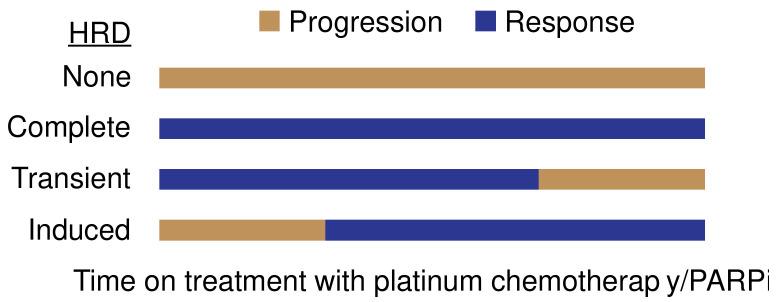
Pancreatic cancer is a treatment-resistant malignancy associated with high mortality. However, defective homologous recombination (HR), a DNA repair mechanism required for high-fidelity repair of double-strand DNA breaks, is a therapeutic vulnerability. Consistent with this, a subset of patients with pancreatic cancer show unique tumor responsiveness to HR-dependent DNA damage triggered by certain treatments (platinum chemotherapy and PARP inhibitors). While pathogenic mutations in HR genes are a major driver of this sensitivity, another layer of diverse tumor intrinsic and extrinsic factors regulate the HR deficiency (HRD) phenotype. Defining the mechanisms that drive HRD may guide the development of novel strategies and therapeutics to induce treatment sensitivity in non-HRD tumors. Here, we discuss the complexity underlying HRD in pancreatic cancer and highlight implications for identifying and treating this distinct subset of patients.
胰腺癌是一种难治性恶性肿瘤,死亡率很高。然而,同源重组(HR)缺陷是一种用于双链DNA断裂的高保真修复的DNA修复机制,它是一种治疗弱点。与此一致的是,一部分胰腺癌患者对某些治疗(铂类化疗和PARP抑制剂)引发的HR依赖性DNA损伤表现出独特的肿瘤反应性。虽然HR基因中的致病突变是这种敏感性的主要驱动因素,但另一层多样的肿瘤内在和外在因素调节着HR缺陷(HRD)表型。确定驱动HRD的机制可能会指导开发新的策略和疗法,以诱导非HRD肿瘤的治疗敏感性。在这里,我们讨论胰腺癌中HRD背后的复杂性,并强调对识别和治疗这一独特患者亚群的意义。

 Zotero 插件