
SARS-CoV-2 刺突介导的融合和合胞体形成的机制和后果。
The Mechanism and Consequences of SARS-CoV-2 Spike-Mediated Fusion and Syncytia Formation.
机构信息
Virus & Immunity Unit, Department of Virology, Institut Pasteur, CNRS UMR 3569, Paris, France; Université de Paris, Sorbonne Paris Cité, Paris, France. Electronic address: https://twitter.com/MaaranRajah.
Institut Curie, INSERM U932, Paris, France. Electronic address: https://twitter.com/nini_bernier.
出版信息
J Mol Biol. 2022 Mar 30;434(6):167280. doi: 10.1016/j.jmb.2021.167280. Epub 2021 Oct 1.
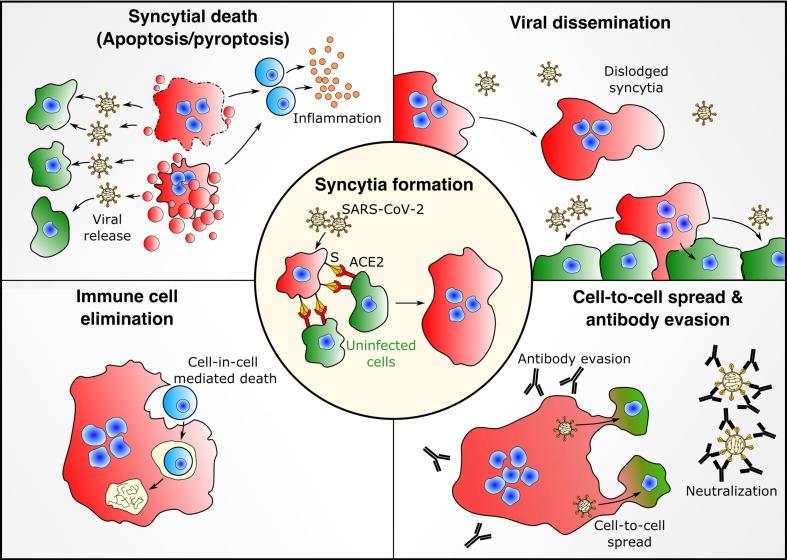
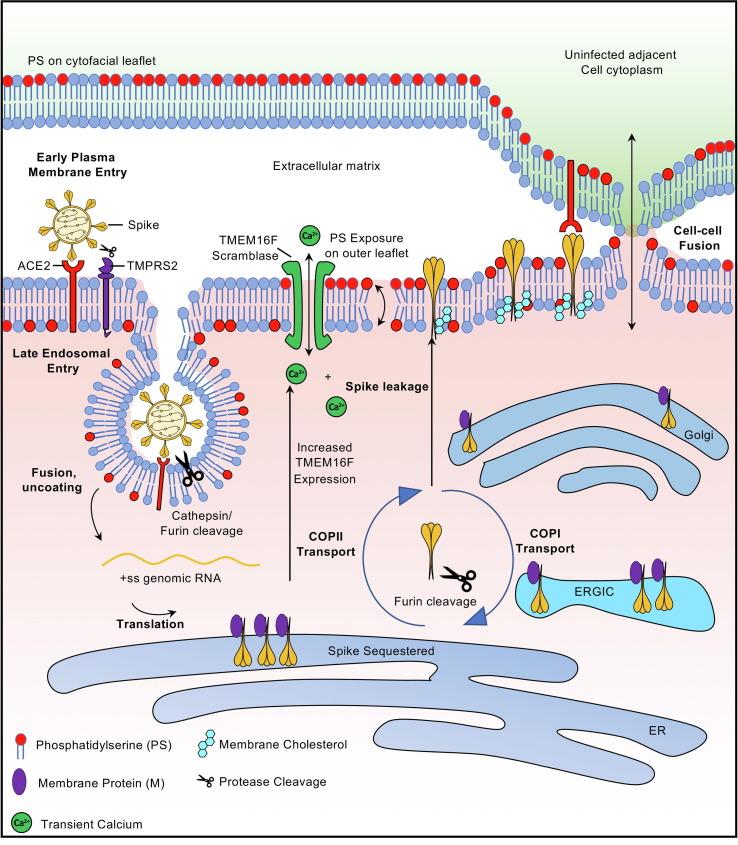
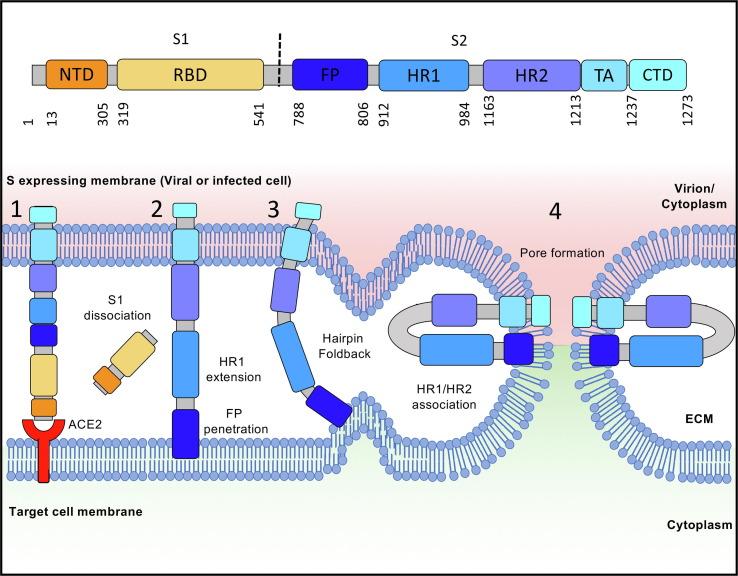
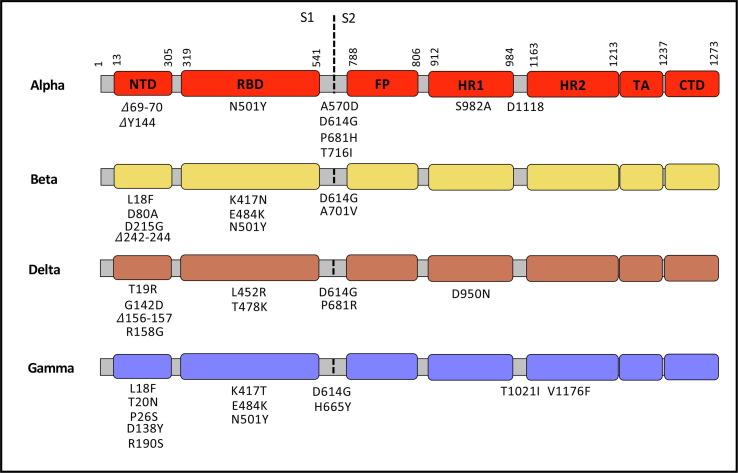
Syncytia are formed when individual cells fuse. SARS-CoV-2 induces syncytia when the viral spike (S) protein on the surface of an infected cell interacts with receptors on neighboring cells. Syncytia may potentially contribute to pathology by facilitating viral dissemination, cytopathicity, immune evasion, and inflammatory response. SARS-CoV-2 variants of concern possess several mutations within the S protein that enhance receptor interaction, fusogenicity and antibody binding. In this review, we discuss the molecular determinants of S mediated fusion and the antiviral innate immunity components that counteract syncytia formation. Several interferon-stimulated genes, including IFITMs and LY6E act as barriers to S protein-mediated fusion by altering the composition or biophysical properties of the target membrane. We also summarize the effect that the mutations associated with the variants of concern have on S protein fusogenicity. Altogether, this review contextualizes the current understanding of Spike fusogenicity and the role of syncytia during SARS-CoV-2 infection and pathology.
合胞体是由单个细胞融合形成的。当感染细胞表面的病毒刺突(S)蛋白与邻近细胞上的受体相互作用时,SARS-CoV-2 会诱导合胞体形成。合胞体可能通过促进病毒传播、细胞病变、免疫逃逸和炎症反应而导致病理变化。令人关注的 SARS-CoV-2 变体在 S 蛋白内具有几个增强受体相互作用、融合性和抗体结合的突变。在这篇综述中,我们讨论了 S 介导融合的分子决定因素,以及抗病毒先天免疫成分,这些成分可对抗合胞体形成。几种干扰素刺激基因,包括 IFITMs 和 LY6E,通过改变靶膜的组成或物理特性,作为 S 蛋白介导融合的障碍。我们还总结了与关注变体相关的突变对 S 蛋白融合性的影响。总的来说,这篇综述从背景角度说明了当前对 SARS-CoV-2 感染和病理学中 Spike 融合性以及合胞体作用的理解。

 Zotero 插件