
人重组脱氧核糖核酸酶 I(Pulmozyme)抑制与血液无细胞 DNA 中的 DNase 活性恢复和 SINE/LINE 和 c-Myc 片段减少相关的小鼠转移性 B16 黑色素瘤模型中的肺转移。
Human Recombinant DNase I (Pulmozyme) Inhibits Lung Metastases in Murine Metastatic B16 Melanoma Model That Correlates with Restoration of the DNase Activity and the Decrease SINE/LINE and c-Myc Fragments in Blood Cell-Free DNA.
机构信息
Institute of Chemical Biology and Fundamental Medicine SB RAS, Lavrentiev ave., 8, 630090 Novosibirsk, Russia.
出版信息
Int J Mol Sci. 2021 Nov 8;22(21):12074. doi: 10.3390/ijms222112074.
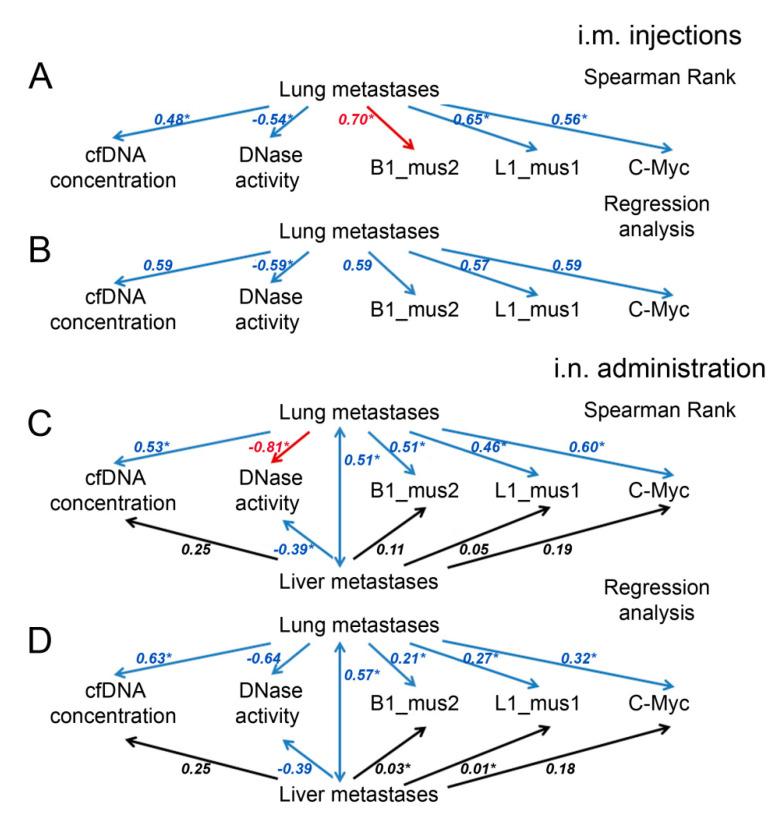
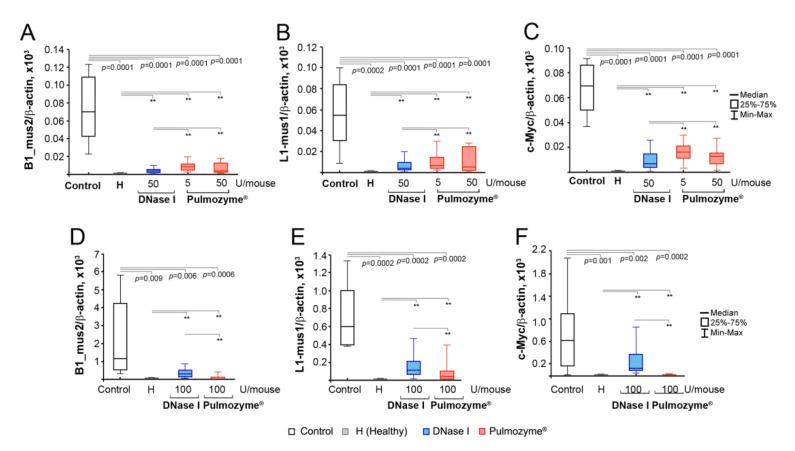
Tumor-associated cell-free DNAs (cfDNA) play an important role in the promotion of metastases. Previous studies proved the high antimetastatic potential of bovine pancreatic DNase I and identified short interspersed nuclear elements (SINEs) and long interspersed nuclear elements (LINEs)and fragments of oncogenes in cfDNA as the main molecular targets of enzyme in the bloodstream. Here, recombinant human DNase I (commercial name Pulmozyme), which is used for the treatment of cystic fibrosis in humans, was repurposed for the inhibition of lung metastases in the B16 melanoma model in mice. We found that Pulmozyme strongly reduced migration and induced apoptosis of B16 cells and effectively inhibited metastases in lungs and liver . Pulmozyme was shown to be two times more effective when administered intranasally (i.n.) than bovine DNase I, but intramuscular (i.m.) administration forced it to exhibit as high an antimetastatic activity as bovine DNase I. Both DNases administered to mice either i.m. or i.n. enhanced the DNase activity of blood serum to the level of healthy animals, significantly decreased cfDNA concentrations, efficiently degraded SINE and LINE repeats and c-Myc fragments in the bloodstream and induced apoptosis and disintegration of neutrophil extracellular traps in metastatic foci; as a result, this manifested as the inhibition of metastases spread. Thus, Pulmozyme, which is already an approved drug, can be recommended for use in the treatment of lung metastases.
肿瘤相关的细胞游离 DNA(cfDNA)在促进转移中发挥重要作用。先前的研究证明了牛胰腺 DNA 酶 I 的高抗转移潜力,并鉴定了 cfDNA 中的短散在核元件(SINEs)和长散在核元件(LINEs)以及癌基因片段是该酶在血液中的主要分子靶标。在这里,重组人 DNA 酶 I(商品名 Pulmozyme),用于治疗人类囊性纤维化,被重新用于抑制小鼠 B16 黑色素瘤模型中的肺转移。我们发现 Pulmozyme 强烈抑制 B16 细胞的迁移并诱导其凋亡,并有效抑制肺部和肝脏的转移。与牛 DNA 酶 I 相比,经鼻内(i.n.)给药的 Pulmozyme 效果强两倍,但肌肉内(i.m.)给药迫使它表现出与牛 DNA 酶 I 相同的抗转移活性。两种 DNA 酶无论是肌肉内还是鼻内给药都能增强血清中的 DNA 酶活性,使其达到健康动物的水平,显著降低 cfDNA 浓度,有效地降解血液中的 SINE 和 LINE 重复序列和 c-Myc 片段,并诱导转移灶中中性粒细胞胞外诱捕网的凋亡和崩解;因此,这表现为抑制转移的扩散。因此,作为一种已批准的药物,Pulmozyme 可推荐用于治疗肺转移。


 Zotero 插件