
传染性支气管炎病毒接种途径决定了产蛋母鸡的免疫反应类型和程度。
Route of infectious bronchitis virus vaccination determines the type and magnitude of immune responses in table egg laying hens.
机构信息
Institute of Infection, Veterinary and Ecology Sciences, University of Liverpool, Cheshire, UK.
College of Veterinary Medicine, King Faisal University, Al-Ahsa, Saudi Arabia.
出版信息
Vet Res. 2021 Nov 12;52(1):139. doi: 10.1186/s13567-021-01008-7.
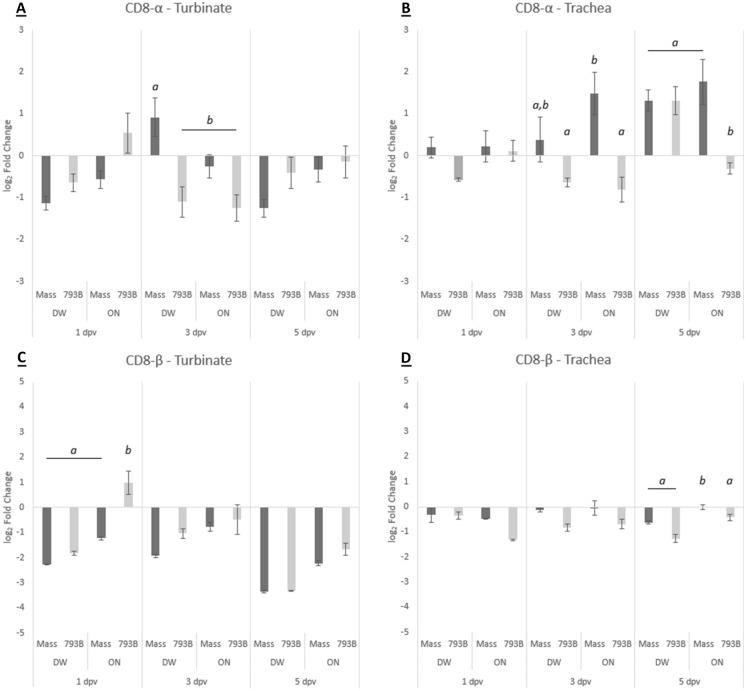
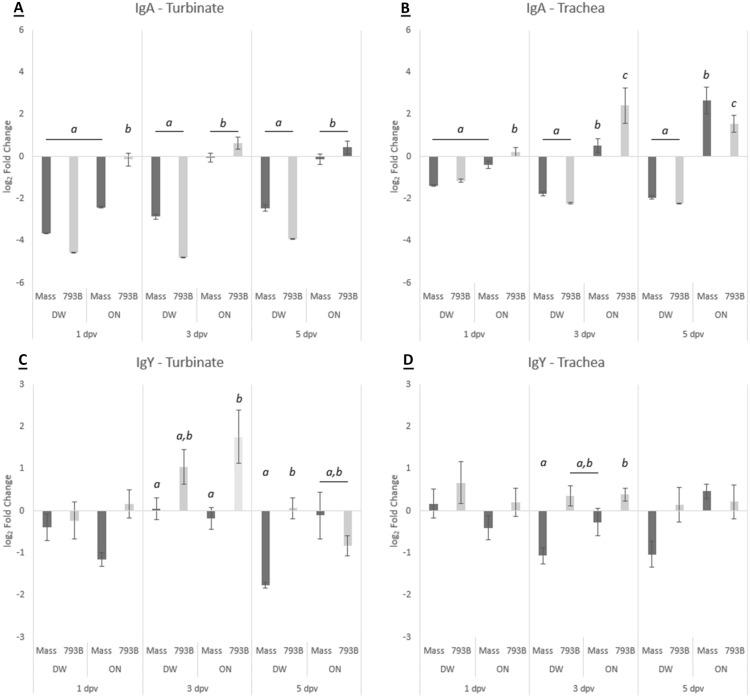
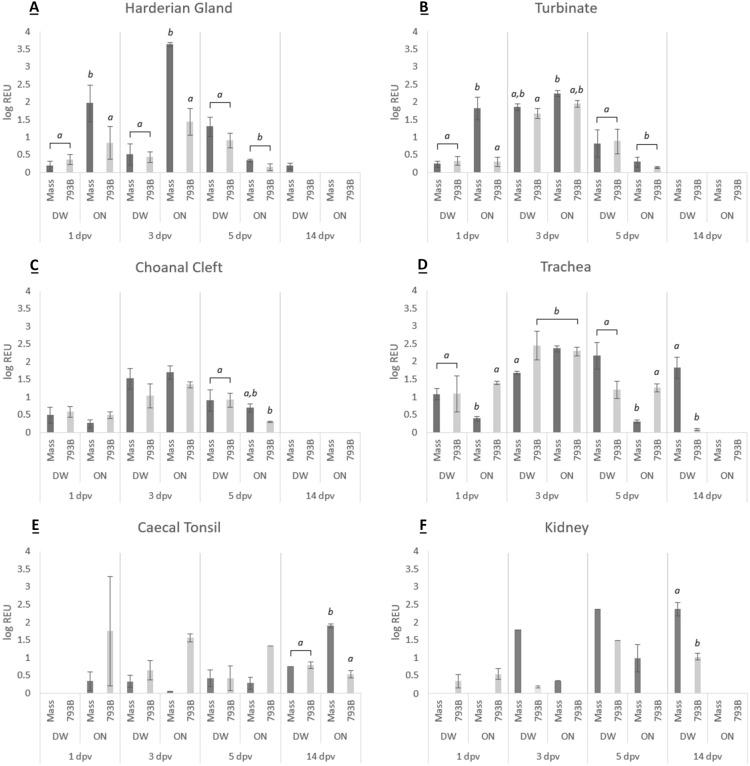
Chicken immune responses to infectious bronchitis virus (IBV) vaccination can depend on route of administration, vaccine strain and bird age. Typically for layer chickens, IBV vaccinations are administered by spray in the hatchery at day-old and boosted at intervals with live vaccines via drinking water (DW). Knowledge of live attenuated IBV vaccine virus kinetics and the immune response in egg-laying hens is exceptionally limited. Here, we demonstrated dissemination of vaccine viruses and differences in hen innate, mucosal, cellular and humoral immune responses following vaccination with Massachusetts or 793B strains, administered by DW or oculonasal (ON) routes. Detection of IBV in the Mass-vaccinated groups was greater during early time-points, however, 793B was detected more frequently at later timepoints. Viral RNA loads in the Harderian gland and turbinate tissues were significantly higher for ON-Mass compared to all other vaccinated groups. Lachrymal fluid IgY levels were significantly greater than the control at 14 days post-vaccination (dpv) for both vaccine serotypes, and IgA mRNA levels were significantly greater in ON-vaccinated groups compared to DW-vaccinated groups, demonstrating robust mucosal immune responses. Cell mediated immune gene transcripts (CD8-α and CD8-β) were up-regulated in turbinate and trachea tissues. For both vaccines, dissemination and vaccine virus clearance was slower when given by DW compared to the ON route. For ON administration, both vaccines induced comparable levels of mucosal immunity. The Mass vaccine induced cellular immunity to similar levels regardless of vaccination method. When given either by ON or DW, 793B vaccination induced significantly higher levels of humoral immunity.
鸡对传染性支气管炎病毒(IBV)疫苗的免疫反应取决于给药途径、疫苗株和禽龄。通常情况下,对于蛋鸡,IBV 疫苗通过在孵化场对雏鸡喷雾进行接种,并通过饮用水(DW)定期用活疫苗进行加强免疫。对于产蛋母鸡,活毒 IBV 疫苗病毒动力学和免疫反应的知识极为有限。在这里,我们通过 DW 或眼鼻(ON)途径分别用马萨诸塞州株或 793B 株进行疫苗接种,研究了疫苗病毒的传播以及母鸡先天、粘膜、细胞和体液免疫反应的差异。在早期时间点,Mass 疫苗接种组中检测到的 IBV 更多,但在后期时间点,793B 检测到的更为频繁。与其他所有接种组相比,ON-Mass 组哈氏腺和鼻甲组织中的病毒 RNA 载量显著更高。两种疫苗血清型的泪液 IgY 水平在接种后 14 天(dpv)均显著高于对照组,ON 接种组的 IgA mRNA 水平显著高于 DW 接种组,表明粘膜免疫反应强烈。鼻甲和气管组织中的细胞介导免疫基因转录物(CD8-α 和 CD8-β)上调。对于 DW 和 ON 两种接种途径,与 DW 相比,ON 接种时疫苗的传播和清除速度更慢。对于 ON 接种,两种疫苗均可诱导相当水平的粘膜免疫。无论接种方式如何,Mass 疫苗均可诱导相似水平的细胞免疫。无论通过 ON 或 DW 接种,793B 疫苗接种均可诱导更高水平的体液免疫。





 Zotero 插件