
针对新型冠状病毒变异株刺突蛋白的新型十三肽的计算机辅助设计
In-Silico Design of a Novel Tridecapeptide Targeting Spike Protein of SARS-CoV-2 Variants of Concern.
作者信息
Rajpoot Sajjan, Solanki Kundan, Kumar Ashutosh, Zhang Kam Y J, Pullamsetti Soni Savai, Savai Rajkumar, Faisal Syed M, Pan Qiuwei, Baig Mirza S
机构信息
Department of Biosciences and Biomedical Engineering (BSBE), Indian Institute of Technology Indore (IITI), Simrol, Indore, 453552 India.
Laboratory for Structural Bioinformatics, Center for Biosystems Dynamics Research, RIKEN, Tsurumi, Yokohama, Kanagawa Japan.
出版信息
Int J Pept Res Ther. 2022;28(1):28. doi: 10.1007/s10989-021-10339-0. Epub 2021 Dec 13.
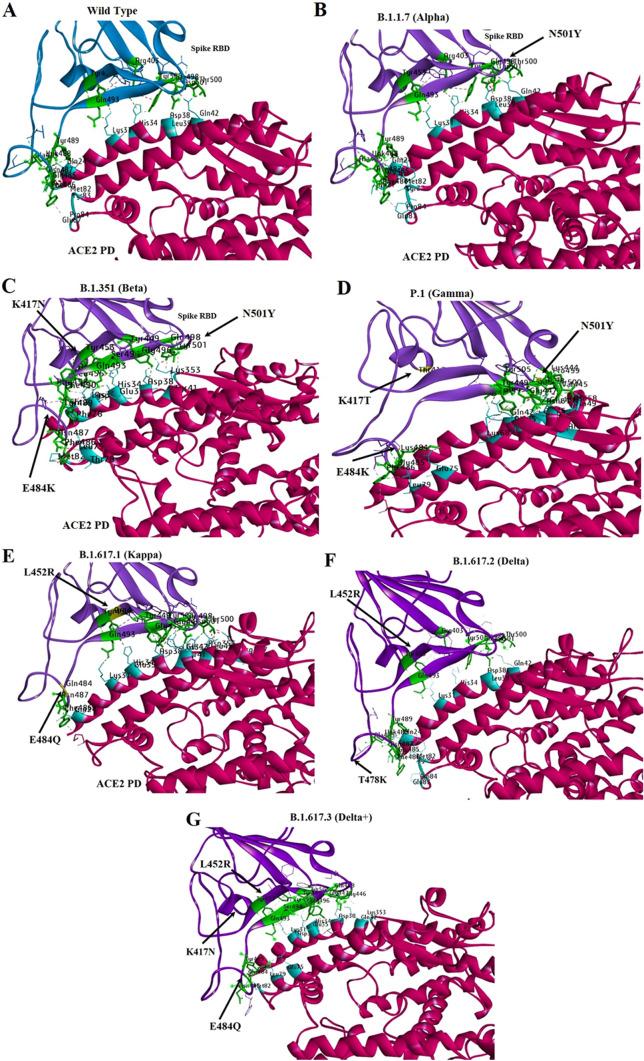
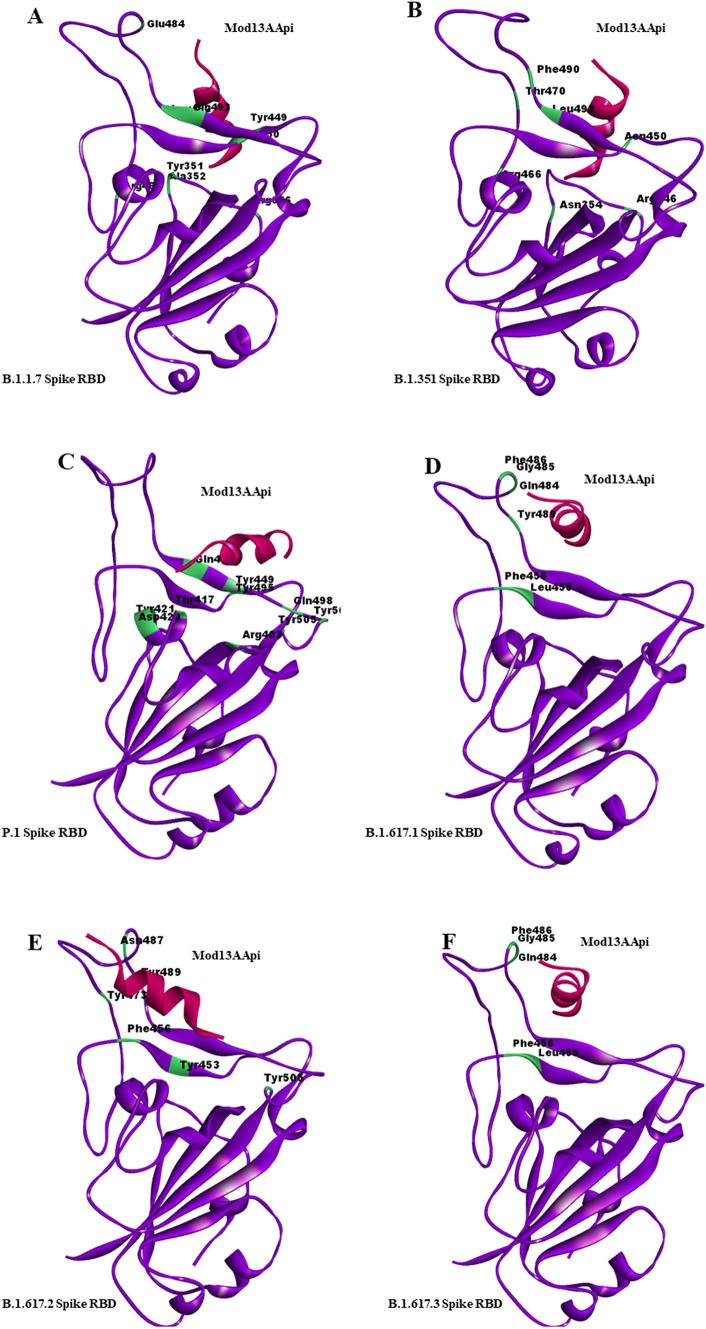
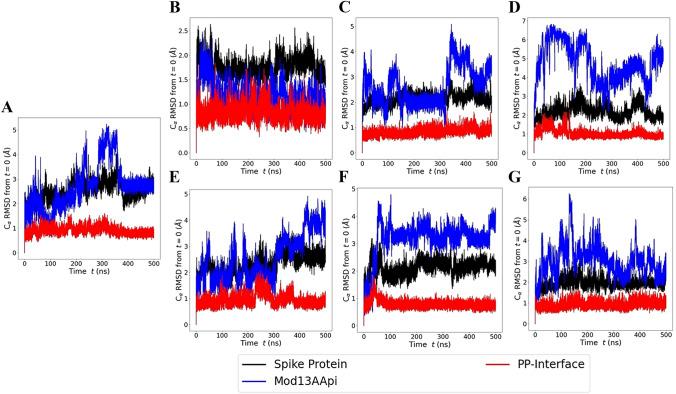
Several mutations in severe acute respiratory syndrome coronavirus 2 (SARS-CoV-2) have increased the transmission and mortality rate of coronavirus disease-19 (COVID-19) across the globe. Although many vaccines have been developed, a large proportion of the global population remains at high risk of infection. The current study aims to develop an antiviral peptide capable of inhibiting the interaction of SARS-CoV-2 spike protein and its six major variants with the host cell angiotensin-converting enzyme 2 (ACE2) receptor. An in-silico approach was employed to design a therapeutic peptide inhibitor against the receptor-binding domain (RBD) of the spike (S) protein of SARS-CoV-2 and its variants (B.1.1.7, B.1.351, P.1, B.1.617.1, B.1.617.2 and B.1.617.3). The binding specificity and affinity of our designed peptide inhibitor Mod13AApi (YADKYQKQYKDAY) with wild-type S-RBD and its six variants was confirmed by molecular docking using the HPEPDOCK tool, whereas complex stability was determined by the MD simulation study. The physicochemical and ADMET (absorption, distribution, metabolism, excretion, and toxicity) properties of inhibitory peptides were determined using the ExPASy tool and pkCSM server. The docking results and its properties from our in-silico analysis present the Mod13AApi, a promising peptide for the rapid development of anti-coronavirus peptide-based antiviral therapy. Blockage of the binding of the spike protein of SARS-CoV-2 variants with ACE2 in the presence of the therapeutic peptide may prevent deadly SARS-CoV-2 variants entry into host cells. Therefore, the designed inhibitory peptide can be utilized as a promising therapeutic strategy to combat COVID-19, as evident from this in-silico study.
严重急性呼吸综合征冠状病毒2(SARS-CoV-2)的几种突变增加了全球范围内冠状病毒病19(COVID-19)的传播率和死亡率。尽管已经研发出许多疫苗,但全球很大一部分人口仍面临着较高的感染风险。当前的研究旨在开发一种抗病毒肽,该肽能够抑制SARS-CoV-2刺突蛋白及其六个主要变体与宿主细胞血管紧张素转换酶2(ACE2)受体的相互作用。采用计算机模拟方法设计了一种针对SARS-CoV-2及其变体(B.1.1.7、B.1.351、P.1、B.1.617.1、B.1.617.2和B.1.617.3)刺突(S)蛋白受体结合域(RBD)的治疗性肽抑制剂。使用HPEPDOCK工具通过分子对接证实了我们设计的肽抑制剂Mod13AApi(YADKYQKQYKDAY)与野生型S-RBD及其六个变体的结合特异性和亲和力,而通过分子动力学模拟研究确定了复合物的稳定性。使用ExPASy工具和pkCSM服务器确定了抑制性肽的理化性质和ADMET(吸收、分布、代谢、排泄和毒性)特性。我们的计算机模拟分析得出的对接结果及其特性表明,Mod13AApi是一种有前景的肽,有望用于基于肽的抗冠状病毒抗病毒疗法的快速开发。在治疗性肽存在的情况下,阻断SARS-CoV-2变体的刺突蛋白与ACE2的结合可能会阻止致命的SARS-CoV-2变体进入宿主细胞。因此,从这项计算机模拟研究可以看出,设计的抑制性肽可作为对抗COVID-19的一种有前景的治疗策略。


 Zotero 插件