
儿童健康视角下的纳米塑料和微塑料。
A Children's Health Perspective on Nano- and Microplastics.
机构信息
Centre for Digital Life Norway, Norwegian University of Science and Technology (NTNU), Trondheim, Norway.
Centre for Global Health Inequalities Research (CHAIN), NTNU, Trondheim, Norway.
出版信息
Environ Health Perspect. 2022 Jan;130(1):15001. doi: 10.1289/EHP9086. Epub 2022 Jan 26.
BACKGROUND
Pregnancy, infancy, and childhood are sensitive windows for environmental exposures. Yet the health effects of exposure to nano- and microplastics (NMPs) remain largely uninvestigated or unknown. Although plastic chemicals are a well-established research topic, the impacts of plastic particles are unexplored, especially with regard to early life exposures.
OBJECTIVES
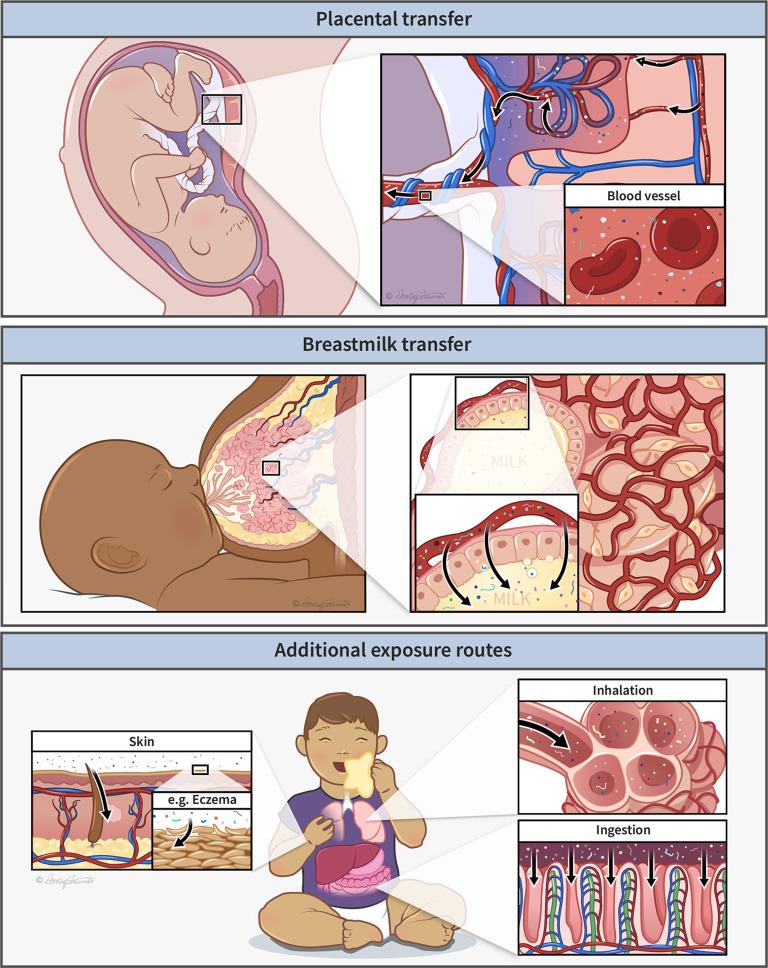
This commentary aims to summarize the knowns and unknowns around child- and pregnancy-relevant exposures to NMPs via inhalation, placental transfer, ingestion and breastmilk, and dermal absorption.
METHODS
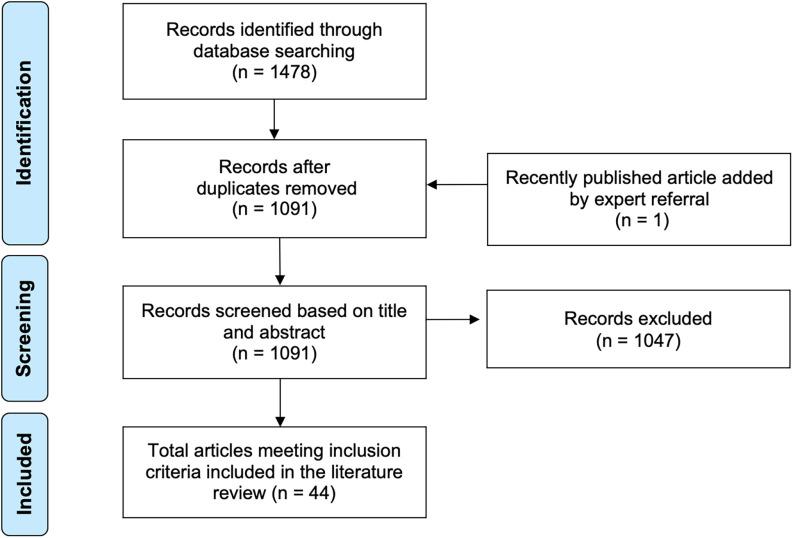
A comprehensive literature search to map the state of the science on NMPs found 37 primary research articles on the health relevance of NMPs during early life and revealed major knowledge gaps in the field. We discuss opportunities and challenges for quantifying child-specific exposures (e.g., NMPs in breastmilk or infant formula) and health effects, in light of global inequalities in baby bottle use, consumption of packaged foods, air pollution, hazardous plastic disposal, and regulatory safeguards. We also summarize research needs for linking child health and NMP exposures and address the unknowns in the context of public health action.
DISCUSSION
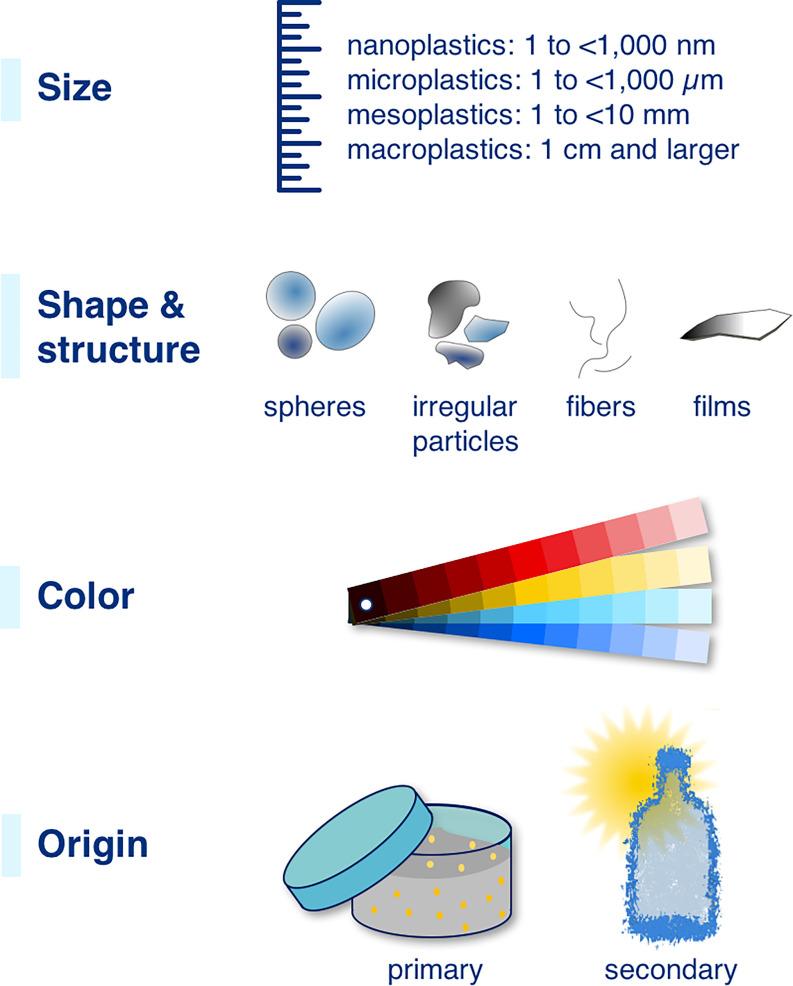
Few studies have addressed child-specific sources of exposure, and exposure estimates currently rely on generic assumptions rather than empirical measurements. Furthermore, toxicological research on NMPs has not specifically focused on child health, yet children's immature defense mechanisms make them particularly vulnerable. Apart from few studies investigating the placental transfer of NMPs, the physicochemical properties (e.g., polymer, size, shape, charge) driving the absorption, biodistribution, and elimination in early life have yet to be benchmarked. Accordingly, the evidence base regarding the potential health impacts of NMPs in early life remains sparse. Based on the evidence to date, we provide recommendations to fill research gaps, stimulate policymakers and industry to address the safety of NMPs, and point to opportunities for families to reduce early life exposures to plastic. https://doi.org/10.1289/EHP9086.
背景
妊娠、婴儿期和儿童期是暴露于环境因素的敏感窗口。然而,暴露于纳米和微塑料(NMPs)的健康影响在很大程度上仍未得到研究或未知。尽管塑料化学物质是一个成熟的研究课题,但塑料颗粒的影响尚未得到探索,特别是在生命早期暴露方面。
目的
本评论旨在总结通过吸入、胎盘转移、摄入和母乳以及皮肤吸收途径,与儿童和妊娠相关的 NMP 暴露的已知和未知情况。
方法
全面的文献检索旨在绘制 NMP 对生命早期健康相关性的科学现状,共找到 37 篇关于 NMPs 健康相关性的主要研究文章,并揭示了该领域的主要知识空白。我们讨论了量化儿童特异性暴露(例如母乳或婴儿配方奶粉中的 NMPs)和健康影响的机会和挑战,同时考虑到全球婴儿奶瓶使用、包装食品消费、空气污染、危险塑料处理和监管保障方面的不平等情况。我们还总结了将儿童健康与 NMP 暴露联系起来的研究需求,并在公共卫生行动的背景下讨论了未知情况。
讨论
很少有研究涉及儿童特异性的暴露源,暴露估计目前依赖于通用假设而不是经验测量。此外,NMP 的毒理学研究并未特别关注儿童健康,但儿童不成熟的防御机制使他们特别脆弱。除了少数研究调查 NMP 的胎盘转移外,驱动早期生命中吸收、分布和消除的理化性质(例如聚合物、大小、形状、电荷)尚未得到基准测试。因此,关于生命早期 NMP 潜在健康影响的证据基础仍然稀少。根据迄今为止的证据,我们提供了建议以填补研究空白,激发政策制定者和行业关注 NMP 的安全性,并指出家庭减少早期生命暴露于塑料的机会。
 Zotero 插件