
通过γ射线辐照尖孢镰刀菌制备SiO/Ag纳米复合材料以对抗青枯雷尔氏菌
Novel fabrication of SiO/Ag nanocomposite by gamma irradiated Fusarium oxysporum to combat Ralstonia solanacearum.
作者信息
Zaki Amira G, Hasanien Yasmeen A, El-Sayyad Gharieb S
机构信息
Plant Research Department, Nuclear Research Center (NRC), Egyptian Atomic Energy Authority (EAEA), Cairo, Egypt.
Drug Radiation Research Department, National Center for Radiation Research and Technology (NCRRT), Egyptian Atomic Energy Authority (EAEA), Cairo, Egypt.
出版信息
AMB Express. 2022 Feb 28;12(1):25. doi: 10.1186/s13568-022-01372-3.
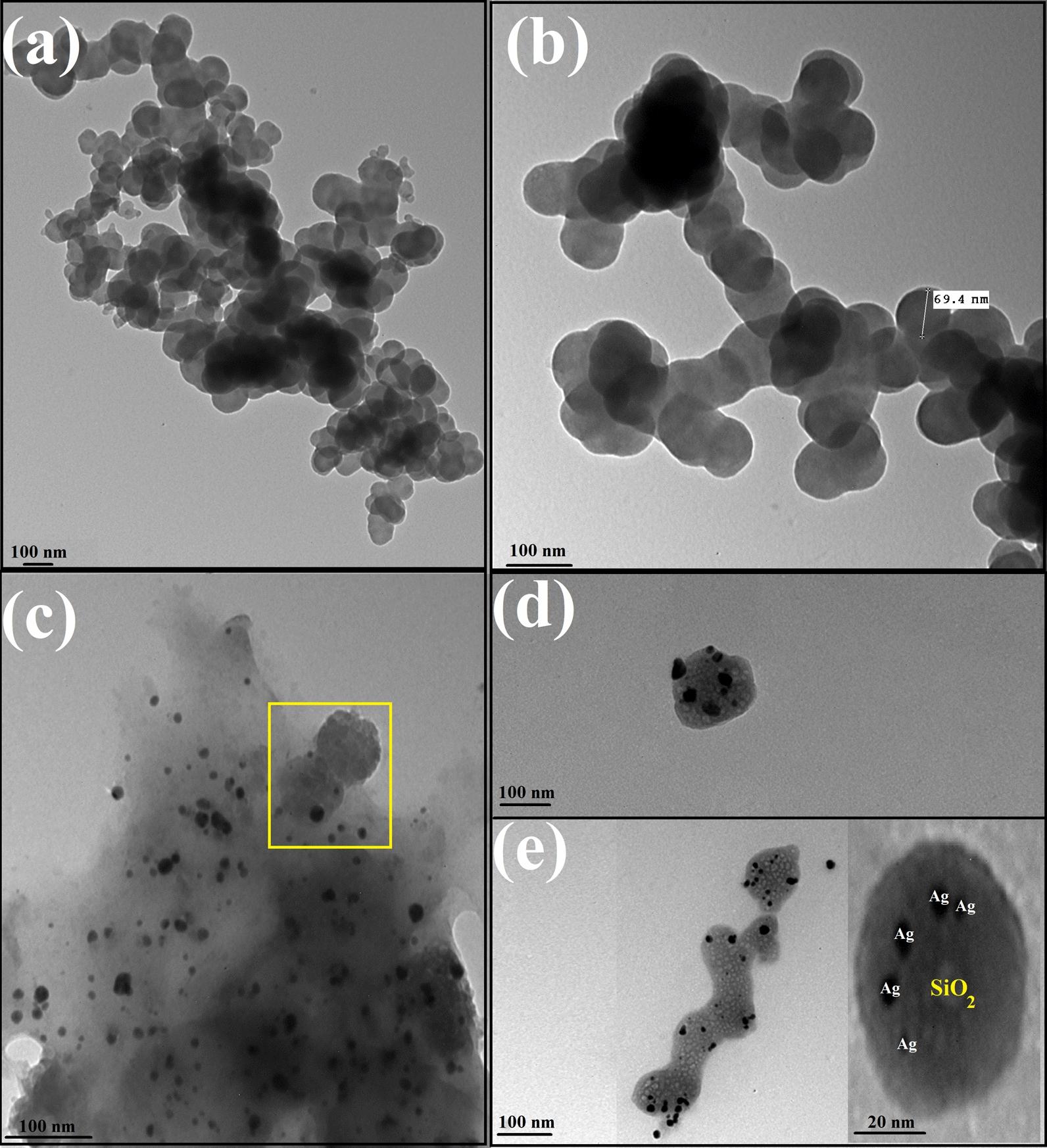
The bacterial wilt is a global destructive plant disease that initiated by the phytopathogenic Ralstonia solanacearum. This study display a novel biofabrication of silica/silver nanocomposite using Fusarium oxysporum-fermented rice husk (RH) under solid state fermentation (SSF). The biofabricated nanocomposite was characterized by XRD, UV-Vis. spectroscopy, DLS, SEM, EDX elemental mapping, and TEM analyses as well as investigated for anti-R. solanacearum activity. Response surface methodology was also processed for optimizing the biofabrication process and improving the anti-bacterial activity of the fabricated nanocomposite. Maximum suppression zone of 29.5 mm against R. solanacearum was reached at optimum RH content of 6.0 g, AgNO concentration of 2.50 mM, reaction pH of 6.3, and reaction time of 2 days. The anti-R. solanacearum activity of the fabricated nanocomposite was further improved by exposing the F. oxysporum strain to a gamma irradiation dose of 200 Gy. In conclusion, RH recycling under SSF by F. oxysporum could provide an innovative, facile, non-expensive, and green approach for fabricating SiO/Ag nanocomposite that could be applied efficiently as an eco-friendly antibacterial agent to combat R. solanacearum in agricultural applications. Moreover, the developed method could serve as a significant platform for the designing of new nanostructures for broad applications.
青枯病是一种由植物病原菌茄科雷尔氏菌引发的全球性毁灭性植物病害。本研究展示了一种利用尖孢镰刀菌在固态发酵(SSF)条件下发酵稻壳(RH)制备二氧化硅/银纳米复合材料的新型生物制造方法。通过X射线衍射(XRD)、紫外-可见光谱、动态光散射(DLS)、扫描电子显微镜(SEM)、能量散射X射线光谱(EDX)元素映射和透射电子显微镜(TEM)分析对生物制造的纳米复合材料进行了表征,并对其抗茄科雷尔氏菌活性进行了研究。还采用响应面方法对生物制造工艺进行了优化,以提高所制备纳米复合材料的抗菌活性。在稻壳含量为6.0 g、硝酸银浓度为2.50 mM、反应pH值为6.3和反应时间为2天的最佳条件下,对茄科雷尔氏菌的最大抑菌圈达到29.5 mm。通过将尖孢镰刀菌菌株暴露于200 Gy的γ射线辐照剂量下,进一步提高了所制备纳米复合材料的抗茄科雷尔氏菌活性。总之,尖孢镰刀菌在固态发酵条件下对稻壳的再利用可以为制备二氧化硅/银纳米复合材料提供一种创新、简便、廉价且绿色的方法,该复合材料可作为一种生态友好型抗菌剂有效地应用于农业领域防治茄科雷尔氏菌。此外,所开发的方法可为设计广泛应用的新型纳米结构提供一个重要平台。




 Zotero 插件