
全球、区域和国家 70 岁及以上成年人的疾病和伤害负担:全球疾病负担 2019 研究的系统分析。
Global, regional, and national burden of diseases and injuries for adults 70 years and older: systematic analysis for the Global Burden of Disease 2019 Study.
出版信息
BMJ. 2022 Mar 10;376:e068208. doi: 10.1136/bmj-2021-068208.
OBJECTIVES
To use data from the Global Burden of Diseases, Injuries, and Risk Factors Study 2019 (GBD 2019) to estimate mortality and disability trends for the population aged ≥70 and evaluate patterns in causes of death, disability, and risk factors.
DESIGN
Systematic analysis.
SETTING
Participants were aged ≥70 from 204 countries and territories, 1990-2019.
MAIN OUTCOMES MEASURES
Years of life lost, years lived with disability, disability adjusted life years, life expectancy at age 70 (LE-70), healthy life expectancy at age 70 (HALE-70), proportion of years in ill health at age 70 (PYIH-70), risk factors, and data coverage index were estimated based on standardised GBD methods.
RESULTS
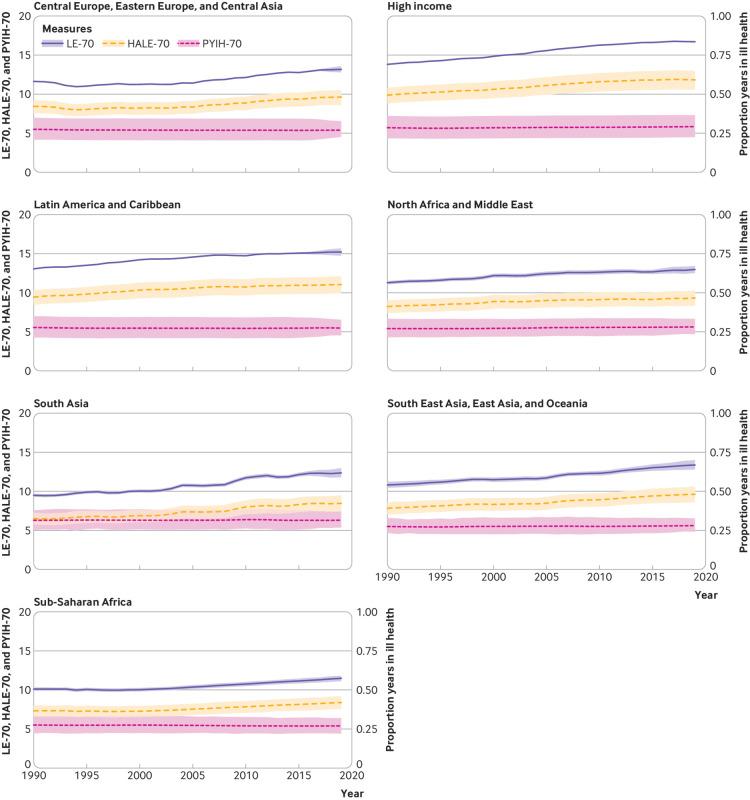
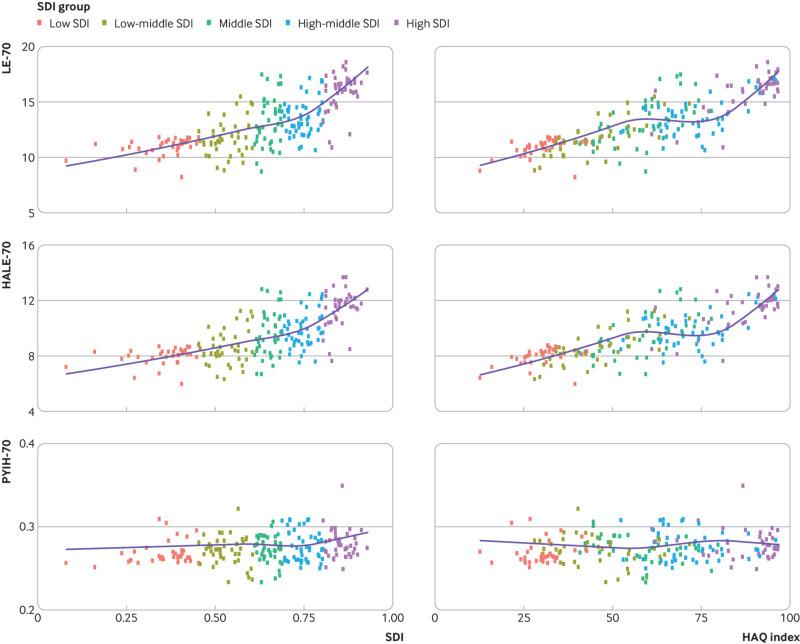
Globally the population of older adults has increased since 1990 and all cause death rates have decreased for men and women. However, mortality rates due to falls increased between 1990 and 2019. The probability of death among people aged 70-90 decreased, mainly because of reductions in non-communicable diseases. Globally disability burden was largely driven by functional decline, vision and hearing loss, and symptoms of pain. LE-70 and HALE-70 showed continuous increases since 1990 globally, with certain regional disparities. Globally higher LE-70 resulted in higher HALE-70 and slightly increased PYIH-70. Sociodemographic and healthcare access and quality indices were positively correlated with HALE-70 and LE-70. For high exposure risk factors, data coverage was moderate, while limited data were available for various dietary, environmental or occupational, and metabolic risks.
CONCLUSIONS
Life expectancy at age 70 has continued to rise globally, mostly because of decreases in chronic diseases. Adults aged ≥70 living in high income countries and regions with better healthcare access and quality were found to experience the highest life expectancy and healthy life expectancy. Disability burden, however, remained constant, suggesting the need to enhance public health and intervention programmes to improve wellbeing among older adults.
目的
利用 2019 年全球疾病、伤害和危险因素负担研究(GBD 2019)的数据,估算≥70 岁人群的死亡率和残疾趋势,并评估死亡、残疾和危险因素的原因模式。
设计
系统分析。
设置
参与者来自 204 个国家和地区,年龄≥70 岁,时间范围为 1990-2019 年。
主要结局测量
基于标准 GBD 方法,估计生命损失年数、失能生存年数、残疾调整生命年数、70 岁时预期寿命(LE-70)、70 岁时健康期望寿命(HALE-70)、70 岁时健康不佳年数比例(PYIH-70)、危险因素和数据覆盖指数。
结果
自 1990 年以来,全球老年人口有所增加,男女全因死亡率均有所下降。然而,1990 年至 2019 年期间,跌倒导致的死亡率有所上升。70-90 岁人群的死亡概率下降,主要原因是非传染性疾病的减少。全球残疾负担主要由功能下降、视力和听力损失以及疼痛症状驱动。自 1990 年以来,LE-70 和 HALE-70 在全球范围内持续增长,存在一定的区域差异。全球较高的 LE-70 导致 HALE-70 更高,PYIH-70 略有增加。社会人口和医疗保健获取和质量指数与 HALE-70 和 LE-70 呈正相关。对于高暴露风险因素,数据覆盖范围适中,而各种饮食、环境或职业以及代谢风险的数据有限。
结论
全球 70 岁时的预期寿命继续上升,主要原因是慢性病的减少。在高收入国家和地区,医疗保健获取和质量较好的≥70 岁成年人的预期寿命和健康期望寿命最高。然而,残疾负担保持不变,这表明需要加强公共卫生和干预计划,以改善老年人的福祉。




 Zotero 插件