
500 年来两亚种人隐孢子虫的全球种群基因组研究。
Global Population Genomics of Two Subspecies of Cryptosporidium hominis during 500 Years of Evolution.
机构信息
Population Health and Immunity, Walter and Eliza Hall Institute of Medical Research, Melbourne, VIC, Australia.
Faculty of Medicine, Dentistry and Health Sciences, University of Melbourne, Melbourne, VIC, Australia.
出版信息
Mol Biol Evol. 2022 Apr 11;39(4). doi: 10.1093/molbev/msac056.
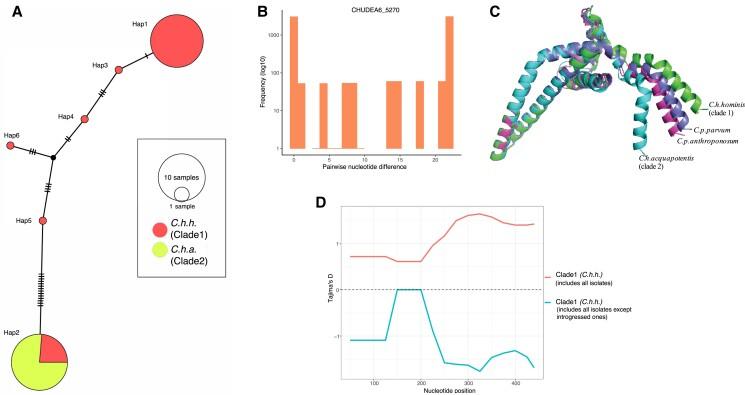
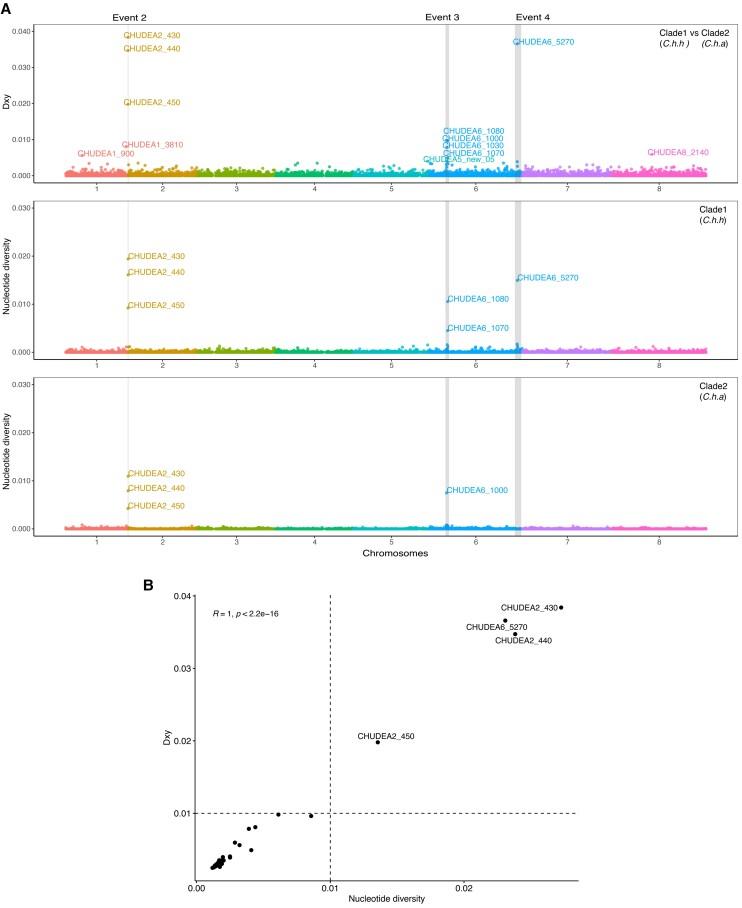
Cryptosporidiosis is a major global health problem and a primary cause of diarrhea, particularly in young children in low- and middle-income countries (LMICs). The zoonotic Cryptosporidium parvum and anthroponotic Cryptosporidium hominis cause most human infections. Here, we present a comprehensive whole-genome study of C. hominis, comprising 114 isolates from 16 countries within five continents. We detect two lineages with distinct biology and demography, which diverged circa 500 years ago. We consider these lineages two subspecies and propose the names C. hominis hominis and C. hominis aquapotentis (gp60 subtype IbA10G2). In our study, C. h. hominis is almost exclusively represented by isolates from LMICs in Africa and Asia and appears to have undergone recent population contraction. In contrast, C. h. aquapotentis was found in high-income countries, mainly in Europe, North America, and Oceania, and appears to be expanding. Notably, C. h. aquapotentis is associated with high rates of direct human-to-human transmission, which may explain its success in countries with well-developed environmental sanitation infrastructure. Intriguingly, we detected genomic regions of introgression following secondary contact between the subspecies. This resulted in high diversity and divergence in genomic islands of putative virulence genes, including muc5 (CHUDEA2_430) and a hypothetical protein (CHUDEA6_5270). This diversity is maintained by balancing selection, suggesting a co-evolutionary arms race with the host. Finally, we find that recent gene flow from C. h. aquapotentis to C. h. hominis, likely associated with increased human migration, maybe driving the evolution of more virulent C. hominis variants.
隐孢子虫病是一个全球性的主要健康问题,也是发展中国家(中低收入国家)儿童,尤其是腹泻的主要病因。人畜共患的微小隐孢子虫和人源隐孢子虫是人感染的主要病原体。在这里,我们对来自五大洲 16 个国家的 114 株人源隐孢子虫进行了全基因组研究。我们检测到具有明显生物学和人口统计学差异的两个谱系,它们大约在 500 年前分化。我们认为这两个谱系是两个亚种,并提出人源隐孢子虫人源亚种和人源隐孢子虫水生亚种(gp60 亚型 IbA10G2)的名称。在我们的研究中,人源隐孢子虫人源亚种几乎完全由来自非洲和亚洲的中低收入国家的分离株代表,且似乎经历了近期的种群收缩。相比之下,人源隐孢子虫水生亚种存在于高收入国家,主要分布在欧洲、北美和大洋洲,且似乎正在扩张。值得注意的是,人源隐孢子虫水生亚种与人与人之间的高直接传播率相关,这可能解释了其在环境卫生基础设施发达的国家取得成功的原因。有趣的是,我们在亚种的二次接触后检测到了基因渗入的基因组区域。这导致了假定毒力基因的基因组岛中出现了高度的多样性和分化,包括 muc5(CHUDEA2_430)和一个假设蛋白(CHUDEA6_5270)。这种多样性是由平衡选择维持的,这表明与宿主存在共同进化的军备竞赛。最后,我们发现人源隐孢子虫水生亚种向人源隐孢子虫人源亚种的近期基因流,可能与人类迁移增加有关,可能导致更具毒力的人源隐孢子虫变异的进化。


 Zotero 插件