
黏蛋白样、分泌型 I 型跨膜糖蛋白 GP900 在顶复门微小隐孢子虫中在分泌途径中被切割,可能发挥润滑作用。
The mucin-like, secretory type-I transmembrane glycoprotein GP900 in the apicomplexan Cryptosporidium parvum is cleaved in the secretory pathway and likely plays a lubrication role.
机构信息
Key Laboratory of Zoonosis Research of the Ministry of Education, The Institute of Zoonosis, The College of Veterinary Medicine, Jilin University, Changchun, 130062, China.
出版信息
Parasit Vectors. 2022 May 17;15(1):170. doi: 10.1186/s13071-022-05286-8.
BACKGROUND
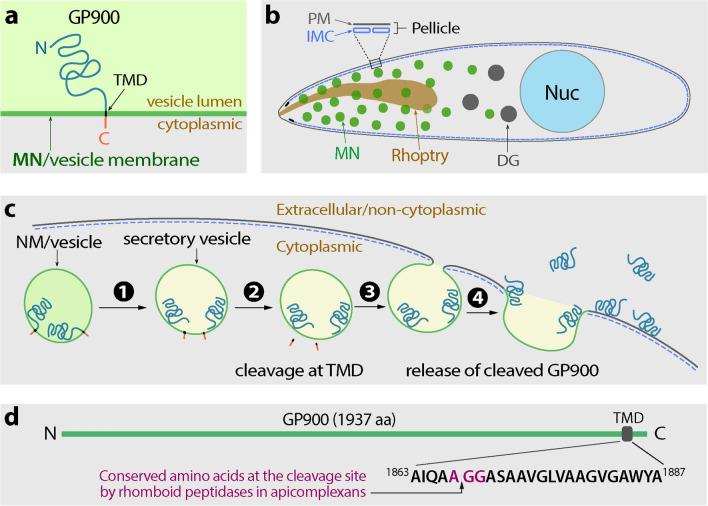
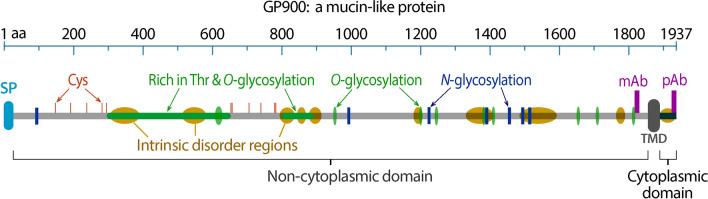
Cryptosporidium parvum is a zoonotic parasite and member of the phylum Apicomplexa with unique secretory organelles, including a rhoptry, micronemes and dense granules that discharge their contents during parasite invasion. The mucin-like glycoprotein GP900 with a single transmembrane domain is an immunodominant antigen and micronemal protein. It is relocated to the surface of excysted sporozoites and shed to form trails by sporozoites exhibiting gliding motility (gliding sporozoites). However, the biological process underlying its relocation and shedding remains unclear. The primary aim of this study was to determine whether GP900 is present as a transmembrane protein anchored to the plasma membrane on the surface of sporozoites and whether it is cleaved before being shed from the sporozoites.
METHODS
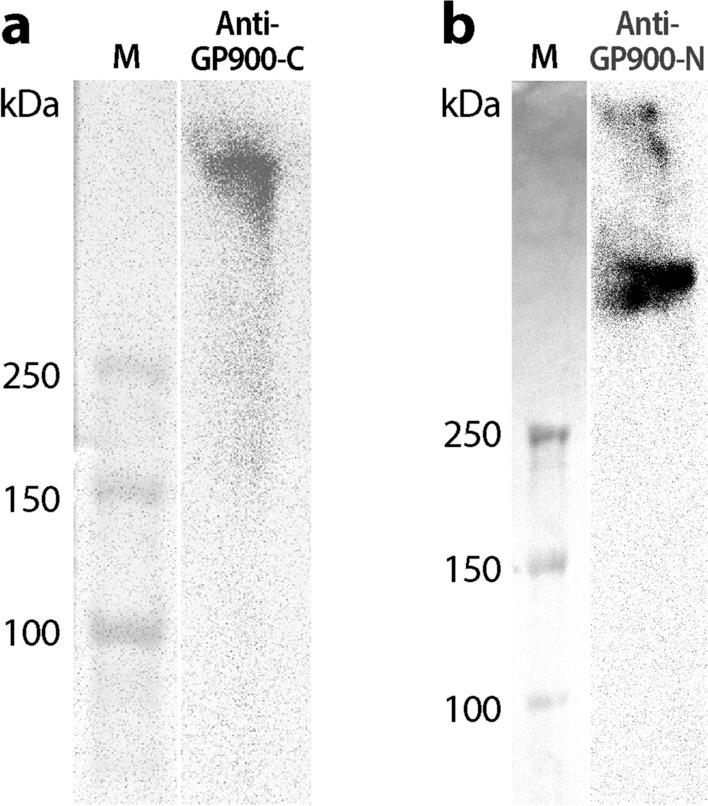
Two anti-GP900 antibodies, a mouse monoclonal antibody (mAb) to the long N-terminal domain (GP900-N) and a rabbit polyclonal antibody (pAb) to the short C-terminal domain (GP900-C), were produced for the detection of intact and cleaved GP900 proteins in sporozoites and other parasite developmental stages by microscopic immunofluorescence assay and in discharged molecules by enzyme-linked immunosorbent assay.
RESULTS
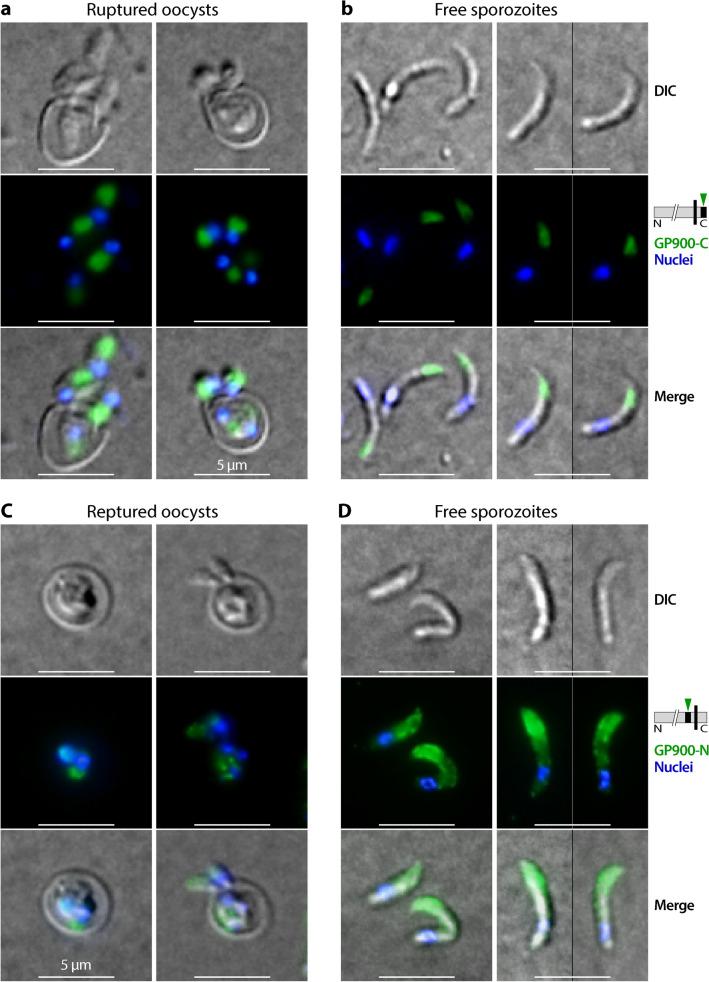
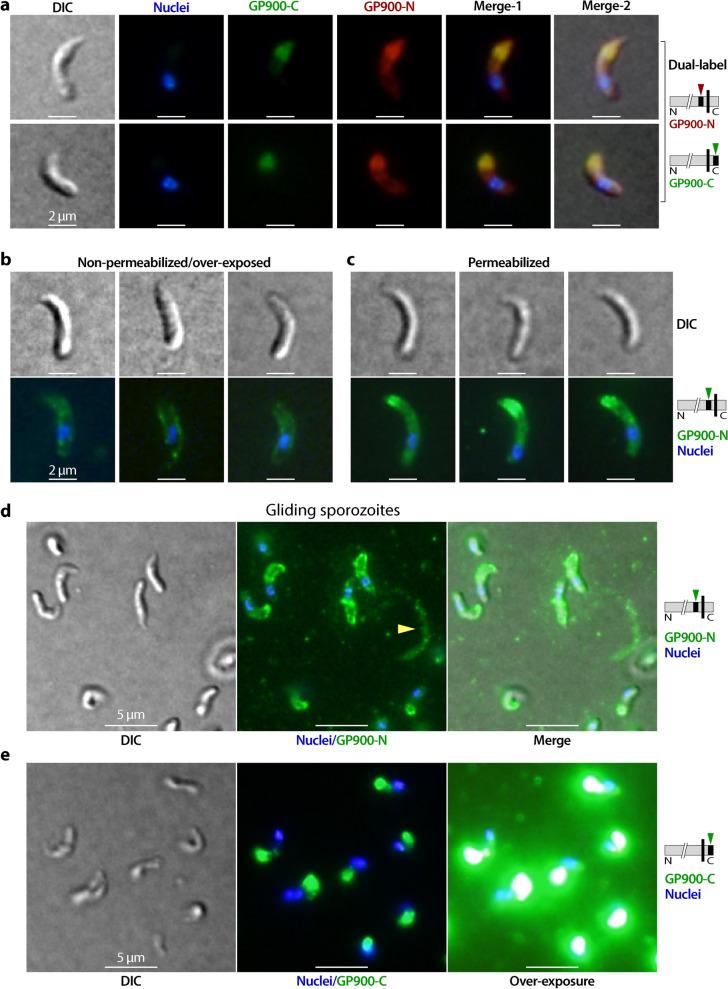
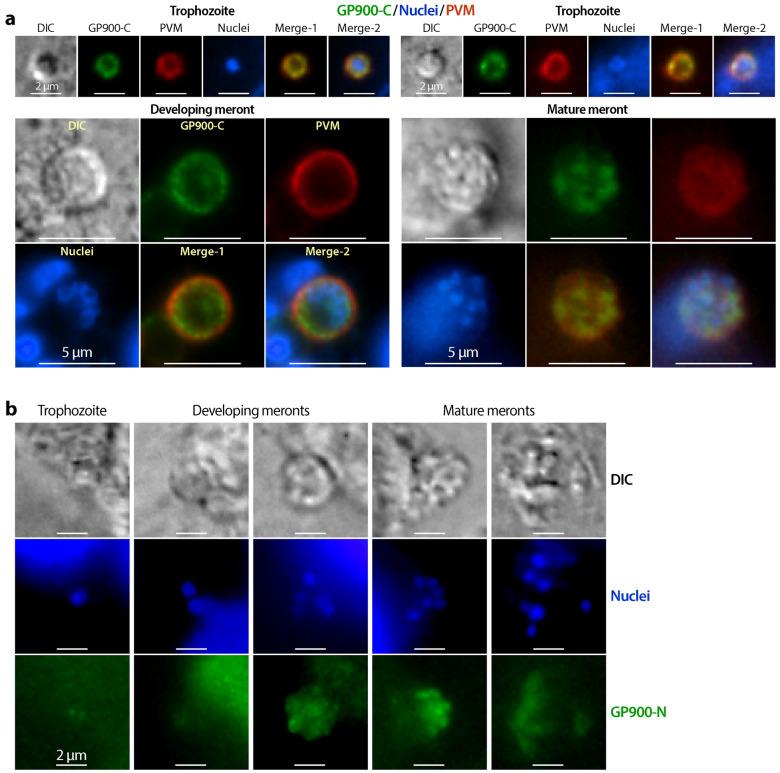
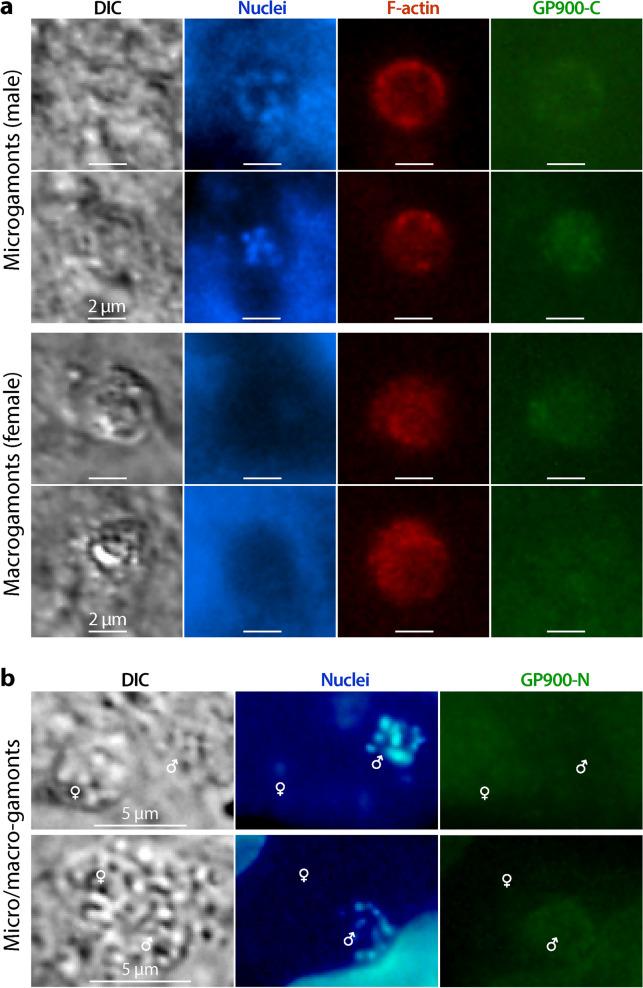
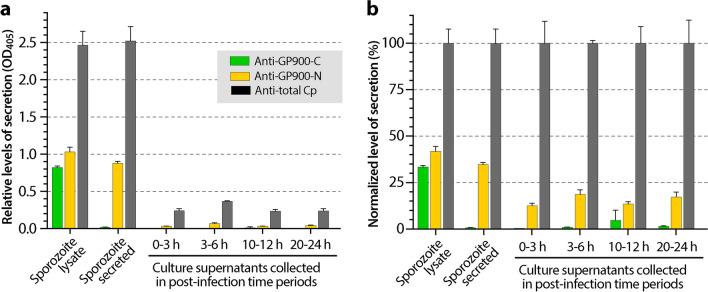
Both anti-GP900 antibodies recognized the apical region of unexcysted and excysted sporozoites. However, anti-GP900-N (but not anti-GP900-C) also stained both the pellicles/surface of excysted sporozoites and the trails of gliding sporozoites. Both antibodies stained the intracellular meronts, both developing and developed, but not the macro- and microgamonts. Additionally, the epitope was recognized by anti-GP900-N (but not anti-GP900-C) and detected in the secretions of excysted sporozoites and intracellular parasites.
CONCLUSIONS
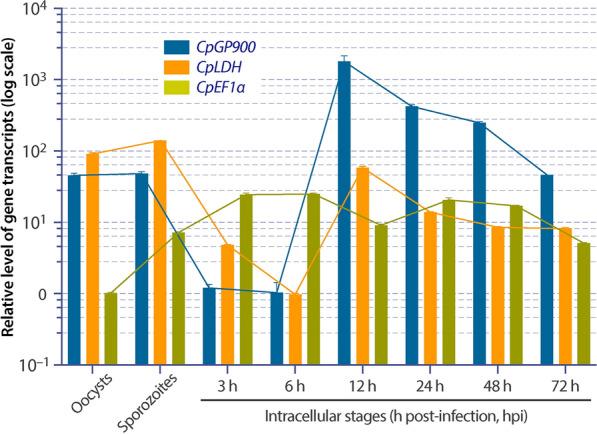
GP900 is present in sporozoites and intracellular meronts, but absent in sexual stages. It is stored in the micronemes of sporozoites, but enters the secretory pathway during excystation and invasion. The short cytoplasmic domain of GP900 is cleaved in the secretory pathway before it reaches the extracellular space. The molecular features and behavior of GP900 imply that it plays mainly a lubrication role.
背景
微小隐孢子虫是一种动物源寄生虫,属于顶复门,具有独特的分泌细胞器,包括棒状体、微线体和致密颗粒,在寄生虫入侵过程中释放其内容物。具有单一跨膜结构域的粘蛋白样糖蛋白 GP900 是一种免疫优势抗原和微线体蛋白。它被重新定位到出芽孢子的表面,并通过表现出滑行运动的孢子(滑行孢子)脱落形成痕迹。然而,其重新定位和脱落的生物学过程尚不清楚。本研究的主要目的是确定 GP900 是否作为跨膜蛋白锚定在孢子表面的质膜上,以及它是否在从孢子中脱落之前被切割。
方法
为了通过显微镜免疫荧光检测在未出芽和出芽孢子以及其他寄生虫发育阶段检测完整和切割的 GP900 蛋白,以及通过酶联免疫吸附试验检测排出的分子,制备了两种抗 GP900 抗体,一种针对长 N 末端结构域的小鼠单克隆抗体(mAb)(GP900-N)和一种针对短 C 末端结构域的兔多克隆抗体(pAb)(GP900-C)。
结果
两种抗 GP900 抗体均识别未出芽和出芽孢子的顶端区。然而,抗 GP900-N(但不是抗 GP900-C)也染色了出芽孢子的囊膜/表面和滑行孢子的痕迹。两种抗体都染色了正在发育和已发育的内出芽体,但不染色大配子体和小配子体。此外,抗 GP900-N(但不是抗 GP900-C)识别表位并在出芽孢子和细胞内寄生虫的分泌物中检测到。
结论
GP900 存在于孢子和细胞内的出芽体中,但不存在于有性阶段。它储存在孢子的微线体中,但在出芽和入侵过程中进入分泌途径。GP900 的短细胞质结构域在到达细胞外空间之前在分泌途径中被切割。GP900 的分子特征和行为表明它主要起润滑作用。

 Zotero 插件