
双特异性抗体为基础的免疫细胞衔接器及其在癌症免疫治疗中的新兴治疗靶点。
Bispecific Antibody-Based Immune-Cell Engagers and Their Emerging Therapeutic Targets in Cancer Immunotherapy.
机构信息
Department of Biopharmaceutical Chemistry, College of Science and Technology, Kookmin University, Seoul 02707, Korea.
R&D Division, GC Biopharma, Yongin 16924, Korea.
出版信息
Int J Mol Sci. 2022 May 19;23(10):5686. doi: 10.3390/ijms23105686.
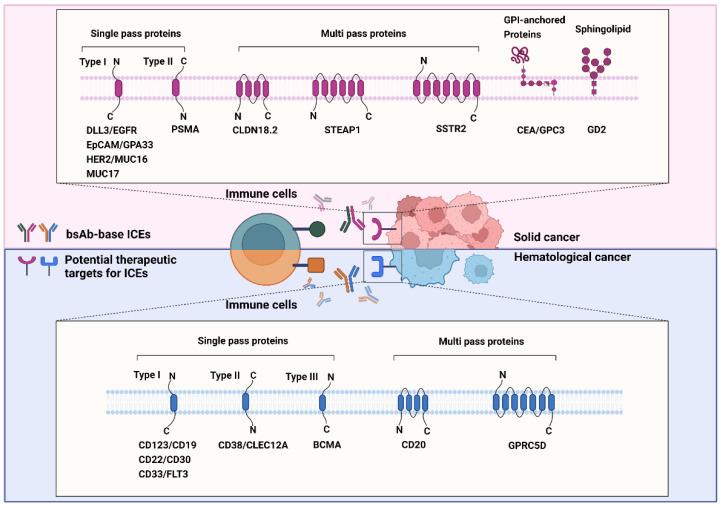
Cancer is the second leading cause of death worldwide after cardiovascular diseases. Harnessing the power of immune cells is a promising strategy to improve the antitumor effect of cancer immunotherapy. Recent progress in recombinant DNA technology and antibody engineering has ushered in a new era of bispecific antibody (bsAb)-based immune-cell engagers (ICEs), including T- and natural-killer-cell engagers. Since the first approval of blinatumomab by the United States Food and Drug Administration (US FDA), various bsAb-based ICEs have been developed for the effective treatment of patients with cancer. Simultaneously, several potential therapeutic targets of bsAb-based ICEs have been identified in various cancers. Therefore, this review focused on not only highlighting the action mechanism, design and structure, and status of bsAb-based ICEs in clinical development and their approval by the US FDA for human malignancy treatment, but also on summarizing the currently known and emerging therapeutic targets in cancer. This review provides insights into practical considerations for developing next-generation ICEs.
癌症是全球仅次于心血管疾病的第二大死亡原因。利用免疫细胞的力量是提高癌症免疫治疗抗肿瘤效果的一种有前途的策略。重组 DNA 技术和抗体工程的最新进展迎来了基于双特异性抗体(bsAb)的免疫细胞衔接器(ICE)的新时代,包括 T 细胞和自然杀伤细胞衔接器。自美国食品和药物管理局(US FDA)首次批准blinatumomab 以来,已经开发了各种基于 bsAb 的 ICE 来有效治疗癌症患者。同时,在各种癌症中已经确定了几种基于 bsAb 的 ICE 的潜在治疗靶点。因此,本综述不仅重点介绍了 bsAb 基于 ICE 的临床开发中的作用机制、设计和结构以及美国 FDA 对人类恶性肿瘤治疗的批准情况,还总结了目前已知和新兴的癌症治疗靶点。本文综述为开发下一代 ICE 提供了一些实用的考虑因素。


 Zotero 插件