
室内环境中的微塑料及其添加剂。
Microplastics and their Additives in the Indoor Environment.
机构信息
Department of Material Analysis and Indoor Chemistry, Fraunhofer WKI, Bienroder Weg 54 E, 38108, Braunschweig, Germany.
出版信息
Angew Chem Int Ed Engl. 2022 Aug 8;61(32):e202205713. doi: 10.1002/anie.202205713. Epub 2022 Jul 8.
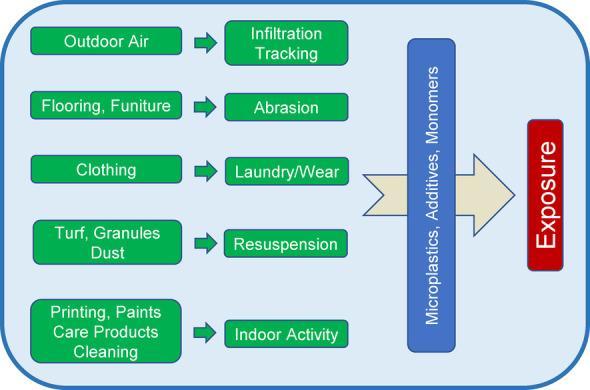
Analyses of air and house dust have shown that pollution of the indoor environment with microplastics could pose a fundamental hygienic problem. Indoor microplastics can result from abrasion, microplastic beads are frequently added to household products and microplastic granules can be found in artificial turf for sports activities and in synthetic admixtures in equestrian hall litter. In this context, the question arose as to what extent particulate emissions of thermoplastic materials from 3D printing should be at least partially classified as microplastics or nanoplastics. The discussion about textiles as a possible source of indoor microplastics has also been intensified. This Minireview gives an overview of the current exposure of residents to microplastics. Trends can be identified from the results and preventive measures can be derived if necessary. It is recommended that microplastics and their additives be given greater consideration in indoor environmental surveys in the future.
分析空气和房屋灰尘表明,室内环境受到微塑料污染可能会构成一个基本的卫生问题。室内微塑料可能是由于磨损造成的,微塑料珠经常被添加到家用产品中,而人造草坪中的人工合成颗粒和马术中的合成混合物中则可以发现微塑料颗粒。在这种情况下,人们开始质疑从 3D 打印中产生的热塑性材料的颗粒排放物至少应部分归类为微塑料或纳米塑料。关于纺织品作为室内微塑料的可能来源的讨论也有所增加。这篇迷你综述概述了居民目前接触微塑料的情况。可以从结果中识别出趋势,如果有必要,可以得出预防措施。建议在未来的室内环境调查中更多地考虑微塑料及其添加剂。


 Zotero 插件