
运动和益生元纤维在乳腺癌幸存者到无菌小鼠的乳腺癌转化模型中提供肠道微生物群驱动的益处。
Exercise and Prebiotic Fiber Provide Gut Microbiota-Driven Benefit in a Survivor to Germ-Free Mouse Translational Model of Breast Cancer.
作者信息
Sampsell Kara, Wang Weilan, Ohland Christina, Mager Lukas F, Pett Nicola, Lowry Dana E, Sales Kate M, McNeely Margaret L, McCoy Kathy D, Culos-Reed S Nicole, Reimer Raylene A
机构信息
Faculty of Kinesiology, University of Calgary, Calgary, AB T2N 1N4, Canada.
International Microbiome Centre, Cumming School of Medicine, University of Calgary, Calgary, AB T2N 4N1, Canada.
出版信息
Cancers (Basel). 2022 May 31;14(11):2722. doi: 10.3390/cancers14112722.
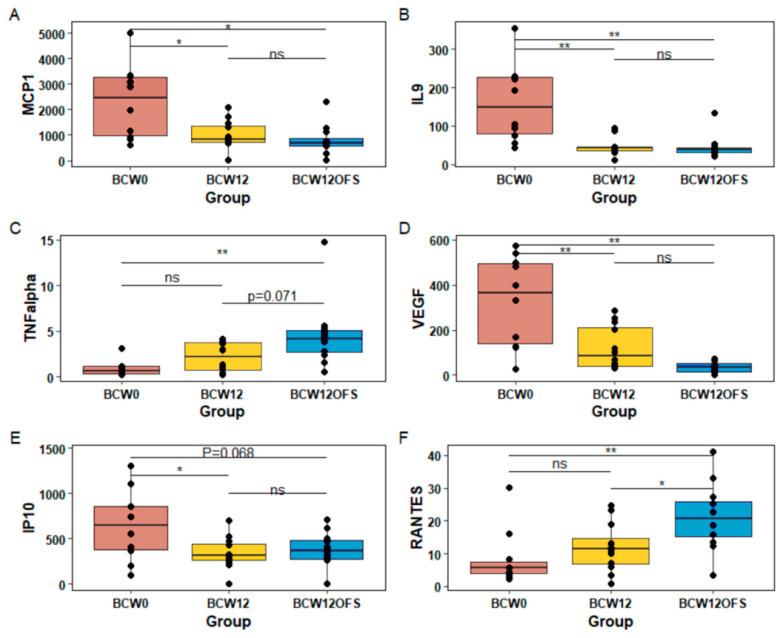
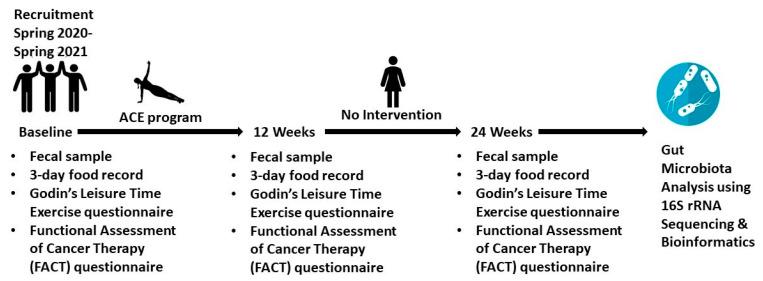
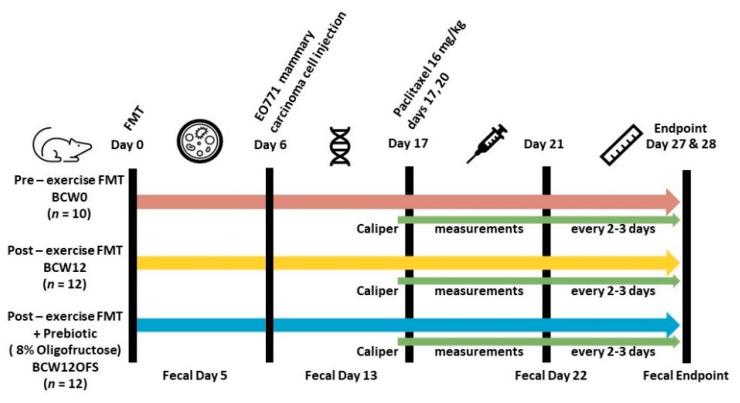
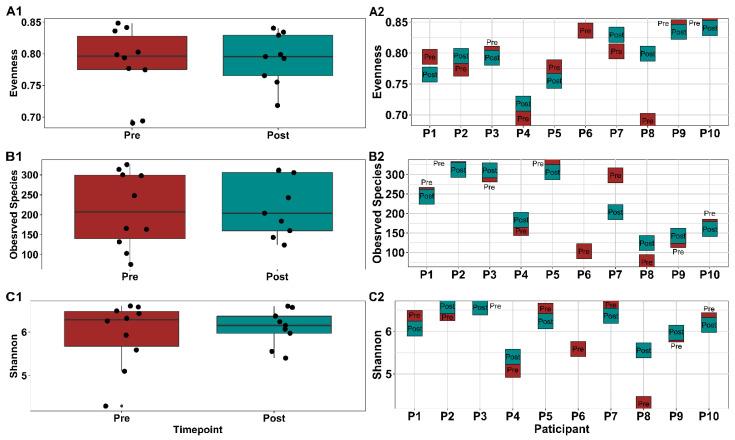
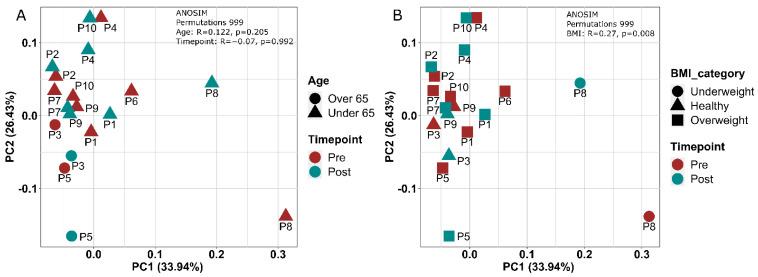
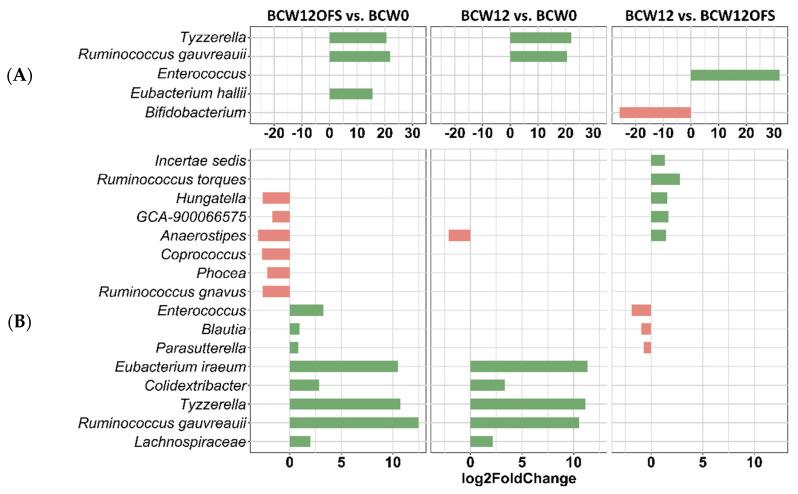
The gut microbiota plays a role in shaping overall host health and response to several cancer treatments. Factors, such as diet, exercise, and chemotherapy, can alter the gut microbiota. In the present study, the Alberta Cancer Exercise (ACE) program was investigated as a strategy to favorably modify the gut microbiota of breast cancer survivors who had received chemotherapy. Subsequently, the ability of post-exercise gut microbiota, alone or with prebiotic fiber supplementation, to influence breast cancer outcomes was interrogated using fecal microbiota transplant (FMT) in germ-free mice. While cancer survivors experienced little gut microbial change following ACE, in the mice, tumor volume trended consistently lower over time in mice colonized with post-exercise compared to pre-exercise microbiota with significant differences on days 16 and 22. Beta diversity analysis revealed that EO771 breast tumor cell injection and Paclitaxel chemotherapy altered the gut microbial communities in mice. Enrichment of potentially protective microbes was found in post-exercise microbiota groups. Tumors of mice colonized with post-exercise microbiota exhibited more favorable cytokine profiles, including decreased vascular endothelial growth factor (VEGF) levels. Beneficial microbial and molecular outcomes were augmented with prebiotic supplementation. Exercise and prebiotic fiber demonstrated adjuvant action, potentially via an enhanced anti-tumor immune response modulated by advantageous gut microbial shifts.
肠道微生物群在塑造宿主整体健康以及对多种癌症治疗的反应中发挥作用。饮食、运动和化疗等因素会改变肠道微生物群。在本研究中,对艾伯塔癌症运动(ACE)项目进行了调查,该项目旨在作为一种策略,对接受过化疗的乳腺癌幸存者的肠道微生物群进行有益调节。随后,利用无菌小鼠的粪便微生物群移植(FMT),研究了运动后肠道微生物群单独或与益生元纤维补充剂联合使用时影响乳腺癌预后的能力。虽然癌症幸存者在ACE项目后肠道微生物变化不大,但在小鼠中,与运动前微生物群定植的小鼠相比,运动后微生物群定植的小鼠肿瘤体积随时间持续呈下降趋势,在第16天和第22天有显著差异。β多样性分析表明,EO771乳腺肿瘤细胞注射和紫杉醇化疗改变了小鼠的肠道微生物群落。在运动后微生物群组中发现了潜在保护性微生物的富集。运动后微生物群定植的小鼠肿瘤表现出更有利的细胞因子谱,包括血管内皮生长因子(VEGF)水平降低。益生元补充剂增强了有益的微生物和分子结果。运动和益生元纤维显示出辅助作用,可能是通过有利的肠道微生物变化调节增强的抗肿瘤免疫反应实现的。


 Zotero 插件