
尿酸与过氧化物酶反应,减少IV型胶原蛋白交联,损害人类内皮细胞迁移和黏附。
Uric Acid Reacts with Peroxidasin, Decreases Collagen IV Crosslink, Impairs Human Endothelial Cell Migration and Adhesion.
作者信息
Dempsey Bianca, Cruz Litiele Cezar, Mineiro Marcela Franco, da Silva Railmara Pereira, Meotti Flavia Carla
机构信息
Department of Biochemistry, Institute of Chemistry, University of São Paulo, Av. Prof Lineu Prestes, 748. Office 1004, São Paulo 05508-000, Brazil.
出版信息
Antioxidants (Basel). 2022 Jun 4;11(6):1117. doi: 10.3390/antiox11061117.
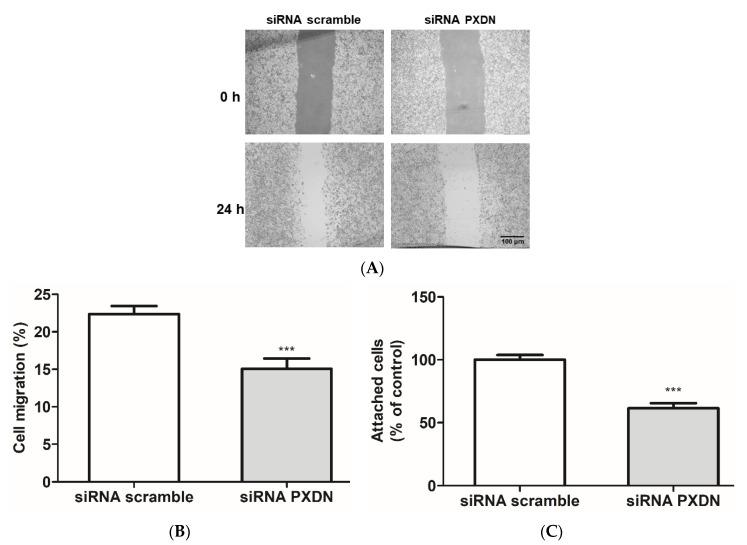
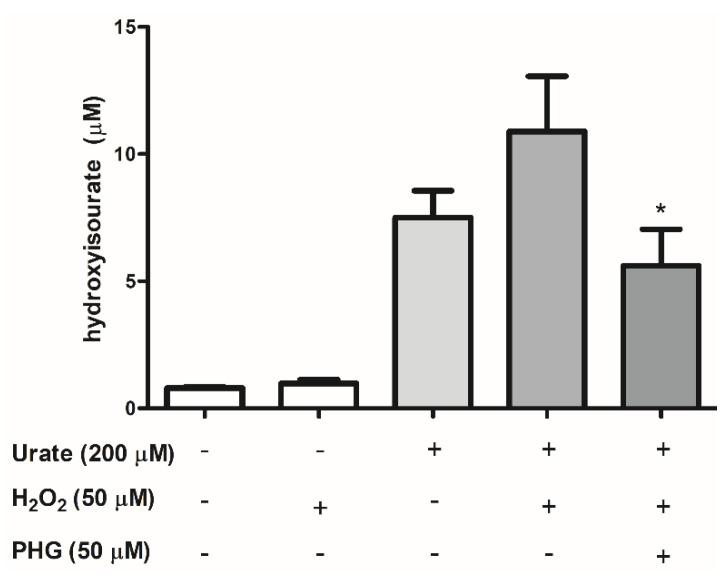
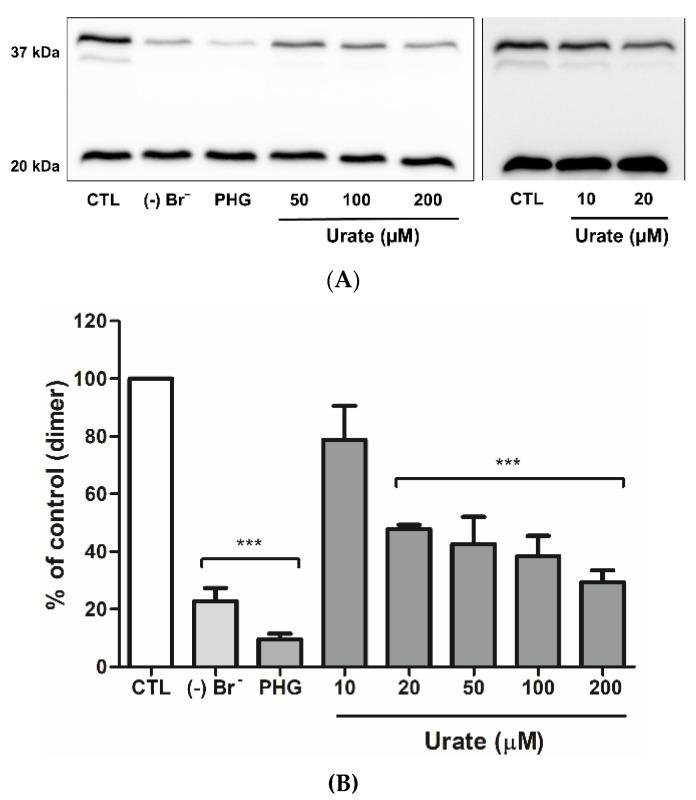
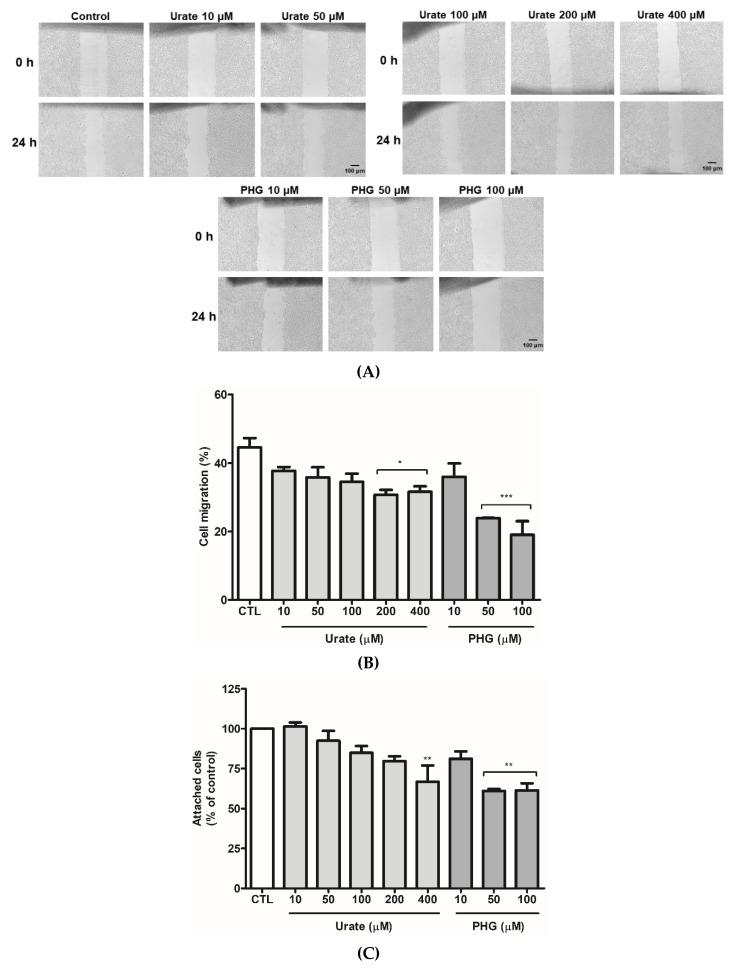
Uric acid is considered the main substrate for peroxidases in plasma. The oxidation of uric acid by human peroxidases generates urate free radical and urate hydroperoxide, which might affect endothelial function and explain, at least in part, the harmful effects of uric acid on the vascular system. Peroxidasin (PXDN), the most recent heme-peroxidase described in humans, catalyzes the formation of hypobromous acid, which mediates collagen IV crosslinks in the extracellular matrix. This enzyme has gained increasing scientific interest since it is associated with cardiovascular disease, cancer, and renal fibrosis. The main objective here was to investigate whether uric acid would react with PXDN and compromise the function of the enzyme in human endothelial cells. Urate decreased Amplex Red oxidation and brominating activity in the extracellular matrix (ECM) from HEK293/PXDN overexpressing cells and in the secretome of HUVECs. Parallelly, urate was oxidized to 5-hydroxyisourate. It also decreased collagen IV crosslink in isolated ECM from PFHR9 cells. Urate, the PXDN inhibitor phloroglucinol, and the PXDN knockdown impaired migration and adhesion of HUVECs. These results demonstrated that uric acid can affect extracellular matrix formation by competing for PXDN. The oxidation of uric acid by PXDN is likely a relevant mechanism in the endothelial dysfunction related to this metabolite.
尿酸被认为是血浆中过氧化物酶的主要底物。人过氧化物酶催化尿酸氧化生成尿酸自由基和尿酸氢过氧化物,这可能会影响内皮功能,至少部分解释了尿酸对血管系统的有害作用。过氧化物酶(PXDN)是人类中最新描述的血红素过氧化物酶,催化次溴酸的形成,次溴酸介导细胞外基质中IV型胶原的交联。由于该酶与心血管疾病、癌症和肾纤维化有关,因此越来越受到科学界的关注。这里的主要目的是研究尿酸是否会与PXDN反应并损害其在人内皮细胞中的功能。尿酸降低了过表达HEK293/PXDN细胞的细胞外基质(ECM)以及人脐静脉内皮细胞(HUVECs)分泌组中的Amplex Red氧化和溴化活性。同时,尿酸被氧化为5-羟基异尿酸。它还减少了PFHR9细胞分离的ECM中IV型胶原的交联。尿酸、PXDN抑制剂间苯三酚和PXDN基因敲低均损害了HUVECs的迁移和黏附。这些结果表明,尿酸可通过与PXDN竞争来影响细胞外基质的形成。PXDN催化尿酸氧化可能是与这种代谢物相关的内皮功能障碍的一种相关机制。


 Zotero 插件