
雾化过氧化氢对 N95 口罩进行消毒,同时进行适配性测试和病毒灭活,证明了在 COVID-19 大流行期间重复使用的可行性。
Aerosolized Hydrogen Peroxide Decontamination of N95 Respirators, with Fit-Testing and Viral Inactivation, Demonstrates Feasibility for Reuse during the COVID-19 Pandemic.
机构信息
Environmental Health and Safety, Pennsylvania State Universitygrid.29857.31, University Park, Pennsylvania, USA.
Animal Resource Program, Pennsylvania State Universitygrid.29857.31, University Park, Pennsylvania, USA.
出版信息
mSphere. 2022 Oct 26;7(5):e0030322. doi: 10.1128/msphere.00303-22. Epub 2022 Aug 30.
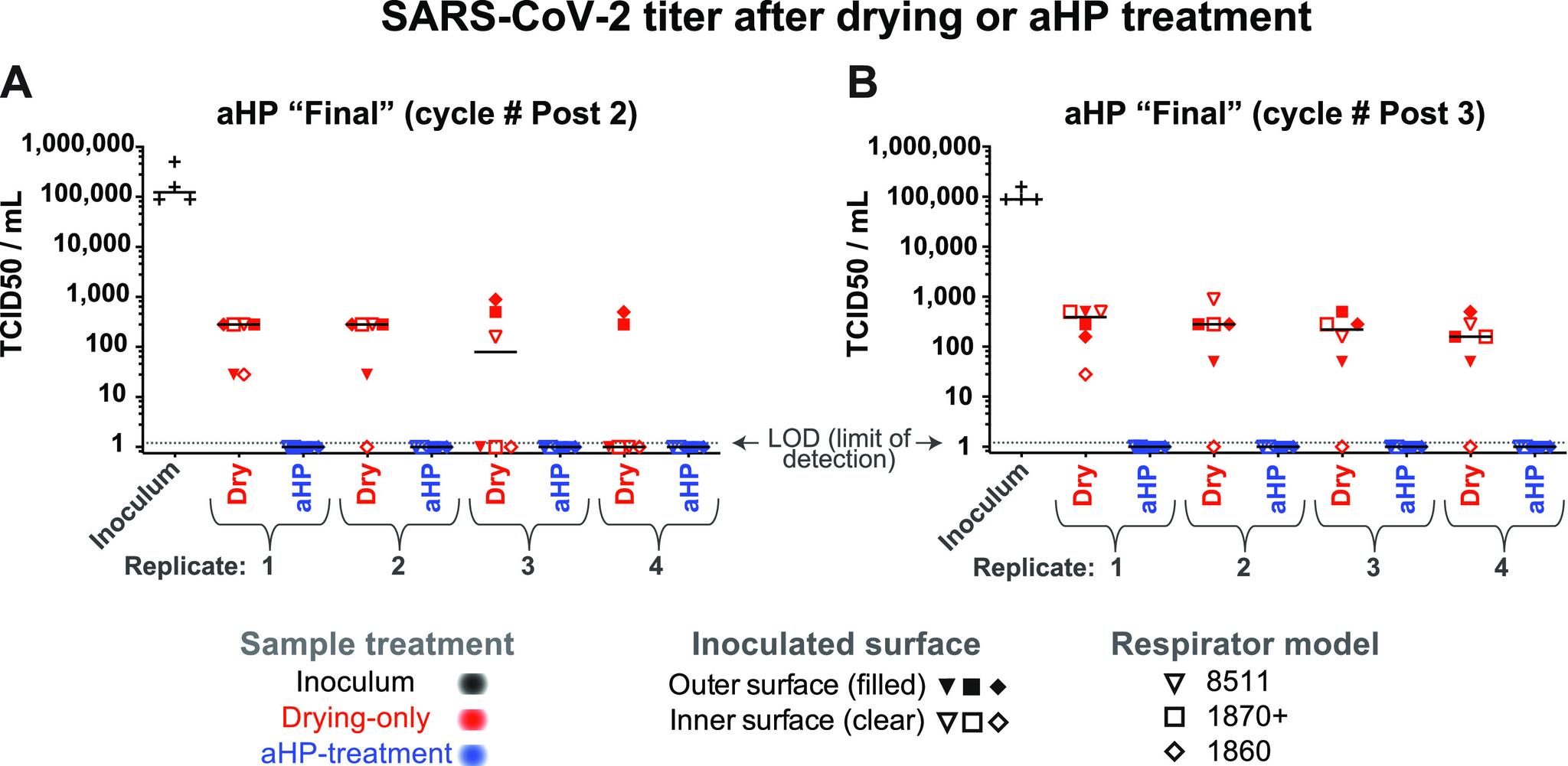
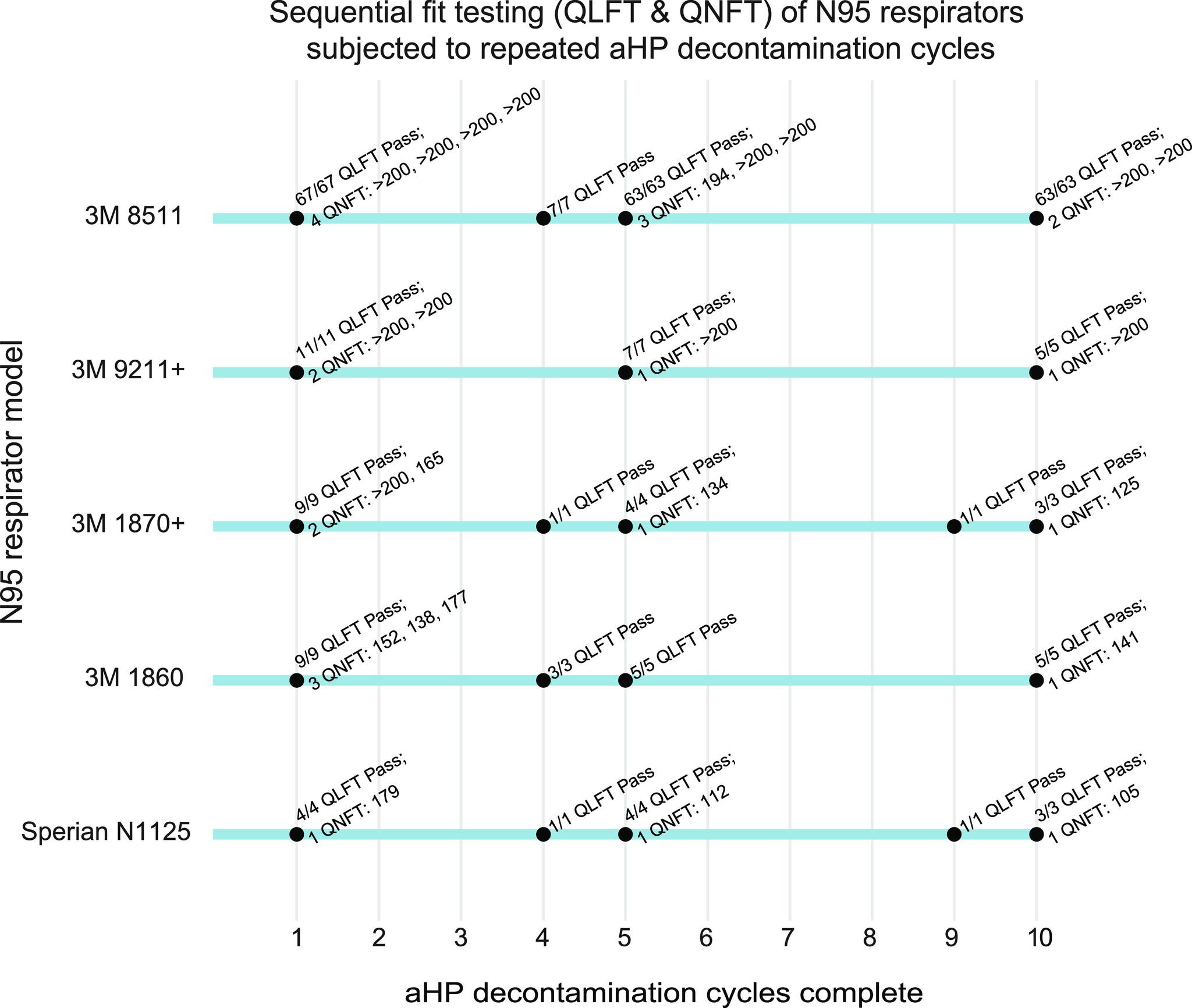
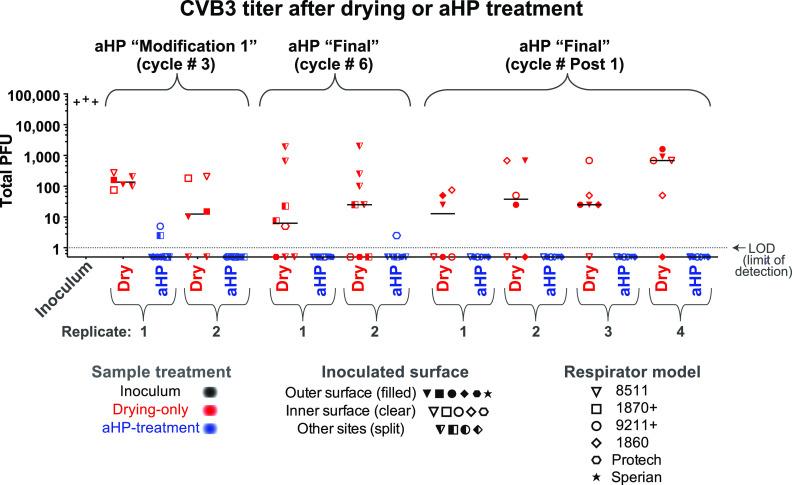
In response to the demand for N95 respirators by health care workers during the COVID-19 pandemic, we evaluated decontamination of N95 respirators using an aerosolized hydrogen peroxide (aHP) system. This system is designed to dispense a consistent atomized spray of aerosolized, 7% hydrogen peroxide (HO) solution over a treatment cycle. Multiple N95 respirator models were subjected to 10 or more cycles of respirator decontamination, with a select number periodically assessed for qualitative and quantitative fit testing. In parallel, we assessed the ability of aHP treatment to inactivate multiple viruses absorbed onto respirators, including phi6 bacteriophage, herpes simplex virus 1 (HSV-1), coxsackievirus B3 (CVB3), and severe acute respiratory syndrome coronavirus 2 (SARS-CoV-2). For pathogens transmitted via respiratory droplets and aerosols, it is critical to address respirator safety for reuse. This study provided experimental validation of an aHP treatment process that decontaminates the respirators while maintaining N95 function. External National Institute for Occupational Safety & Health (NIOSH) certification verified respirator structural integrity and filtration efficiency after 10 rounds of aHP treatment. Virus inactivation by aHP was comparable to the decontamination of commercial spore-based biological indicators. These data demonstrate that the aHP process is effective, with successful fit-testing of respirators after multiple aHP cycles, effective decontamination of multiple virus species, including SARS-CoV-2, successful decontamination of bacterial spores, and filtration efficiency maintained at or greater than 95%. While this study did not include extended or clinical use of N95 respirators between aHP cycles, these data provide proof of concept for aHP decontamination of N95 respirators before reuse in a crisis-capacity scenario. The COVID-19 pandemic led to unprecedented pressure on health care and research facilities to provide personal protective equipment. The respiratory nature of the SARS-CoV2 pathogen makes respirator facepieces a critical protective measure to limit inhalation of this virus. While respirator facepieces were designed for single use and disposal, the pandemic increased overall demand for N95 respirators, and corresponding manufacturing and supply chain limitations necessitated the safe reuse of respirators when necessary. In this study, we repurposed an aerosolized hydrogen peroxide (aHP) system that is regularly utilized to decontaminate materials in a biosafety level 3 (BSL3) facility, to develop a method for decontamination of N95 respirators. Results from viral inactivation, biological indicators, respirator fit testing, and filtration efficiency testing all indicated that the process was effective at rendering N95 respirators safe for reuse. This proof-of-concept study establishes baseline data for future testing of aHP in crisis-capacity respirator-reuse scenarios.
针对 COVID-19 大流行期间医护人员对 N95 呼吸器的需求,我们评估了使用气溶胶化过氧化氢(aHP)系统对 N95 呼吸器进行消毒的效果。该系统旨在在处理周期内分配一致的雾化喷雾,雾化 7%过氧化氢(HO)溶液。对多种 N95 呼吸器模型进行了 10 次或更多次呼吸器消毒循环,定期对其中一些模型进行定性和定量拟合测试。同时,我们评估了 aHP 处理对吸附在呼吸器上的多种病毒(包括 phi6 噬菌体、单纯疱疹病毒 1(HSV-1)、柯萨奇病毒 B3(CVB3)和严重急性呼吸综合征冠状病毒 2(SARS-CoV-2))的灭活能力。对于通过呼吸道飞沫和气溶胶传播的病原体,必须解决呼吸器的安全重复使用问题。这项研究为 aHP 处理过程提供了实验验证,该过程在保持 N95 功能的同时对呼吸器进行消毒。外部国家职业安全与健康研究所(NIOSH)认证在经过 10 轮 aHP 处理后验证了呼吸器的结构完整性和过滤效率。aHP 对病毒的灭活与商业孢子基生物指示剂的消毒效果相当。这些数据表明,aHP 工艺是有效的,经过多次 aHP 循环后,呼吸器的拟合测试成功,多种病毒(包括 SARS-CoV-2)有效消毒,细菌孢子成功消毒,过滤效率保持在 95%或更高。虽然本研究未包括在 aHP 循环之间对 N95 呼吸器进行扩展或临床使用,但这些数据为在危机容量场景中重复使用 N95 呼吸器之前,使用 aHP 对 N95 呼吸器进行消毒提供了概念验证。 COVID-19 大流行导致医疗保健和研究设施前所未有地面临提供个人防护设备的压力。SARS-CoV2 病原体的呼吸性质使得呼吸器面罩成为限制吸入这种病毒的关键保护措施。虽然呼吸器面罩专为一次性使用和处置而设计,但大流行增加了对 N95 呼吸器的总体需求,相应的制造和供应链限制需要在必要时安全重复使用呼吸器。在这项研究中,我们重新利用了一种气溶胶化过氧化氢(aHP)系统,该系统通常用于在生物安全 3 级(BSL3)设施中对材料进行消毒,以开发一种对 N95 呼吸器进行消毒的方法。病毒灭活、生物指示剂、呼吸器拟合测试和过滤效率测试的结果均表明,该过程可有效使 N95 呼吸器安全重复使用。这项概念验证研究为未来在危机容量呼吸器重复使用场景中测试 aHP 奠定了基础数据。


 Zotero 插件