
Delmarva(DMV/1639)传染性支气管炎病毒(IBV) Spike 1(S1)糖蛋白的基因分型和计算机分析。
Genotyping and In Silico Analysis of Delmarva (DMV/1639) Infectious Bronchitis Virus (IBV) Spike 1 (S1) Glycoprotein.
机构信息
Faculty of Veterinary Medicine, University of Calgary, 3330 Hospital Drive NW, Calgary, AB T2N 4N1, Canada.
Department of Pathology, Faculty of Veterinary Medicine, Beni-Suef University, Beni Suef 62511, Egypt.
出版信息
Genes (Basel). 2022 Sep 9;13(9):1617. doi: 10.3390/genes13091617.
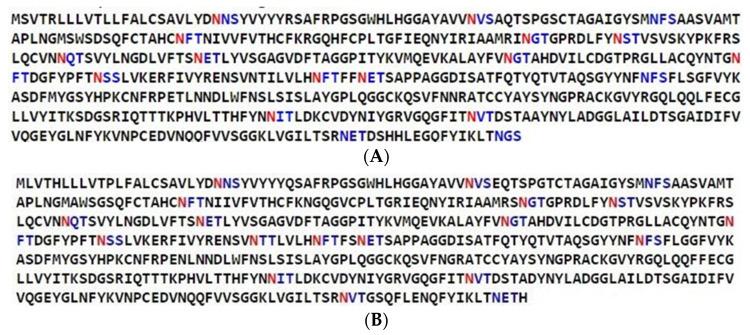
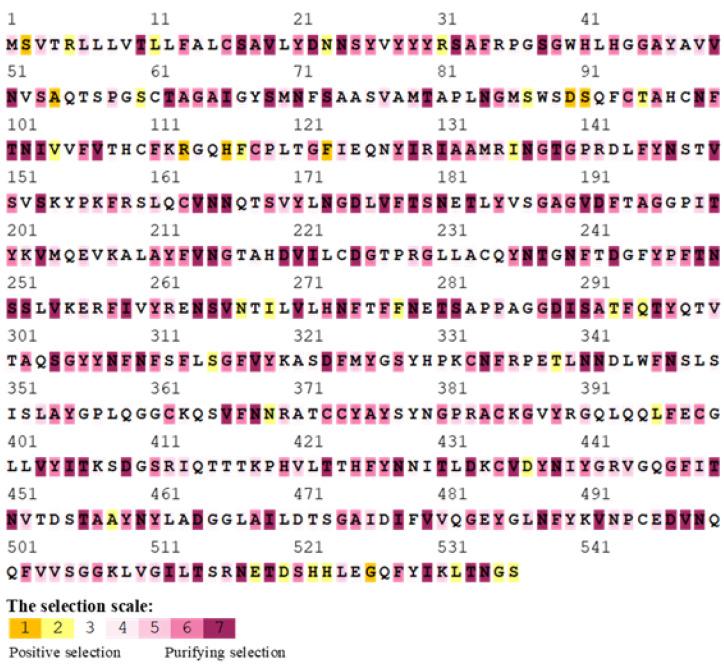
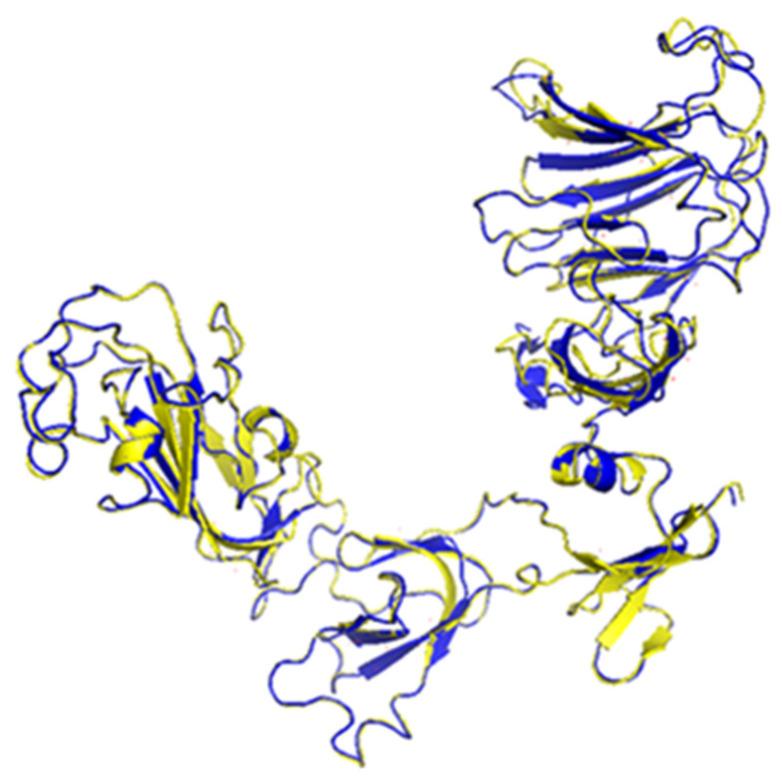
Genetic diversity and evolution of infectious bronchitis virus (IBV) are mainly impacted by mutations in the spike 1 (S1) gene. This study focused on whole genome sequencing of an IBV isolate (IBV/Ck/Can/2558004), which represents strains highly prevalent in Canadian commercial poultry, especially concerning features related to its S1 gene and protein sequences. Based on the phylogeny of the S1 gene, IBV/Ck/Can/2558004 belongs to the GI-17 lineage. According to S1 gene and protein pairwise alignment, IBV/Ck/Can/2558004 had 99.44-99.63% and 98.88-99.25% nucleotide (nt) and deduced amino acid (aa) identities, respectively, with five Canadian Delmarva (DMV/1639) IBVs isolated in 2019, and it also shared 96.63-97.69% and 94.78-97.20% nt and aa similarities with US DMV/1639 IBVs isolated in 2011 and 2019, respectively. Further homology analysis of aa sequences showed the existence of some aa substitutions in the hypervariable regions (HVRs) of the S1 protein of IBV/Ck/Can/2558004 compared to US DMV/1639 isolates; most of these variant aa residues have been subjected to positive selection pressure. Predictive analysis of potential N-glycosylation and phosphorylation motifs showed either loss or acquisition in the S1 glycoprotein of IBV/Ck/Can/2558004 compared to S1 of US DMV/1639 IBV. Furthermore, bioinformatic analysis showed some of the aa changes within the S1 protein of IBV/Ck/Can/2558004 have been predicted to impact the function and structure of the S1 protein, potentially leading to a lower binding affinity of the S1 protein to its relevant ligand (sialic acid). In conclusion, these findings revealed that the DMV/1639 IBV isolates are under continuous evolution among Canadian poultry.
传染性支气管炎病毒(IBV)的遗传多样性和进化主要受其 Spike 1(S1)基因的突变影响。本研究专注于对一株 IBV 分离株(IBV/Ck/Can/2558004)进行全基因组测序,该分离株代表了在加拿大商业家禽中高度流行的毒株,特别是与 S1 基因及其蛋白序列相关的特征。根据 S1 基因的系统发育树,IBV/Ck/Can/2558004 属于 GI-17 谱系。根据 S1 基因和蛋白的两两比对,IBV/Ck/Can/2558004 与 2019 年分离的五株加拿大 Delmarva(DMV/1639)IBV 的核苷酸(nt)和推导氨基酸(aa)同一性分别为 99.44-99.63%和 98.88-99.25%,与 2011 年和 2019 年分离的美国 DMV/1639 IBV 的 nt 和 aa 相似性分别为 96.63-97.69%和 94.78-97.20%。进一步对 aa 序列的同源性分析显示,与美国 DMV/1639 分离株相比,IBV/Ck/Can/2558004 的 S1 蛋白的高变区(HVRs)中存在一些 aa 取代;其中大多数变异 aa 残基受到正选择压力的影响。对潜在的 N-糖基化和磷酸化位点的预测分析表明,与美国 DMV/1639 IBV 的 S1 糖蛋白相比,IBV/Ck/Can/2558004 的 S1 糖蛋白发生了丢失或获得。此外,生物信息学分析表明,IBV/Ck/Can/2558004 的 S1 蛋白中的一些 aa 变化已被预测会影响 S1 蛋白的功能和结构,可能导致 S1 蛋白与其相关配体(唾液酸)的结合亲和力降低。综上所述,这些发现表明,加拿大家禽中的 DMV/1639 IBV 分离株正在不断进化。



 Zotero 插件