
商业传染性支气管炎疫苗对蛋鸡感染加拿大德尔马瓦(DMV/1639)传染性支气管炎病毒的效力
Efficacy of Commercial Infectious Bronchitis Vaccines against Canadian Delmarva (DMV/1639) Infectious Bronchitis Virus Infection in Layers.
作者信息
Hassan Mohamed S H, Buharideen Sabrina M, Ali Ahmed, Najimudeen Shahnas M, Goldsmith Dayna, Coffin Carla S, Cork Susan C, van der Meer Frank, Abdul-Careem Mohamed Faizal
机构信息
Faculty of Veterinary Medicine, University of Calgary, 3330 Hospital Drive NW, Calgary, AB T2N 4N1, Canada.
Department of Poultry Diseases, Faculty of Veterinary Medicine, Assiut University, Assiut 71515, Egypt.
出版信息
Vaccines (Basel). 2022 Jul 27;10(8):1194. doi: 10.3390/vaccines10081194.
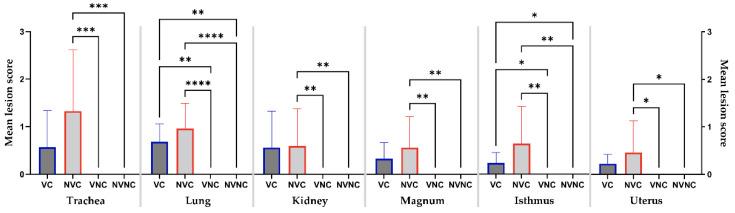
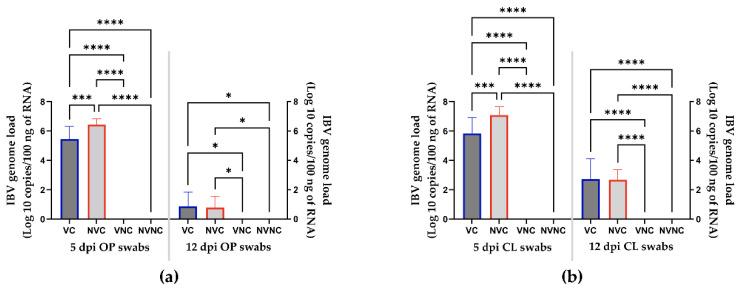
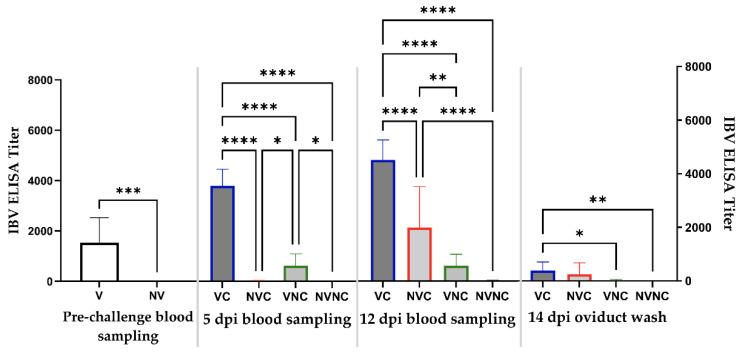
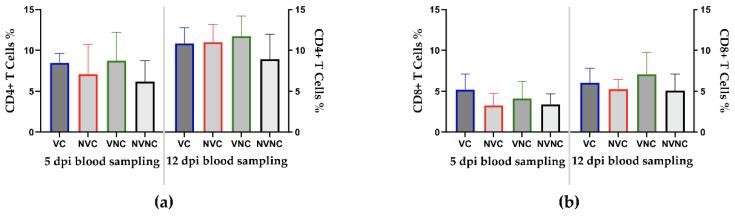
Vaccination is the most important way to control infectious bronchitis (IB) in chickens. Since the end of 2015, the Delmarva (DMV)/1639 strain of infectious bronchitis virus (IBV) has caused significant damage to the layer flocks in Eastern Canada. The efficacy of a combination of existing IB vaccines licensed in Canada was assessed against experimental challenge with this IBV strain. The layer pullets were vaccinated during the rearing phase with live attenuated IB vaccines of Massachusetts (Mass) + Connecticut (Conn) types followed by an inactivated IB vaccine of Mass + Arkansas (Ark) types and then challenged with the Canadian IBV DMV/1639 strain at 30 weeks of age. Protection was evaluated based on the egg laying performance, immune responses, viral shedding, and viral genome loads and lesions in IBV target organs. The vaccinated challenged hens were protected from the drop in egg production observed in the non-vaccinated challenged hens. Early (5 dpi) anamnestic serum antibody response was measured in the vaccinated challenged hens as well as a significant level of antibodies was detected in the oviduct washes (14 dpi). In contrast, hens in the non-vaccinated challenged group showed delayed (12 dpi) and significantly lower serum antibody response. Viral RNA loads were reduced in the respiratory, alimentary, and reproductive tissues of the vaccinated challenged hens compared to the non-vaccinated challenged hens. Compared to the control groups, the vaccinated challenged hens had less marked microscopic lesions in the trachea, kidney, magnum, and uterus. Our experimental model demonstrated inconclusive results for cell-mediated immune responses and viral shedding. Overall, the vaccination program used in this study minimized viral replication and histopathological changes in most IBV target organs and protected challenged hens against drop in egg production.
接种疫苗是控制鸡传染性支气管炎(IB)的最重要方法。自2015年底以来,传染性支气管炎病毒(IBV)的德尔马瓦(DMV)/1639毒株对加拿大东部的蛋鸡群造成了重大损害。评估了加拿大已获许可的现有IB疫苗组合对该IBV毒株实验性攻毒的效果。蛋鸡雏鸡在育雏阶段接种马萨诸塞州(Mass)+康涅狄格州(Conn)型的减毒活IB疫苗,随后接种Mass+阿肯色州(Ark)型的灭活IB疫苗,然后在30周龄时用加拿大IBV DMV/1639毒株进行攻毒。基于产蛋性能、免疫反应、病毒 shedding、病毒基因组载量以及IBV靶器官中的病变来评估保护效果。接种疫苗并受到攻毒的母鸡免受了未接种疫苗并受到攻毒的母鸡所出现的产蛋量下降的影响。在接种疫苗并受到攻毒的母鸡中检测到早期(攻毒后5天)的回忆血清抗体反应,并且在输卵管冲洗液中也检测到显著水平的抗体(攻毒后14天)。相比之下,未接种疫苗并受到攻毒组的母鸡血清抗体反应延迟(攻毒后12天)且显著较低。与未接种疫苗并受到攻毒的母鸡相比,接种疫苗并受到攻毒的母鸡的呼吸道、消化道和生殖组织中的病毒RNA载量降低。与对照组相比,接种疫苗并受到攻毒的母鸡在气管、肾脏、输卵管膨大部和子宫中的微观病变不那么明显。我们的实验模型在细胞介导的免疫反应和病毒 shedding方面显示出不确定的结果。总体而言,本研究中使用的疫苗接种方案使大多数IBV靶器官中的病毒复制和组织病理学变化降至最低,并保护受到攻毒的母鸡免受产蛋量下降的影响。



 Zotero 插件