
mRNA 疫苗接种在未感染 SARS-CoV-2 的个体和既往感染 SARS-CoV-2 的个体中引发不同的黏膜中和抗体谱。
mRNA vaccination drives differential mucosal neutralizing antibody profiles in naïve and SARS-CoV-2 previously-infected individuals.
机构信息
Wellcome Centre for Human Genetics, University of Oxford, Oxford, United Kingdom.
Pandemic Sciences Institute, University of Oxford, Oxford, United Kingdom.
出版信息
Front Immunol. 2022 Sep 8;13:953949. doi: 10.3389/fimmu.2022.953949. eCollection 2022.
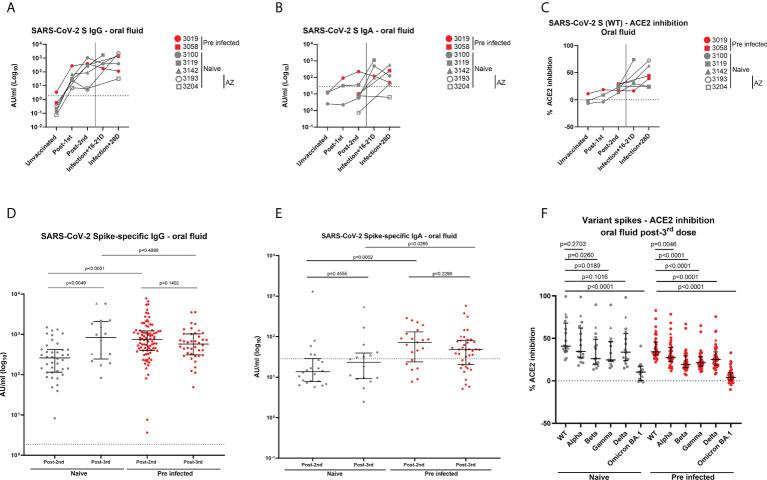
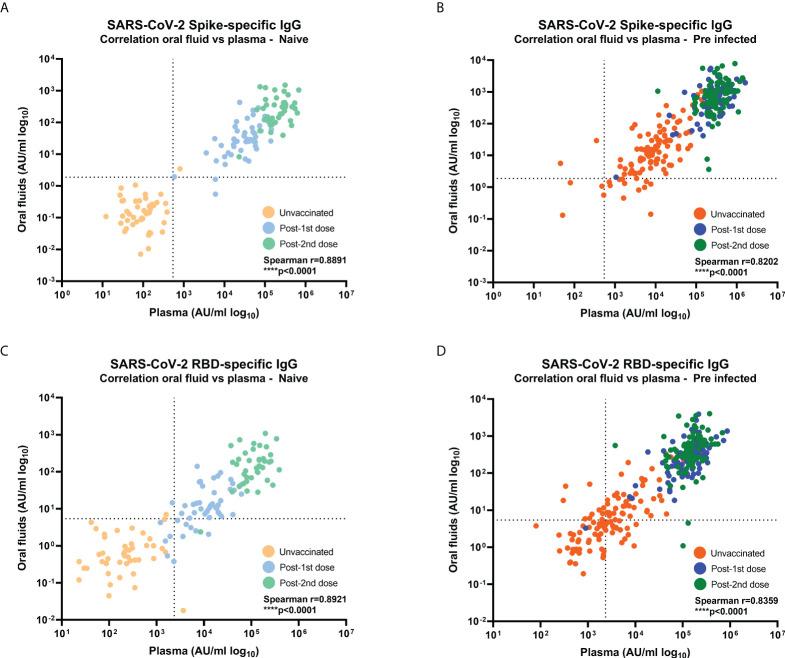
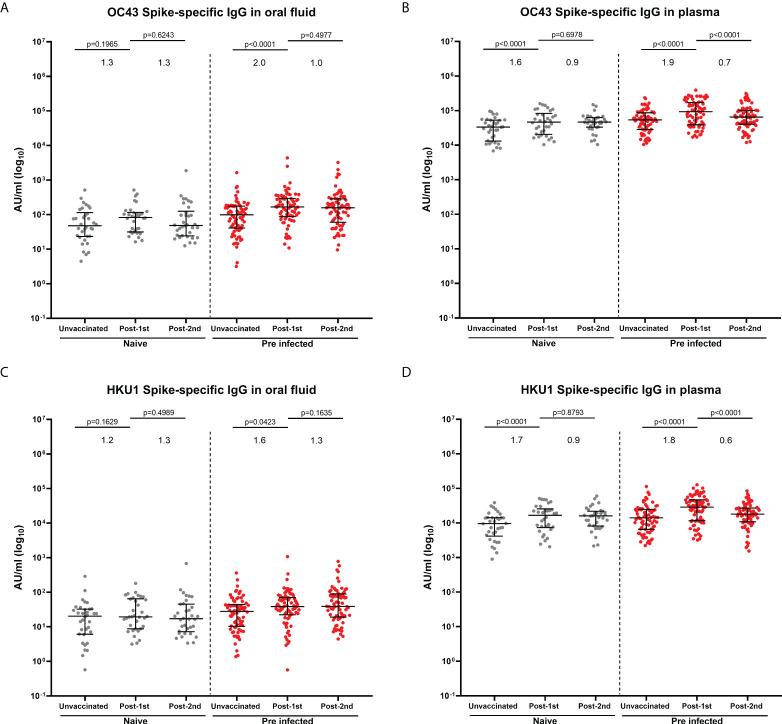
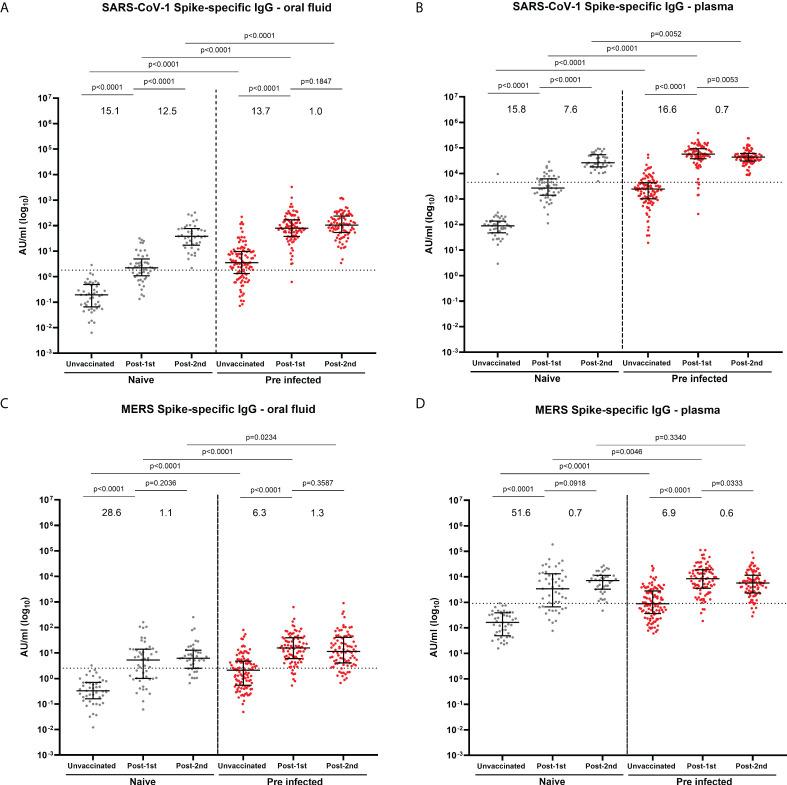
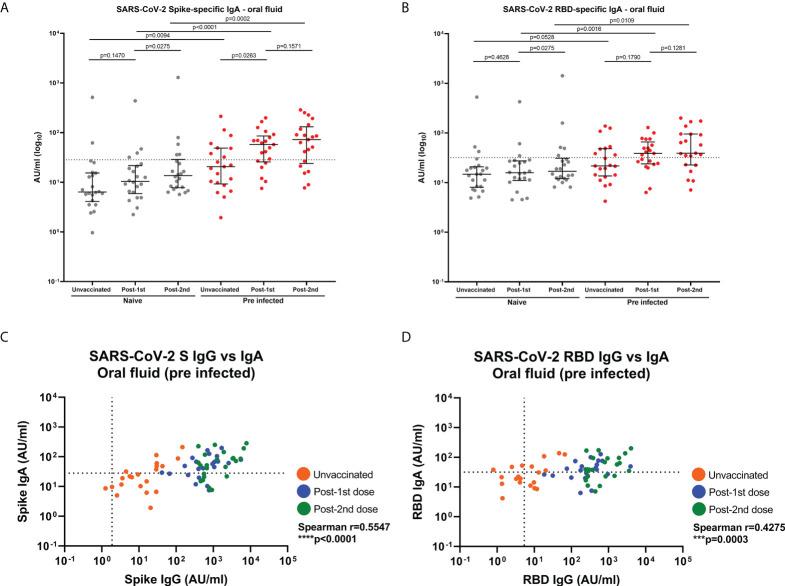
Two doses of BNT162b2 mRNA vaccine induces a strong systemic SARS-CoV-2 specific humoral response. However, SARS-CoV-2 airborne transmission makes mucosal immune response a crucial first line of defense. Therefore, we characterized SARS-CoV-2-specific IgG responses induced by BNT162b2 vaccine, as well as IgG responses to other pathogenic and seasonal human coronaviruses in oral fluid and plasma from 200 UK healthcare workers who were naïve (N=62) or previously infected with SARS-CoV-2 (N=138) using a pan-coronavirus multiplex binding immunoassay (Meso Scale Discovery). Additionally, we investigated the impact of historical SARS-CoV-2 infection on vaccine-induced IgG, IgA and neutralizing responses in selected oral fluid samples before vaccination, after a first and second dose of BNT162b2, as well as following a third dose of mRNA vaccine or breakthrough infections using the same immunoassay and an ACE2 inhibition assay. Prior to vaccination, we found that spike-specific IgG levels in oral fluid positively correlated with IgG levels in plasma from previously-infected individuals (Spearman r=0.6858, p<0.0001) demonstrating that oral fluid could be used as a proxy for the presence of plasma SARS-CoV-2 IgG. However, the sensitivity was lower in oral fluid (0.85, 95% CI 0.77-0.91) than in plasma (0.94, 95% CI 0.88-0.97). Similar kinetics of mucosal and systemic spike-specific IgG levels were observed following vaccination in naïve and previously-infected individuals, respectively. In addition, a significant enhancement of OC43 and HKU1 spike-specific IgG levels was observed in previously-infected individuals following one vaccine dose in oral fluid (OC43 S: p<0.0001; HKU1 S: p=0.0423) suggesting cross-reactive IgG responses to seasonal beta coronaviruses. Mucosal spike-specific IgA responses were induced by mRNA vaccination particularly in previously-infected individuals (71%) but less frequently in naïve participants (23%). Neutralizing responses to SARS-CoV-2 ancestral and variants of concerns were detected following vaccination in naïve and previously-infected participants, with likely contribution from both IgG and IgA in previously-infected individuals (correlations between neutralizing responses and IgG: Spearman r=0.5642, p<0.0001; IgA: Spearman r=0.4545, p=0.0001). We also observed that breakthrough infections or a third vaccine dose enhanced mucosal antibody levels and neutralizing responses. These data contribute to show that a previous SARS-CoV-2 infection tailors the mucosal antibody profile induced by vaccination.
两剂 BNT162b2 mRNA 疫苗可诱导强烈的全身性 SARS-CoV-2 特异性体液免疫应答。然而,SARS-CoV-2 通过空气传播,使得黏膜免疫应答成为第一道重要防线。因此,我们使用 Meso Scale Discovery 公司的多病原体冠状病毒结合免疫分析,对 200 名英国医护人员的口腔液和血浆中的 BNT162b2 疫苗诱导的 SARS-CoV-2 特异性 IgG 应答,以及对其他致病性和季节性人类冠状病毒的 IgG 应答进行了特征描述。这些医护人员中,无 SARS-CoV-2 感染史的为 62 人(naïve),有 SARS-CoV-2 感染史的为 138 人。此外,我们还在接种疫苗前、接种第一剂和第二剂 BNT162b2 疫苗后,以及接种第三剂 mRNA 疫苗或突破性感染后,使用相同的免疫分析和 ACE2 抑制测定法,研究了既往 SARS-CoV-2 感染对选定口腔液样本中疫苗诱导的 IgG、IgA 和中和应答的影响。在接种疫苗之前,我们发现口腔液中刺突蛋白特异性 IgG 水平与既往感染个体血浆中的 IgG 水平呈正相关(Spearman r=0.6858,p<0.0001),这表明口腔液可作为 SARS-CoV-2 血浆 IgG 存在的替代物。然而,口腔液的敏感性(0.85,95%CI 0.77-0.91)低于血浆(0.94,95%CI 0.88-0.97)。在无感染史和有感染史的个体中,分别在接种疫苗后观察到黏膜和系统刺突蛋白特异性 IgG 水平的相似动力学。此外,在接种一剂疫苗后,既往感染个体的 OC43 和 HKU1 刺突蛋白特异性 IgG 水平在口腔液中显著升高(OC43 S:p<0.0001;HKU1 S:p=0.0423),表明对季节性β冠状病毒存在交叉反应性 IgG 应答。mRNA 疫苗接种可诱导黏膜刺突蛋白特异性 IgA 应答,尤其是在既往感染个体中(71%),但在无感染史个体中较少见(23%)。在无感染史和既往感染个体中,接种疫苗后可检测到针对 SARS-CoV-2 祖先和关注变体的中和应答,既往感染个体的中和应答可能来自 IgG 和 IgA(与中和应答的 IgG:Spearman r=0.5642,p<0.0001;IgA:Spearman r=0.4545,p=0.0001)。我们还观察到突破性感染或第三剂疫苗可增强黏膜抗体水平和中和应答。这些数据有助于表明,先前的 SARS-CoV-2 感染会改变疫苗接种诱导的黏膜抗体谱。


 Zotero 插件