
肠道微生物组、认知功能和大脑结构:多组学整合分析。
Gut microbiome, cognitive function and brain structure: a multi-omics integration analysis.
机构信息
College of Life Sciences, Zhejiang University, Hangzhou, 310058, China.
School of Life Sciences, Westlake University, 18 Shilongshan Rd, Cloud Town, Hangzhou, 310024, China.
出版信息
Transl Neurodegener. 2022 Nov 14;11(1):49. doi: 10.1186/s40035-022-00323-z.
BACKGROUND
Microbiome-gut-brain axis may be involved in the progression of age-related cognitive impairment and relevant brain structure changes, but evidence from large human cohorts is lacking. This study was aimed to investigate the associations of gut microbiome with cognitive impairment and brain structure based on multi-omics from three independent populations.
METHODS
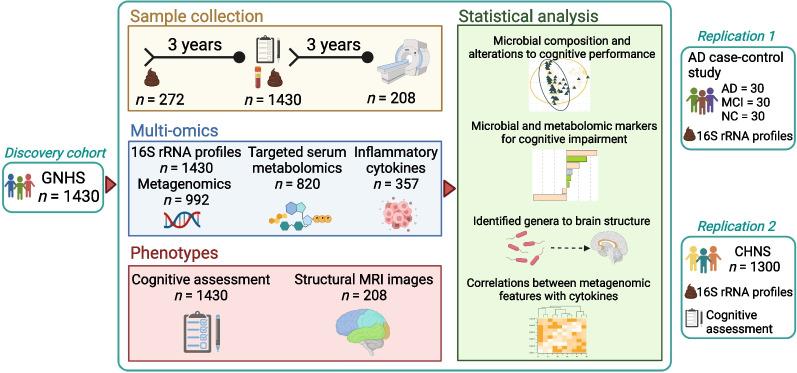
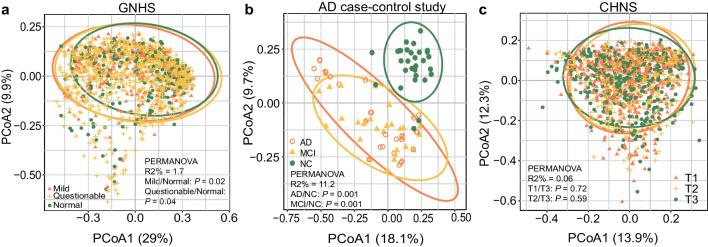
We included 1430 participants from the Guangzhou Nutrition and Health Study (GNHS) with both gut microbiome and cognitive assessment data available as a discovery cohort, of whom 272 individuals provided fecal samples twice before cognitive assessment. We selected 208 individuals with baseline microbiome data for brain magnetic resonance imaging during the follow-up visit. Fecal 16S rRNA and shotgun metagenomic sequencing, targeted serum metabolomics, and cytokine measurements were performed in the GNHS. The validation analyses were conducted in an Alzheimer's disease case-control study (replication study 1, n = 90) and another community-based cohort (replication study 2, n = 1300) with cross-sectional dataset.
RESULTS
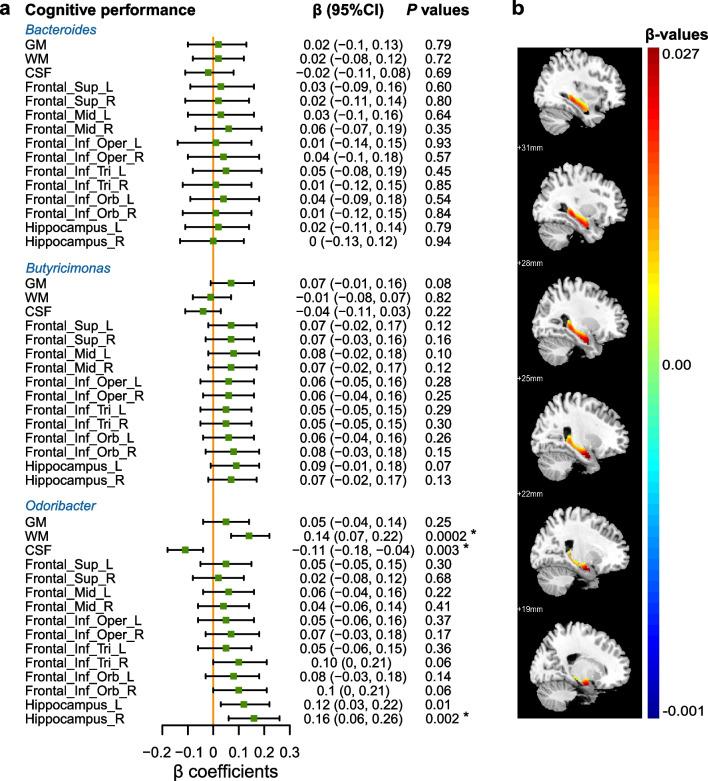
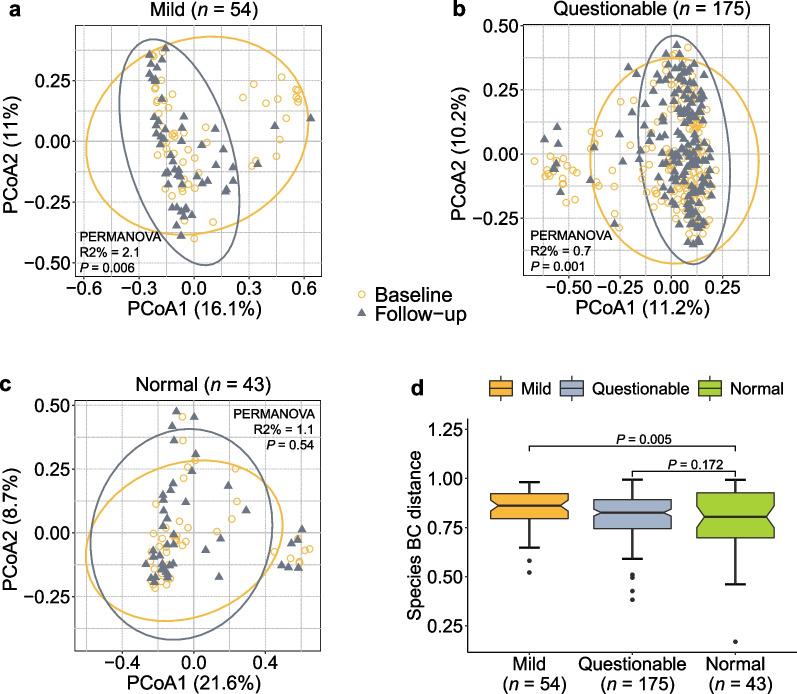
We found protective associations of specific gut microbial genera (Odoribacter, Butyricimonas, and Bacteroides) with cognitive impairment in both the discovery cohort and the replication study 1. Result of Bacteroides was further validated in the replication study 2. Odoribacter was positively associated with hippocampal volume (β, 0.16; 95% CI 0.06-0.26, P = 0.002), which might be mediated by acetic acids. Increased intra-individual alterations in gut microbial composition were found in participants with cognitive impairment. We also identified several serum metabolites and inflammation-associated metagenomic species and pathways linked to impaired cognition.
CONCLUSIONS
Our findings reveal that specific gut microbial features are closely associated with cognitive impairment and decreased hippocampal volume, which may play an important role in dementia development.
背景
肠道微生物群-肠-脑轴可能与年龄相关的认知障碍的进展及相关的大脑结构变化有关,但缺乏来自大型人类队列的证据。本研究旨在基于三个独立人群的多组学数据,探讨肠道微生物群与认知障碍和大脑结构的关系。
方法
我们纳入了广州营养与健康研究(GNHS)中的 1430 名参与者,这些参与者均具有肠道微生物群和认知评估数据,作为发现队列,其中 272 人在认知评估前两次提供了粪便样本。我们选择了 208 名具有基线微生物组数据的个体,在随访期间进行了大脑磁共振成像。在 GNHS 中进行了粪便 16S rRNA 和 shotgun 宏基因组测序、靶向血清代谢组学和细胞因子测量。验证分析在阿尔茨海默病病例对照研究(复制研究 1,n=90)和另一个基于社区的队列(复制研究 2,n=1300)中进行,这些队列均具有横断面数据集。
结果
我们发现特定肠道微生物属(Odoribacter、Butyricimonas 和 Bacteroides)与发现队列和复制研究 1 中的认知障碍呈保护性关联。Bacteroides 的结果在复制研究 2 中得到了进一步验证。Odoribacter 与海马体积呈正相关(β,0.16;95%CI 0.06-0.26,P=0.002),这可能是通过乙酸介导的。在认知障碍患者中,发现个体肠道微生物组成的个体内变化增加。我们还确定了几种与认知障碍相关的血清代谢物和炎症相关的宏基因组物种和途径。
结论
我们的研究结果表明,特定的肠道微生物特征与认知障碍和海马体积减少密切相关,这可能在痴呆症的发展中发挥重要作用。


 Zotero 插件