
流行和散发性耐甲氧西林金黄色葡萄球菌(MRSA)在人体模拟皮肤上的存活取决于宿主和细菌因素。
The survival of epidemic and sporadic MRSA on human skin mimics is determined by both host and bacterial factors.
机构信息
Department of Medical Microbiology and Infectious Diseases, Erasmus MC University Medical Center Rotterdam, Rotterdam, the Netherlands.
Department of Infectious Diseases, Leiden University Medical Center, Leiden, The Netherlands.
出版信息
Epidemiol Infect. 2022 Nov 16;150:e203. doi: 10.1017/S0950268822001765.
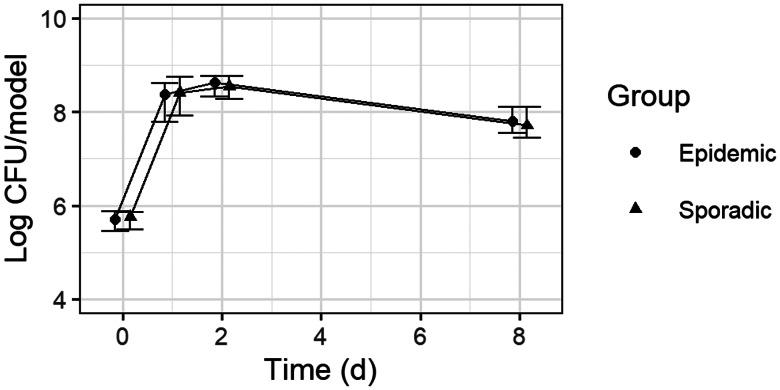
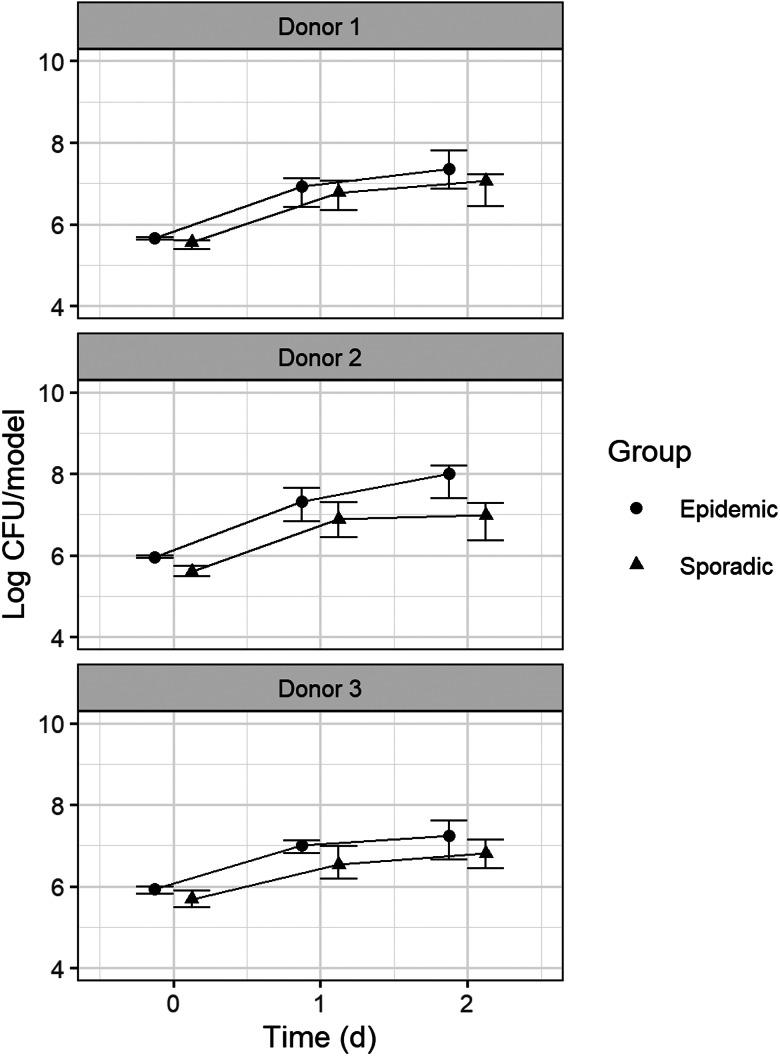
Bacterial survival on, and interactions with, human skin may explain the epidemiological success of MRSA strains. We evaluated the bacterial counts for 27 epidemic and 31 sporadic MRSA strains on 3D epidermal models based on N/TERT cells (NEMs) after 1, 2 and 8 days. In addition, the expression of antimicrobial peptides (hBD-2, RNase 7), inflammatory cytokines (IL-1, IL-6) and chemokine IL-8 by NEMs was assessed using immunoassays and the expression of 43 virulence factors was determined by a multiplex competitive Luminex assay. To explore donor variation, bacterial counts for five epidemic and seven sporadic MRSA strains were determined on 3D primary keratinocyte models (LEMs) from three human donors. Bacterial survival was comparable on NEMs between the two groups, but on LEMs, sporadic strains showed significantly lower survival numbers compared to epidemic strains. Both groups triggered the expression of immune factors. Upon interaction with NEMs, only the epidemic MRSA strains expressed pore-forming toxins, including alpha-hemolysin (Hla), gamma-hemolysin (HlgB), Panton-Valentine leucocidin (LukS) and LukED. Together, these data indicate that the outcome of the interaction between MRSA and human skin mimics, depends on the unique combination of bacterial strain and host factors.
细菌在人体皮肤上的存活和相互作用可能解释了 MRSA 菌株在流行病学上的成功。我们评估了 27 株流行株和 31 株散发病例 MRSA 菌株在基于 N/TERT 细胞(NEM)的 3D 表皮模型上 1、2 和 8 天后的细菌计数。此外,通过免疫测定评估了 NEMs 中抗菌肽(hBD-2、RNase 7)、炎症细胞因子(IL-1、IL-6)和趋化因子 IL-8 的表达,并通过多重竞争 Luminex 测定确定了 43 种毒力因子的表达。为了探索供体差异,我们在来自 3 个人供体的 3D 原代角质形成细胞模型(LEMs)上确定了 5 株流行株和 7 株散发病例 MRSA 菌株的细菌计数。两组之间 NEM 上的细菌存活情况相当,但在 LEM 上,散发病例菌株的存活数量明显低于流行株。两组都触发了免疫因子的表达。与 NEM 相互作用时,只有流行株 MRSA 菌株表达了孔形成毒素,包括 alpha-hemolysin (Hla)、gamma-hemolysin (HlgB)、Panton-Valentine leukocidin (LukS) 和 LukED。总之,这些数据表明,MRSA 与人体皮肤相互作用的结果取决于细菌菌株和宿主因素的独特组合。


 Zotero 插件