
皮肤和软组织感染的临床影响
Clinical Impact of Skin and Soft Tissue Infections.
作者信息
Linz Matthew S, Mattappallil Arun, Finkel Diana, Parker Dane
机构信息
Department of Pathology, Immunology and Laboratory Medicine, Center for Immunity and Inflammation, Rutgers New Jersey Medical School, Newark, NJ 07103, USA.
Department of Pharmaceutical Services, University Hospital, Newark, NJ 07103, USA.
出版信息
Antibiotics (Basel). 2023 Mar 11;12(3):557. doi: 10.3390/antibiotics12030557.
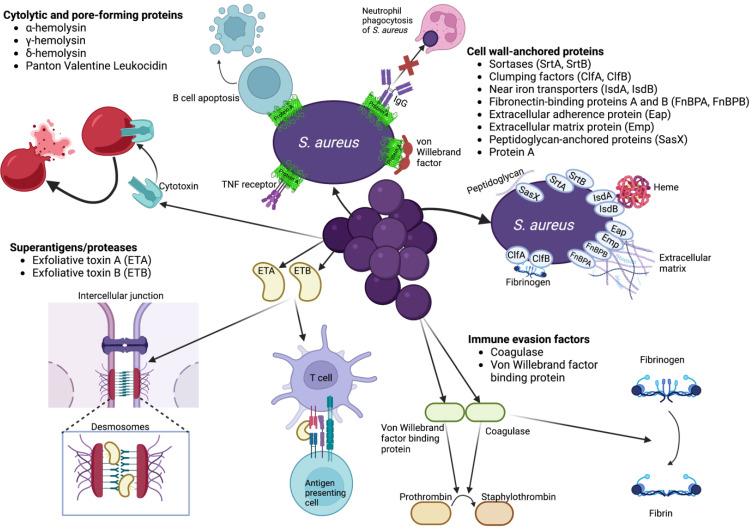
The pathogenic bacterium is the most common pathogen isolated in skin-and-soft-tissue infections (SSTIs) in the United States. Most SSTIs are caused by the epidemic clone USA300 in the USA. These infections can be serious; in 2019, SSTIs with were associated with an all-cause, age-standardized mortality rate of 0.5 globally. Clinical presentations of SSTIs vary from superficial infections with local symptoms to monomicrobial necrotizing fasciitis, which can cause systemic manifestations and may lead to serious complications or death. In order to cause skin infections, employs a host of virulence factors including cytolytic proteins, superantigenic factors, cell wall-anchored proteins, and molecules used for immune evasion. The immune response to SSTIs involves initial responders such as keratinocytes and neutrophils, which are supported by dendritic cells and T-lymphocytes later during infection. Treatment for SSTIs is usually oral therapy, with parenteral therapy reserved for severe presentations; it ranges from cephalosporins and penicillin agents such as oxacillin, which is generally used for methicillin-sensitive (MSSA), to vancomycin for methicillin-resistant (MRSA). Treatment challenges include adverse effects, risk for infection, and potential for antibiotic resistance.
该病原菌是美国皮肤和软组织感染(SSTIs)中最常见的分离病原体。在美国,大多数SSTIs由流行克隆USA300引起。这些感染可能很严重;2019年,全球范围内由该病原菌引起的SSTIs的全因年龄标准化死亡率为0.5。SSTIs的临床表现从伴有局部症状的浅表感染到单微生物坏死性筋膜炎不等,后者可引起全身表现,并可能导致严重并发症或死亡。为了引发皮肤感染,该病原菌利用了一系列毒力因子,包括溶细胞蛋白、超抗原因子、细胞壁锚定蛋白以及用于免疫逃避的分子。对SSTIs的免疫反应涉及初始应答者,如角质形成细胞和中性粒细胞,在感染后期,树突状细胞和T淋巴细胞会提供支持。SSTIs的治疗通常采用口服疗法,严重病例则采用肠外疗法;治疗药物范围从头孢菌素和青霉素类药物(如通常用于对甲氧西林敏感的该病原菌(MSSA)的苯唑西林)到用于耐甲氧西林的该病原菌(MRSA)的万古霉素。治疗挑战包括不良反应、感染风险以及抗生素耐药性的可能性。
 Zotero 插件