
利用自然杀伤细胞固有免疫对抗血液系统恶性肿瘤:从干细胞移植到过继转移及其他。
Leveraging Natural Killer Cell Innate Immunity against Hematologic Malignancies: From Stem Cell Transplant to Adoptive Transfer and Beyond.
机构信息
Division of Hematologic Malignancies & Cellular Therapy, Duke University, Durham, NC 27710, USA.
出版信息
Int J Mol Sci. 2022 Dec 22;24(1):204. doi: 10.3390/ijms24010204.
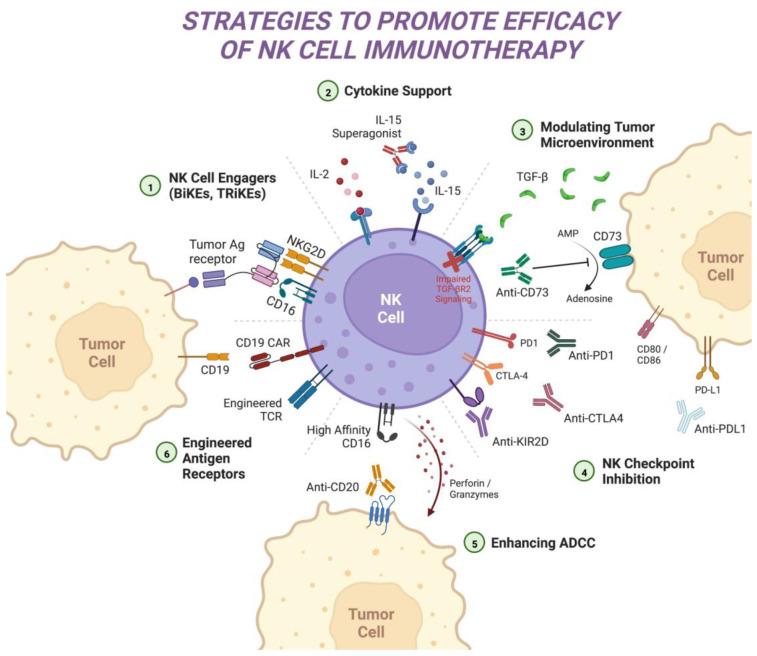
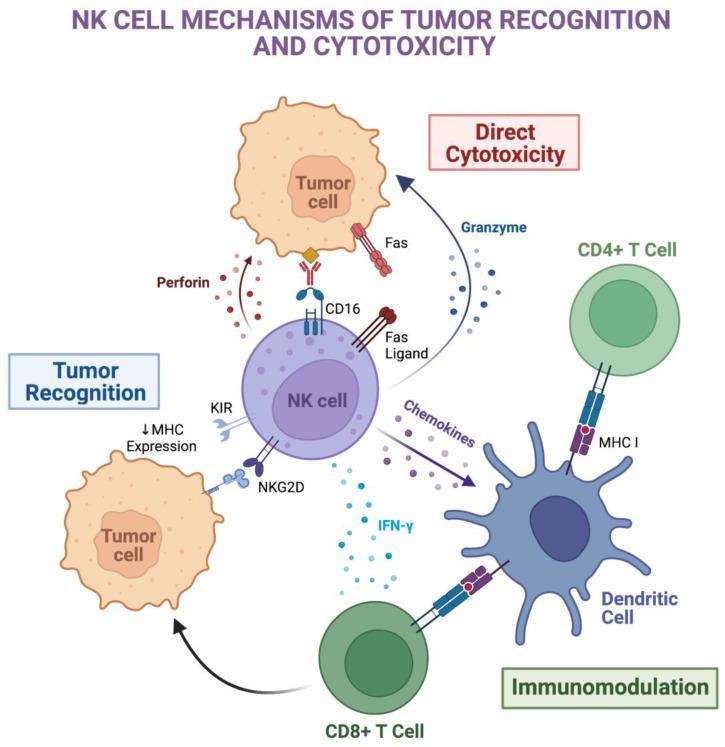
Numerous recent advancements in T-cell based immunotherapies have revolutionized the treatment of hematologic malignancies. In the race towards the first approved allogeneic cellular therapy product, there is growing interest in utilizing natural killer (NK) cells as a platform for off-the-shelf cellular therapies due to their scalable manufacturing potential, potent anti-tumor efficacy, and superior safety profile. Allogeneic NK cell therapies are now being actively explored in the setting of hematopoietic stem cell transplantation and adoptive transfer. Increasingly sophisticated gene editing techniques have permitted the engineering of chimeric antigen receptors, ectopic cytokine expression, and tumor recognition signals to improve the overall cytotoxicity of NK cell therapies. Furthermore, the enhancement of antibody-dependent cellular cytotoxicity has been achieved through the use of NK cell engagers and combination regimens with monoclonal antibodies that act synergistically with CD16-expressing NK cells. Finally, a greater understanding of NK cell biology and the mechanisms of resistance have allowed the preclinical development of NK checkpoint blockade and methods to modulate the tumor microenvironment, which have been evaluated in early phase trials. This review will discuss the recent clinical advancements in NK cell therapies in hematologic malignancies as well as promising avenues of future research.
近年来,T 细胞免疫疗法的诸多进展彻底改变了血液系统恶性肿瘤的治疗模式。在竞相研发首个获得批准的同种异体细胞治疗产品之际,由于自然杀伤 (NK) 细胞具有可扩展性的制造潜力、强大的抗肿瘤疗效和优越的安全性,人们对其作为现成细胞治疗平台的兴趣日益浓厚。同种异体 NK 细胞疗法目前正在造血干细胞移植和过继转移的背景下得到积极探索。日益复杂的基因编辑技术允许对嵌合抗原受体、异位细胞因子表达和肿瘤识别信号进行工程改造,以提高 NK 细胞疗法的整体细胞毒性。此外,通过使用 NK 细胞结合物和与表达 CD16 的 NK 细胞协同作用的单克隆抗体的联合方案,实现了抗体依赖性细胞毒性的增强。最后,对 NK 细胞生物学和耐药机制的更深入了解使得 NK 检查点阻断的临床前开发和调节肿瘤微环境的方法成为可能,这些方法已在早期临床试验中得到评估。本文将讨论血液系统恶性肿瘤中 NK 细胞疗法的最新临床进展以及未来有前景的研究方向。
 Zotero 插件