
放射组学中的共线性和降维:肥厚型心肌病磁共振T1和T2映射中预处理参数的影响
Collinearity and Dimensionality Reduction in Radiomics: Effect of Preprocessing Parameters in Hypertrophic Cardiomyopathy Magnetic Resonance T1 and T2 Mapping.
作者信息
Marzi Chiara, Marfisi Daniela, Barucci Andrea, Del Meglio Jacopo, Lilli Alessio, Vignali Claudio, Mascalchi Mario, Casolo Giancarlo, Diciotti Stefano, Traino Antonio Claudio, Tessa Carlo, Giannelli Marco
机构信息
Institute of Applied Physics "Nello Carrara" (IFAC), Council of National Research (CNR), Sesto Fiorentino, 50019 Florence, Italy.
Unit of Medical Physics, Pisa University Hospital "Azienda Ospedaliero-Universitaria Pisana", Via Roma 67, 56126 Pisa, Italy.
出版信息
Bioengineering (Basel). 2023 Jan 6;10(1):80. doi: 10.3390/bioengineering10010080.
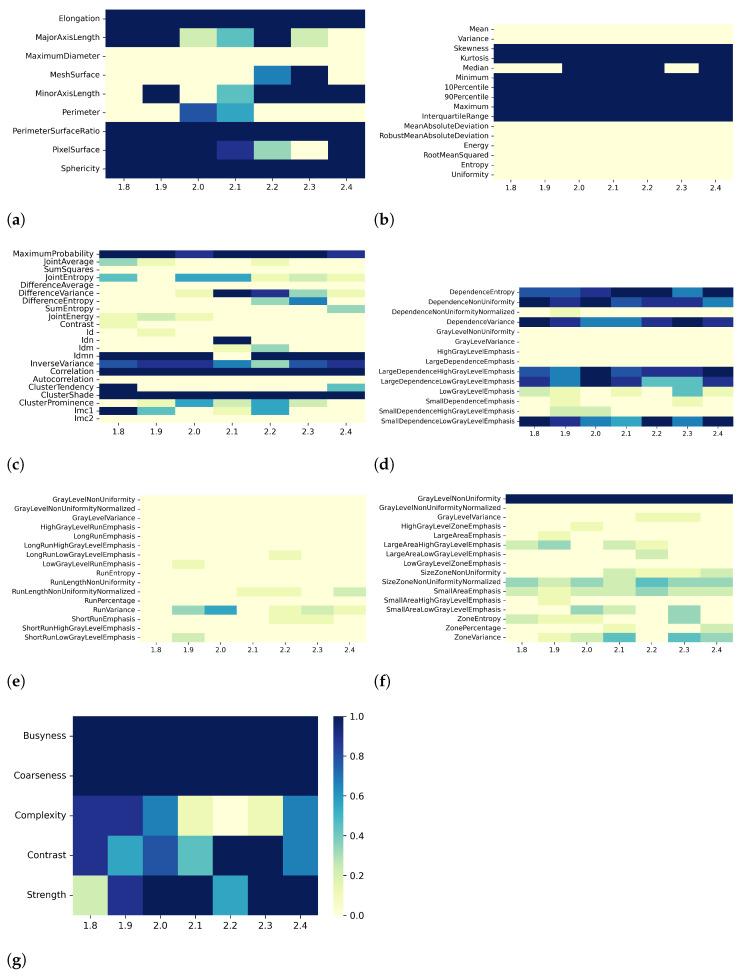
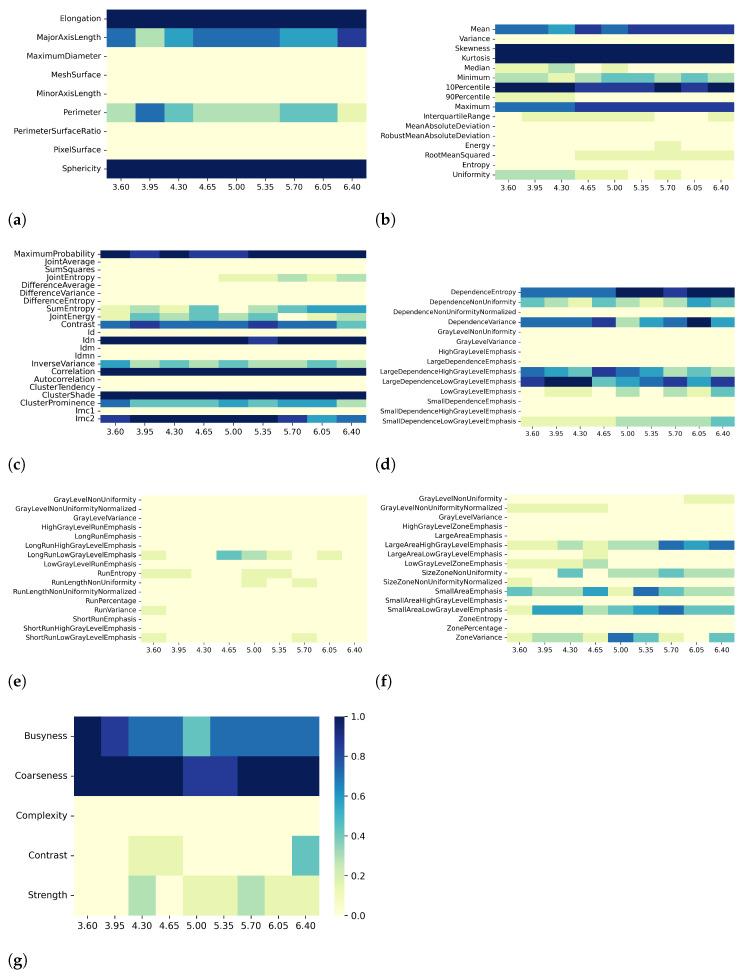
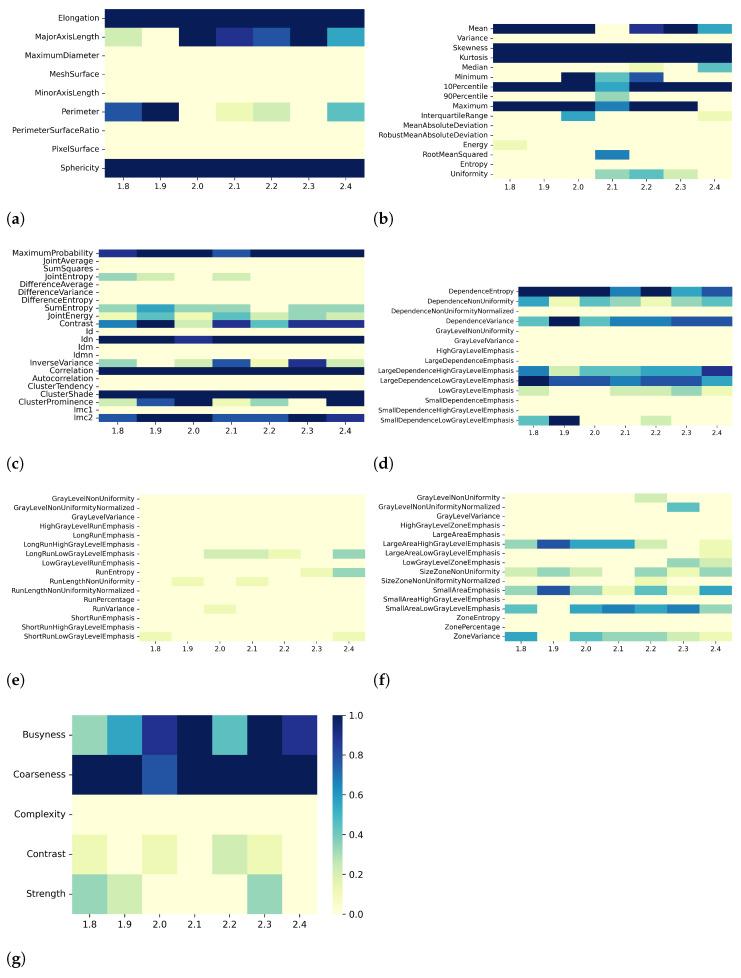
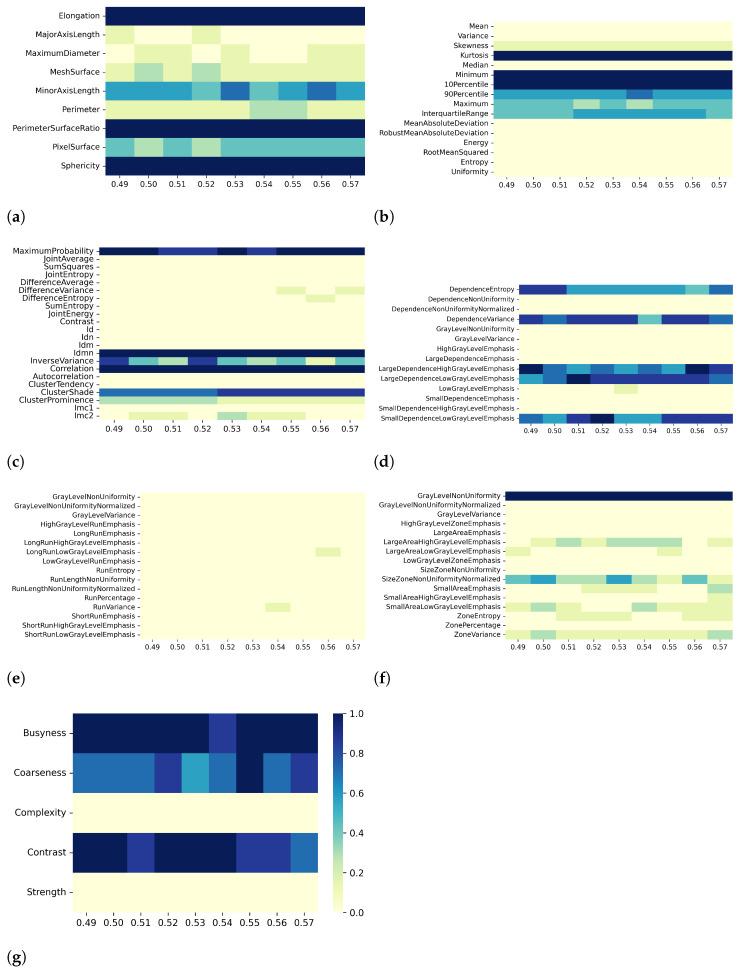
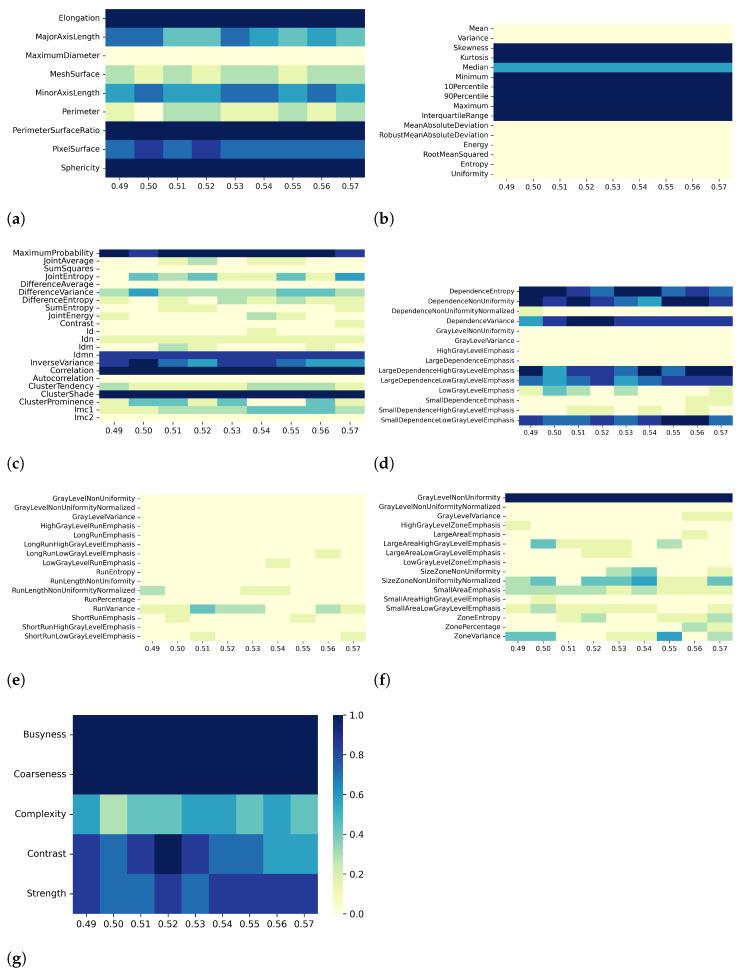
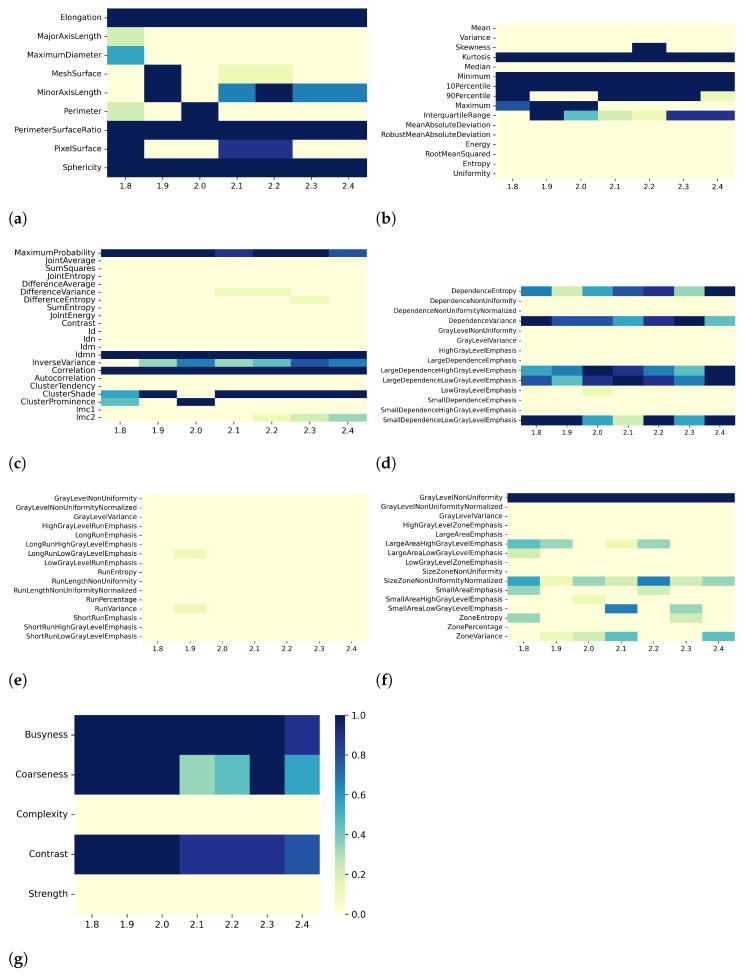
Radiomics and artificial intelligence have the potential to become a valuable tool in clinical applications. Frequently, radiomic analyses through machine learning methods present issues caused by high dimensionality and multicollinearity, and redundant radiomic features are usually removed based on correlation analysis. We assessed the effect of preprocessing-in terms of voxel size resampling, discretization, and filtering-on correlation-based dimensionality reduction in radiomic features from cardiac T1 and T2 maps of patients with hypertrophic cardiomyopathy. For different combinations of preprocessing parameters, we performed a dimensionality reduction of radiomic features based on either Pearson's or Spearman's correlation coefficient, followed by the computation of the stability index. With varying resampling voxel size and discretization bin width, for both T1 and T2 maps, Pearson's and Spearman's dimensionality reduction produced a slightly different percentage of remaining radiomic features, with a relatively high stability index. For different filters, the remaining features' stability was instead relatively low. Overall, the percentage of eliminated radiomic features through correlation-based dimensionality reduction was more dependent on resampling voxel size and discretization bin width for textural features than for shape or first-order features. Notably, correlation-based dimensionality reduction was less sensitive to preprocessing when considering radiomic features from T2 compared with T1 maps.
放射组学和人工智能有潜力成为临床应用中的一项宝贵工具。通常,通过机器学习方法进行的放射组学分析会出现由高维度和多重共线性导致的问题,冗余的放射组学特征通常会基于相关性分析被去除。我们评估了预处理(体素大小重采样、离散化和滤波)对肥厚型心肌病患者心脏T1和T2图谱放射组学特征中基于相关性的降维效果。对于预处理参数的不同组合,我们基于皮尔逊或斯皮尔曼相关系数对放射组学特征进行降维,随后计算稳定性指数。随着重采样体素大小和离散化箱宽度的变化,对于T1和T2图谱,基于皮尔逊和斯皮尔曼的降维产生的剩余放射组学特征百分比略有不同,稳定性指数相对较高。对于不同的滤波器,剩余特征的稳定性则相对较低。总体而言,通过基于相关性的降维消除的放射组学特征百分比,对于纹理特征而言,比对形状或一阶特征更依赖于重采样体素大小和离散化箱宽度。值得注意的是,与T1图谱相比,在考虑来自T2的放射组学特征时,基于相关性的降维对预处理不太敏感。



 Zotero 插件