
Erk1/2 依赖性头颈部鳞状细胞癌细胞对 Erastin 诱导的铁死亡敏感性。
Erk1/2-Dependent HNSCC Cell Susceptibility to Erastin-Induced Ferroptosis.
机构信息
Laboratory for Experimental and Translational Research on Radiation Oncology (EXTRO-Lab), Department of Therapeutic Radiology and Oncology, Medical University of Innsbruck, A-6020 Innsbruck, Austria.
Tyrolean Cancer Research Institute (TKFI), A-6020 Innsbruck, Austria.
出版信息
Cells. 2023 Jan 16;12(2):336. doi: 10.3390/cells12020336.
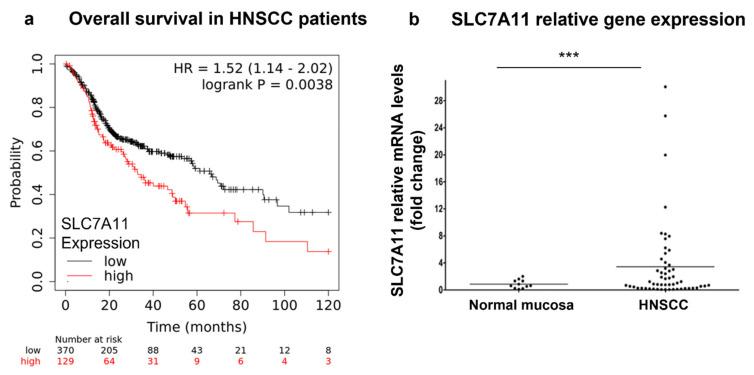
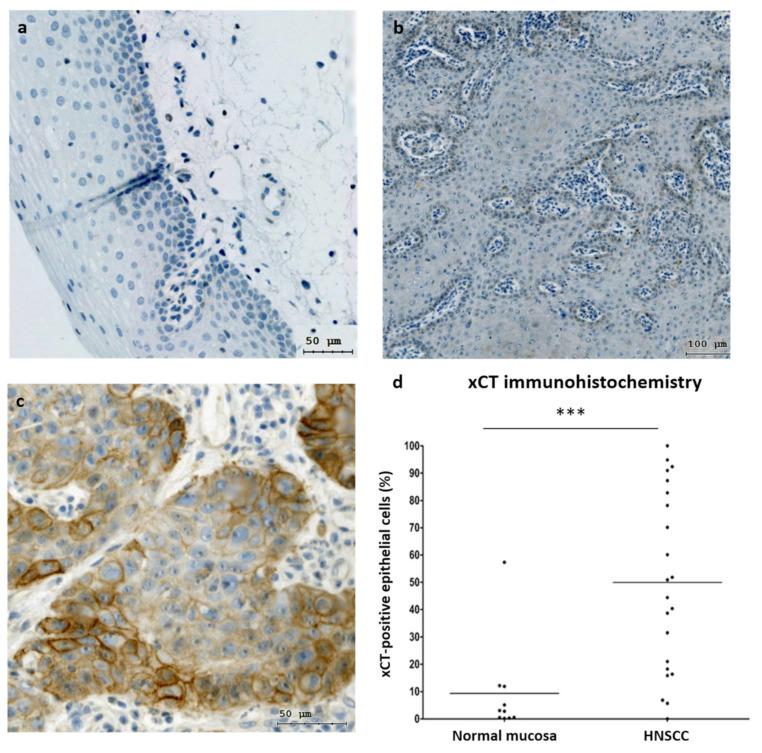
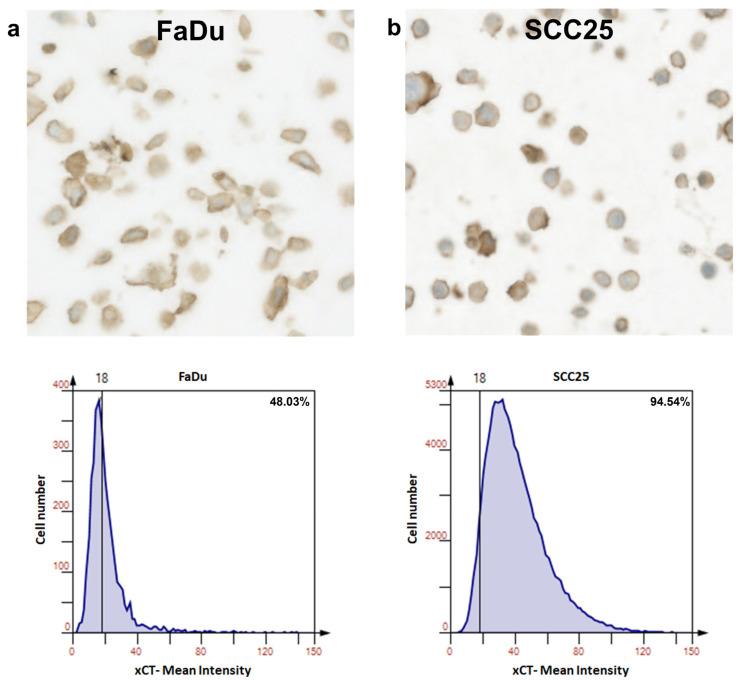
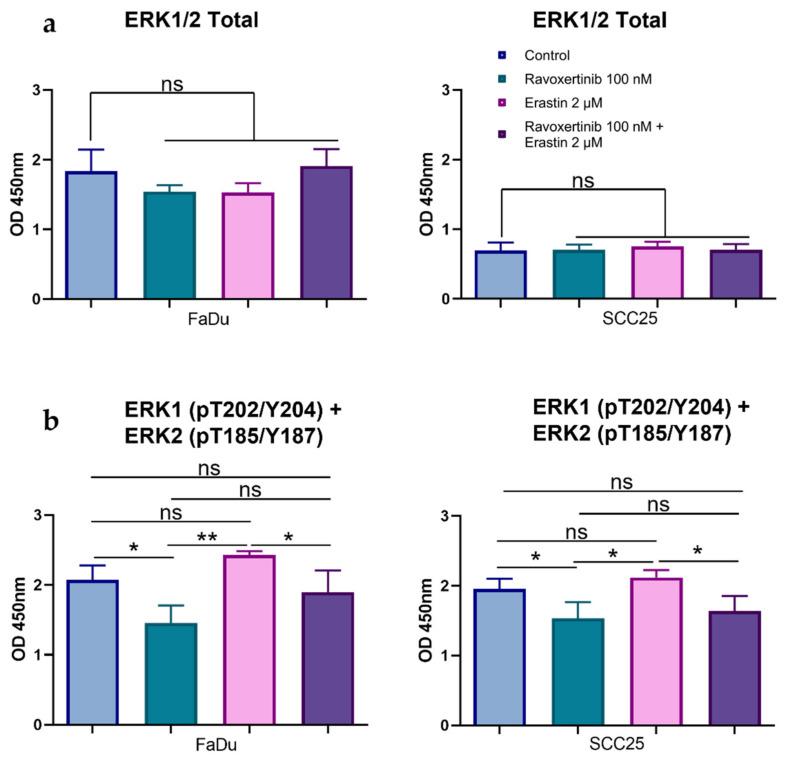
Unfavorable clinical outcomes mean that cancer researchers must attempt to develop novel therapeutic strategies to overcome therapeutic resistance in patients with HNSCC. Recently, ferroptosis was shown to be a promising pathway possessing druggable targets, such as xCT (SLC7A11). Unfortunately, little is known about the molecular mechanisms underlying the susceptibility of HNSCC cells to ferroptosis. The goal of this study was to determine whether HNSCC cells with activated Erk1/2 are vulnerable to ferroptosis induction. Our results have shown that xCT (SLC7A11) was overexpressed in malignant tissues obtained from the patients with HNSCC, whereas normal mucosa demonstrated weak expression of the protein. In order to investigate the role of Erk1/2 in the decrease in cell viability caused by erastin, xCT-overexpressing FaDu and SCC25 HNSCC cells were used. The ravoxertinib-dependent inhibition of Erk1/2 signaling led to the decrease in erastin efficacy due to the effect on ROS production and the upregulation of ROS scavengers SOD1 and SOD2, resulting in repressed lipid peroxidation. Therefore, it was concluded that the erastin-dependent activation of ferroptosis seems to be a promising approach which can be further developed as an additional strategy for the treatment of HNSCC. As ferroptosis induction via erastin is strongly dependent on the expression of Erk1/2, this MAP kinase can be considered as a predictor for cancer cells' response to erastin.
不良的临床结果意味着癌症研究人员必须尝试开发新的治疗策略,以克服 HNSCC 患者的治疗耐药性。最近,铁死亡被证明是一种有前途的途径,具有可靶向的治疗靶点,如 xCT(SLC7A11)。不幸的是,人们对 HNSCC 细胞易感性铁死亡的分子机制知之甚少。本研究的目的是确定激活 Erk1/2 的 HNSCC 细胞是否容易诱导铁死亡。我们的研究结果表明,xCT(SLC7A11)在 HNSCC 患者的恶性组织中过度表达,而正常粘膜中该蛋白表达较弱。为了研究 Erk1/2 在 erastin 引起的细胞活力下降中的作用,使用了 xCT 过表达的 FaDu 和 SCC25 HNSCC 细胞。由于对 ROS 产生和 ROS 清除剂 SOD1 和 SOD2 的上调的影响,ravoxertinib 依赖性抑制 Erk1/2 信号导致 erastin 功效降低,从而抑制脂质过氧化。因此,结论是,依赖 erastin 的铁死亡激活似乎是一种很有前途的方法,可以进一步开发为治疗 HNSCC 的附加策略。由于通过 erastin 诱导铁死亡强烈依赖于 Erk1/2 的表达,因此这种 MAP 激酶可以被认为是癌细胞对 erastin 反应的预测因子。




 Zotero 插件