
mRNA 疫苗/疗法的开发及其递送系统。
Development of mRNA Vaccines/Therapeutics and Their Delivery System.
机构信息
College of Pharmacy and Research Institute of Pharmaceutical Sciences, Gyeongsang National University, Jinju 52828, Korea.
出版信息
Mol Cells. 2023 Jan 31;46(1):41-47. doi: 10.14348/molcells.2023.2165. Epub 2022 Jan 19.
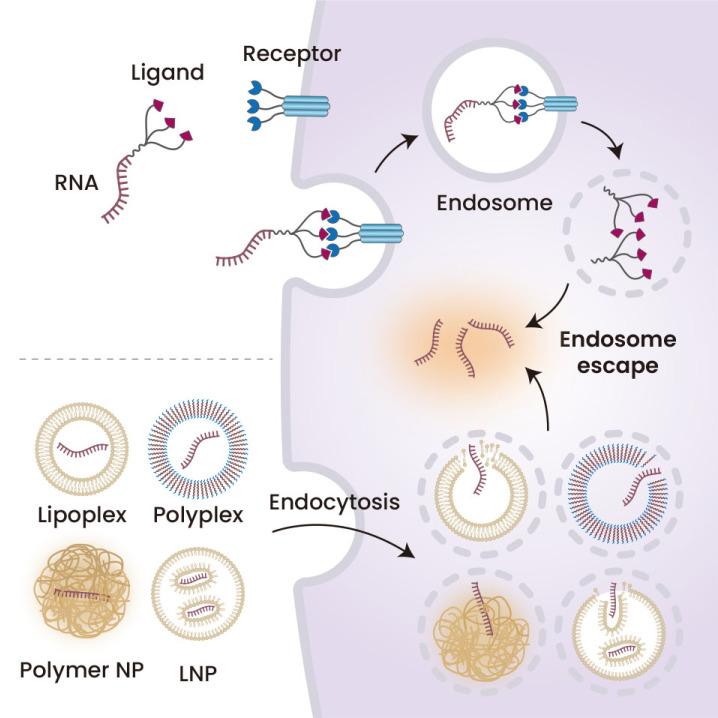
The rapid development of mRNA vaccines has contributed to the management of the current coronavirus disease 2019 (COVID-19) pandemic, suggesting that this technology may be used to manage future outbreaks of infectious diseases. Because the antigens targeted by mRNA vaccines can be easily altered by simply changing the sequence present in the coding region of mRNA structures, it is more appropriate to develop vaccines, especially during rapidly developing outbreaks of infectious diseases. In addition to allowing rapid development, mRNA vaccines have great potential in inducing successful antigen-specific immunity by expressing target antigens in cells and simultaneously triggering immune responses. Indeed, the two COVID-19 mRNA vaccines approved by the U.S. Food and Drug Administration have shown significant efficacy in preventing infections. The ability of mRNAs to produce target proteins that are defective in specific diseases has enabled the development of options to treat intractable diseases. Clinical applications of mRNA vaccines/therapeutics require strategies to safely deliver the RNA molecules into targeted cells. The present review summarizes current knowledge about mRNA vaccines/ therapeutics, their clinical applications, and their delivery strategies.
mRNA 疫苗的快速发展有助于应对当前的 2019 年冠状病毒病(COVID-19)大流行,这表明该技术可能用于应对未来传染病的爆发。由于 mRNA 疫苗所针对的抗原可以通过简单地改变 mRNA 结构编码区中存在的序列来轻松改变,因此开发疫苗更为合适,尤其是在传染病迅速爆发期间。除了允许快速开发之外,mRNA 疫苗通过在细胞中表达靶抗原并同时触发免疫反应,在诱导成功的抗原特异性免疫方面具有巨大潜力。事实上,美国食品和药物管理局批准的两种 COVID-19 mRNA 疫苗已显示出在预防感染方面的显著功效。mRNA 产生在特定疾病中存在缺陷的靶蛋白的能力使人们能够开发出治疗难治性疾病的选择方案。mRNA 疫苗/疗法的临床应用需要安全地将 RNA 分子递送至靶向细胞的策略。本综述总结了有关 mRNA 疫苗/疗法、其临床应用及其递送策略的现有知识。


 Zotero 插件