
在一大组弥漫性大B细胞淋巴瘤中未检测到NTRK融合蛋白表达。
NTRK fusion protein expression is absent in a large cohort of diffuse large B-cell lymphoma.
作者信息
Ghandili Susanne, Dierlamm Judith, Bokemeyer Carsten, von Bargen Clara Marie, Weidemann Sören Alexander
机构信息
Department of Oncology, Hematology and Bone Marrow Transplantation with Section Pneumology, University Cancer Center Hamburg, University Medical Center Hamburg-Eppendorf, Hamburg, Germany.
Institute of Pathology, University Medical Center Hamburg-Eppendorf, Hamburg, Germany.
出版信息
Front Oncol. 2023 Mar 14;13:1146029. doi: 10.3389/fonc.2023.1146029. eCollection 2023.
BACKGROUND
Even though two NTRK-targeting drugs are available for the treatment of irresectable, metastatic, or progressive NTRK-positive solid tumors, less is known about the role of NTRK fusions in lymphoma. For this reason, we aimed to investigate if NTRK fusion proteins are expressed in diffuse large B-cell lymphoma (DLBCL) by systemic immunohistochemistry (IHC) screening and additional FISH analysis in a large cohort of DLBCL samples according to the ESMO Translational Research and Precision Medicine Working Group recommendations for the detection of NTRK fusions in daily practice and clinical research.
METHODS
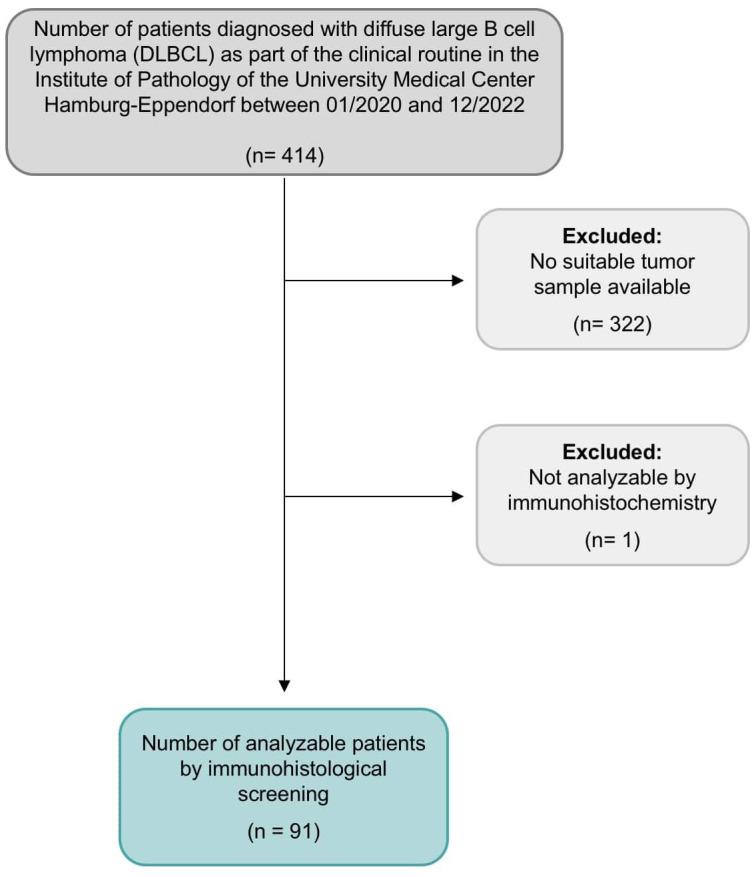
A tissue microarray of 92 patients with the diagnosis of DLBCL at the University Hospital Hamburg between 2020 and 2022 was built. The clinical data were taken from patient records. Immunohistochemistry for Pan-NTRK fusion protein was performed and positive staining was defined as any viable staining. For FISH analysis only results with quality 2 and 3 were evaluated.
RESULTS
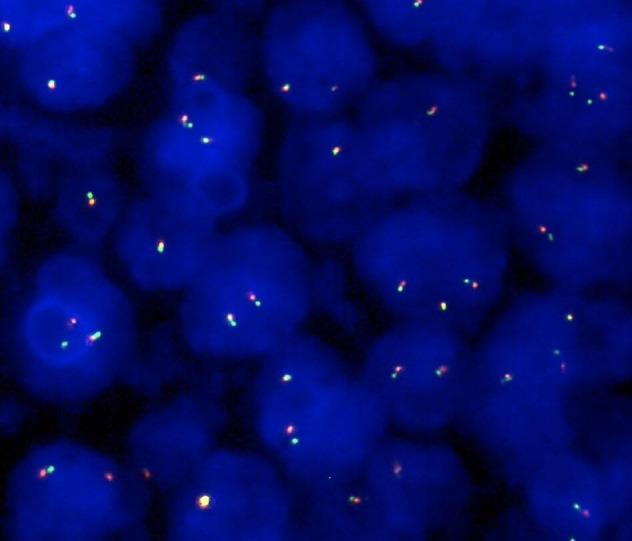
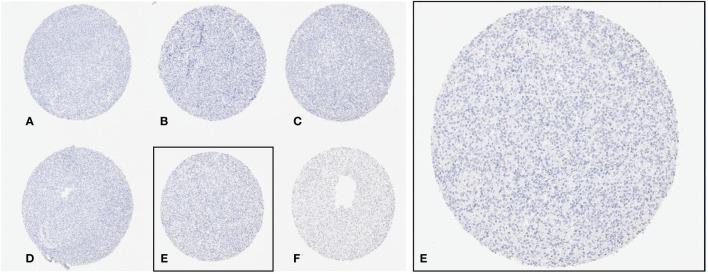
NTRK immunostaining was absent in all analyzable cases. No break apart was detectable by FISH.
CONCLUSION
Our negative result is consistent with the very sparse data existing on NTRK gene fusions in hematologic neoplasms. To date, only a few cases of hematological malignancies have been described in which NTRK-targeting drugs may provide a potential therapeutic agent. Even though NTRK fusion protein expression was not detectable in our sample cohort, performing systemic screenings for NTRK fusions are necessary to define further the role of NTRK fusions not only in DLBCL but in a multitude of lymphoma entities as long as the lack of reliable data exists.
背景
尽管有两种靶向NTRK的药物可用于治疗不可切除、转移性或进展性NTRK阳性实体瘤,但关于NTRK融合在淋巴瘤中的作用了解较少。因此,我们旨在根据ESMO转化研究和精准医学工作组在日常实践和临床研究中检测NTRK融合的建议,通过对大量弥漫性大B细胞淋巴瘤(DLBCL)样本进行系统免疫组织化学(IHC)筛查和额外的荧光原位杂交(FISH)分析,来研究NTRK融合蛋白在DLBCL中是否表达。
方法
构建了一个包含2020年至2022年间在汉堡大学医院诊断为DLBCL的92例患者的组织微阵列。临床数据取自患者记录。进行了泛NTRK融合蛋白的免疫组织化学检测,阳性染色定义为任何有活力的染色。对于FISH分析,仅评估质量为2和3的结果。
结果
在所有可分析的病例中均未检测到NTRK免疫染色。FISH检测未发现分离现象。
结论
我们的阴性结果与血液系统肿瘤中NTRK基因融合的现有稀疏数据一致。迄今为止,仅描述了少数几例血液系统恶性肿瘤病例,其中靶向NTRK的药物可能提供潜在的治疗手段。尽管在我们的样本队列中未检测到NTRK融合蛋白表达,但只要缺乏可靠数据,对NTRK融合进行系统筛查对于进一步明确NTRK融合不仅在DLBCL中而且在众多淋巴瘤实体中的作用都是必要的。

 Zotero 插件