
米托蒽醌和负载米托蒽醌的氧化铁纳米颗粒诱导人胰腺导管腺癌细胞球发生细胞死亡。
Mitoxantrone and Mitoxantrone-Loaded Iron Oxide Nanoparticles Induce Cell Death in Human Pancreatic Ductal Adenocarcinoma Cell Spheroids.
作者信息
Dinter Jonas, Friedrich Ralf P, Yang Hai, Pilarsky Christian, Mangge Harald, Pöttler Marina, Janko Christina, Alexiou Christoph, Lyer Stefan
机构信息
Department of Otorhinolaryngology, Head and Neck Surgery, Section of Experimental Oncology and Nanomedicine (SEON), Else Kröner-Fresenius-Stiftung Professorship, Universitätsklinikum Erlangen, 91054 Erlangen, Germany.
Medical Faculty, Friedrich-Alexander-Universität Erlangen-Nürnberg (FAU), 91054 Erlangen, Germany.
出版信息
Materials (Basel). 2023 Apr 6;16(7):2906. doi: 10.3390/ma16072906.
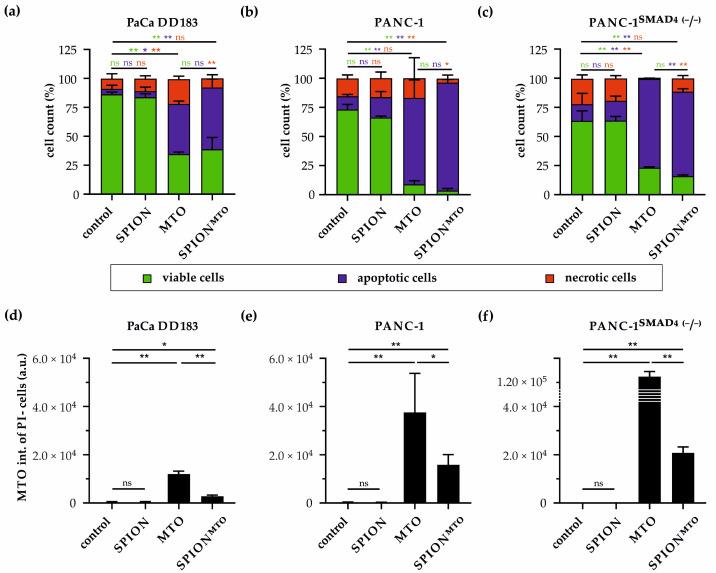
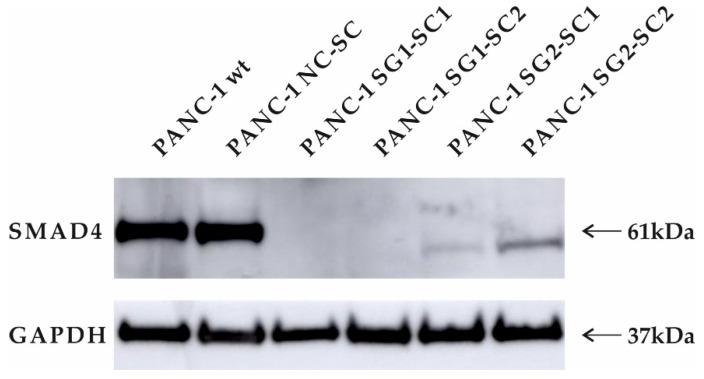
Pancreatic ductal adenocarcinoma is a hard-to-treat, deadly malignancy. Traditional treatments, such as surgery, radiation and chemotherapy, unfortunately are still not able to significantly improve long-term survival. Three-dimensional (3D) cell cultures might be a platform to study new drug types in a highly reproducible, resource-saving model within a relevant pathophysiological cellular microenvironment. We used a 3D culture of human pancreatic ductal adenocarcinoma cell lines to investigate a potential new treatment approach using superparamagnetic iron oxide nanoparticles (SPIONs) as a drug delivery system for mitoxantrone (MTO), a chemotherapeutic agent. We established a PaCa DD183 cell line and generated PANC-1 cells by using the CRISPR-Cas9 system, differing in a prognostically relevant mutation in the TGF-β pathway. Afterwards, we formed spheroids using PaCa DD183, PANC-1 and PANC-1 cells, and analyzed the uptake and cytotoxic effect of free MTO and MTO-loaded SPIONs by microscopy and flow cytometry. MTO and SPION-MTO-induced cell death in all tumor spheroids in a dose-dependent manner. Interestingly, spheroids with a SMAD4 mutation showed an increased uptake of MTO and SPION-MTO, while at the same time being more resistant to the cytotoxic effects of the chemotherapeutic agents. MTO-loaded SPIONs, with their ability for magnetic drug targeting, could be a future approach for treating pancreatic ductal adenocarcinomas.
胰腺导管腺癌是一种难以治疗的致命恶性肿瘤。不幸的是,传统治疗方法,如手术、放疗和化疗,仍无法显著提高长期生存率。三维(3D)细胞培养可能是一个平台,用于在相关病理生理细胞微环境中,以高度可重复、节省资源的模型研究新型药物。我们使用人胰腺导管腺癌细胞系的3D培养来研究一种潜在的新治疗方法,即使用超顺磁性氧化铁纳米颗粒(SPIONs)作为米托蒽醌(MTO,一种化疗药物)的药物递送系统。我们建立了PaCa DD183细胞系,并通过CRISPR-Cas9系统生成了PANC-1细胞,二者在TGF-β途径中存在与预后相关的突变差异。之后,我们用PaCa DD183、PANC-1和PANC-1细胞形成球体,并通过显微镜和流式细胞术分析游离MTO和负载MTO的SPIONs的摄取及细胞毒性作用。MTO和SPION-MTO在所有肿瘤球体中均以剂量依赖方式诱导细胞死亡。有趣的是,具有SMAD4突变的球体对MTO和SPION-MTO的摄取增加,而同时对化疗药物的细胞毒性作用更具抗性。负载MTO的SPIONs具有磁性药物靶向能力,可能成为未来治疗胰腺导管腺癌的一种方法。


 Zotero 插件