
硫氰酸根离子氧化胱天蛋白酶-8 从而实现肿瘤坏死因子诱导的细胞坏死性凋亡。
Oxidation of caspase-8 by hypothiocyanous acid enables TNF-mediated necroptosis.
机构信息
Mātai Hāora - Centre for Redox Biology and Medicine, Department of Pathology and Biomedical Science, University of Otago, Christchurch, New Zealand.
School of Biological Sciences, University of Canterbury, Christchurch, New Zealand.
出版信息
J Biol Chem. 2023 Jun;299(6):104792. doi: 10.1016/j.jbc.2023.104792. Epub 2023 May 6.
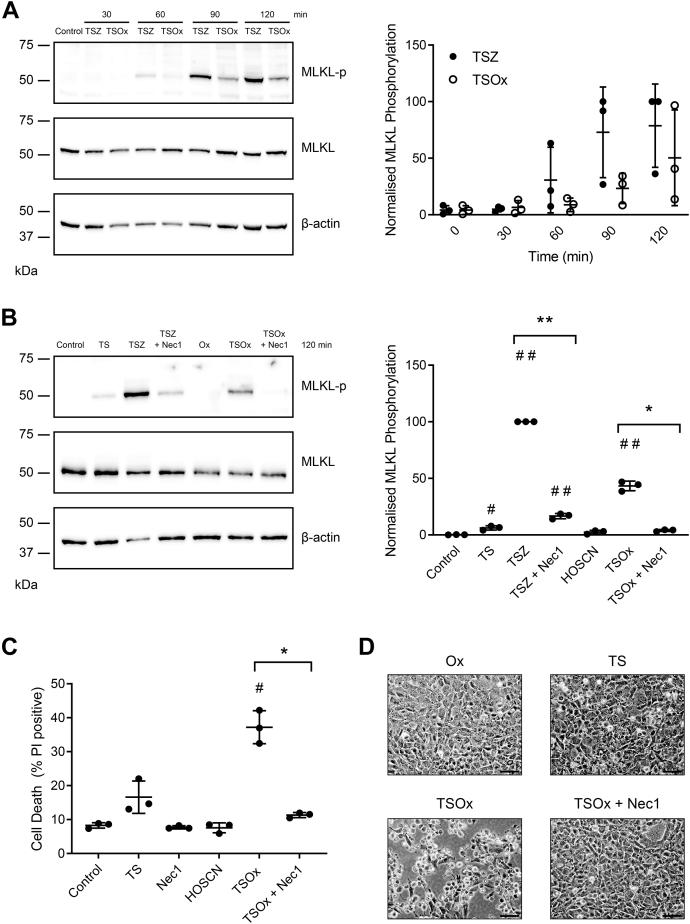
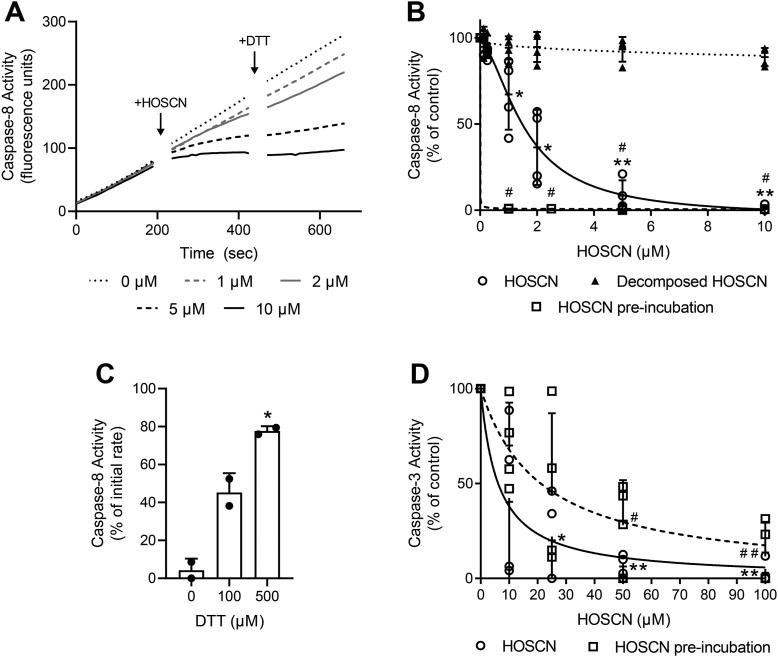
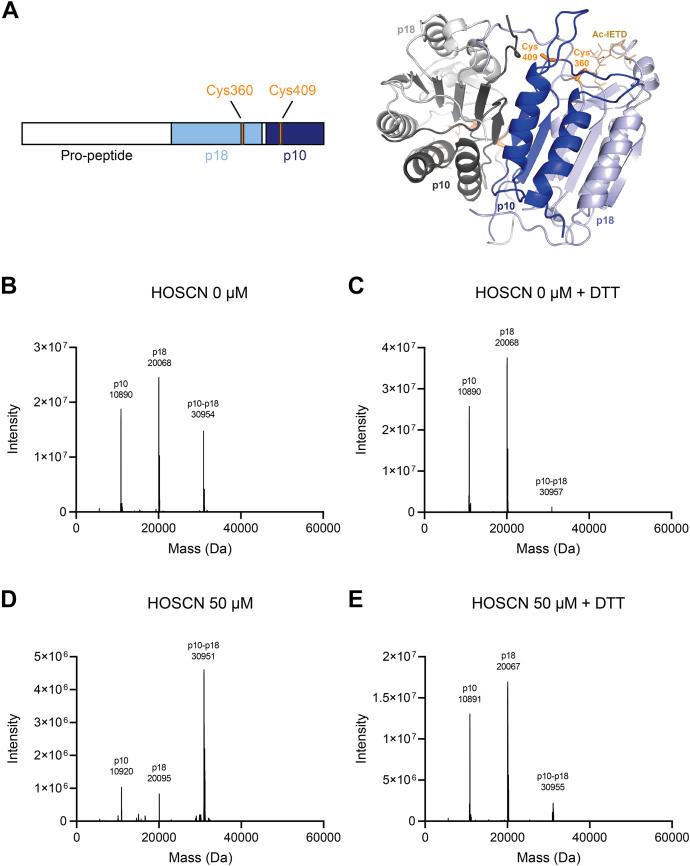
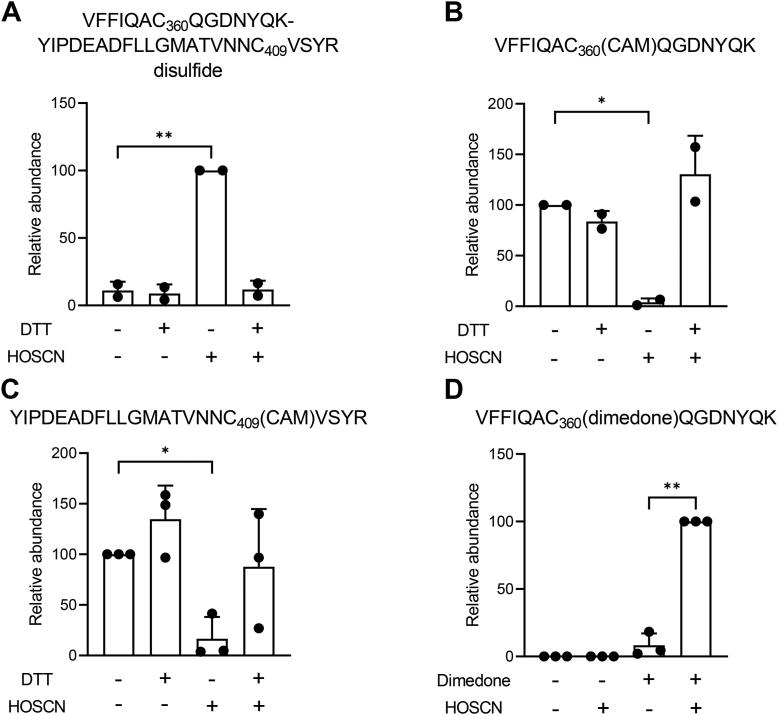
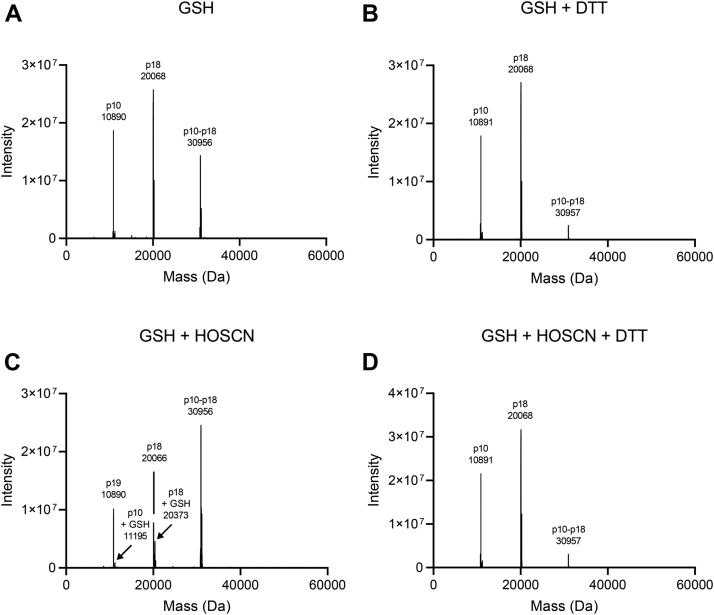
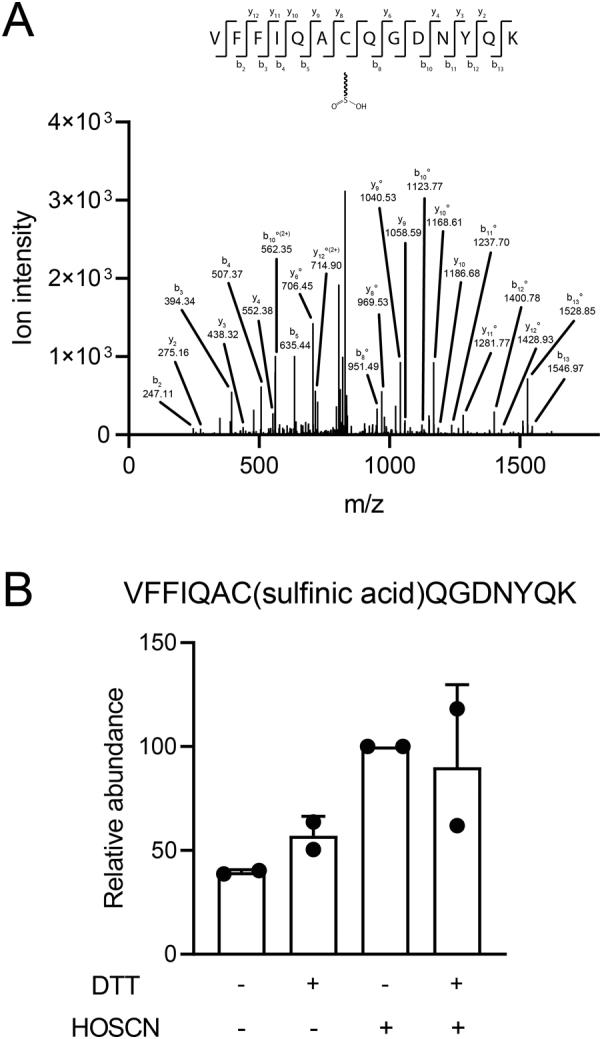
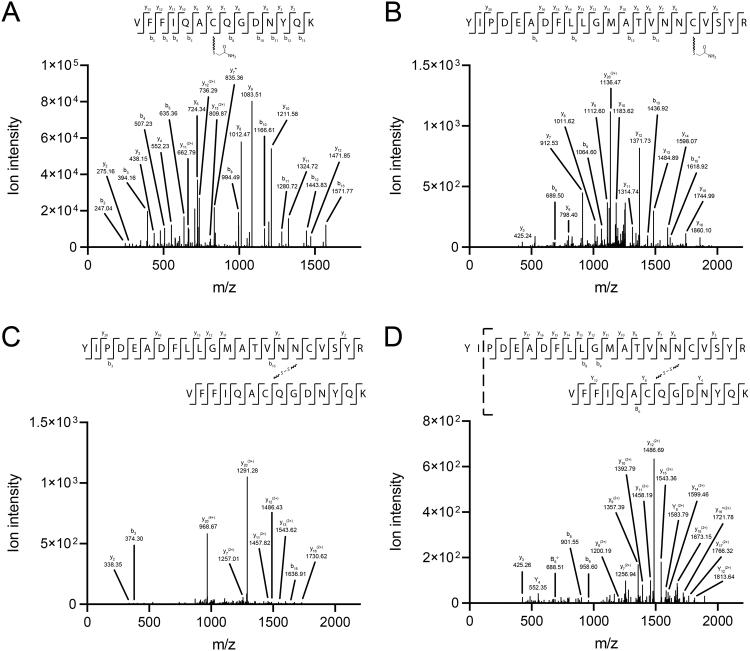
Necroptosis is a form of regulated cell death triggered by various host and pathogen-derived molecules during infection and inflammation. The essential step leading to necroptosis is phosphorylation of the mixed lineage kinase domain-like protein by receptor-interacting protein kinase 3. Caspase-8 cleaves receptor-interacting protein kinases to block necroptosis, so synthetic caspase inhibitors are required to study this process in experimental models. However, it is unclear how caspase-8 activity is regulated in a physiological setting. The active site cysteine of caspases is sensitive to oxidative inactivation, so we hypothesized that oxidants generated at sites of inflammation can inhibit caspase-8 and promote necroptosis. Here, we discovered that hypothiocyanous acid (HOSCN), an oxidant generated in vivo by heme peroxidases including myeloperoxidase and lactoperoxidase, is a potent caspase-8 inhibitor. We found HOSCN was able to promote necroptosis in mouse fibroblasts treated with tumor necrosis factor. We also demonstrate purified caspase-8 was inactivated by low concentrations of HOSCN, with the predominant product being a disulfide-linked dimer between Cys360 and Cys409 of the large and small catalytic subunits. We show oxidation still occurred in the presence of reducing agents, and reduction of the dimer was slow, consistent with HOSCN being a powerful physiological caspase inhibitor. While the initial oxidation product is a dimer, further modification also occurred in cells treated with HOSCN, leading to higher molecular weight caspase-8 species. Taken together, these findings indicate major disruption of caspase-8 function and suggest a novel mechanism for the promotion of necroptosis at sites of inflammation.
细胞坏死是一种受感染和炎症过程中各种宿主和病原体衍生分子触发的调节性细胞死亡形式。导致细胞坏死的关键步骤是受体相互作用蛋白激酶 3 对混合谱系激酶结构域样蛋白的磷酸化。半胱天冬酶-8 切割受体相互作用蛋白激酶以阻断细胞坏死,因此需要合成半胱天冬酶抑制剂来研究实验模型中的这个过程。然而,在生理环境中如何调节半胱天冬酶-8 的活性尚不清楚。半胱天冬酶的活性位点半胱氨酸对氧化失活敏感,因此我们假设炎症部位产生的氧化剂可以抑制半胱天冬酶-8 并促进细胞坏死。在这里,我们发现次氯酸(HOSCN)是一种由髓过氧化物酶和乳过氧化物酶等血红素过氧化物酶在体内产生的氧化剂,是一种有效的半胱天冬酶-8 抑制剂。我们发现 HOSCN 能够促进肿瘤坏死因子处理的小鼠成纤维细胞发生细胞坏死。我们还证明了低浓度的 HOSCN 可以使纯化的半胱天冬酶失活,主要产物是大、小催化亚基的 Cys360 和 Cys409 之间形成的二硫键连接的二聚体。我们发现氧化反应仍然发生在还原剂存在的情况下,并且二聚体的还原速度较慢,这表明 HOSCN 是一种强大的生理性半胱天冬酶抑制剂。虽然初始氧化产物是二聚体,但在用 HOSCN 处理的细胞中还发生了进一步的修饰,导致更高分子量的半胱天冬酶-8 物质。总之,这些发现表明对半胱天冬酶-8 功能的重大破坏,并提示在炎症部位促进细胞坏死的一种新机制。





 Zotero 插件