
1990年至2019年204个国家和地区哮喘的全球疾病负担及归因风险因素分析
Global Disease Burden and Attributable Risk Factor Analysis of Asthma in 204 Countries and Territories From 1990 to 2019.
作者信息
Liu Hailing, Zhang Jing, Liu Li, Lian Guoli, Shi Ruiming, Xu Man, Yang Juan, Liu Xiaohong
机构信息
Department of Pediatrics, The First Affiliated Hospital of Xi'an Jiaotong University, Xi'an, P. R. China.
Department of Cardiovascular Medicine, The First Affiliated Hospital of Xi'an Jiaotong University, Xi'an, P. R. China.
出版信息
Allergy Asthma Immunol Res. 2023 Jul;15(4):473-495. doi: 10.4168/aair.2023.15.4.473. Epub 2023 Apr 21.
PURPOSE
Asthma is a common chronic inflammatory respiratory tract disease with high morbidity and mortality. The global trends in asthma burden remain poorly understood, and asthma incidence has increased during the worldwide coronavirus disease 2019 (COVID-19) pandemic. This study aimed to provide a comprehensive view of the global distribution of asthma burden and its attributable risk factors from 1990 to 2019.
METHODS
Based on the Global Burden of Disease Study 2019 Database, asthma incidence, deaths, disability-adjusted life years (DALYs), the corresponding age-standardized incidence rate (ASIR), age-standardized death rate (ASDR), age-standardized DALY rate, and estimated annual percentage change were analyzed according to age, sex, sociodemographic index (SDI) quintiles, and locations. Risk factors contributing to asthma deaths and DALYs were also investigated.
RESULTS
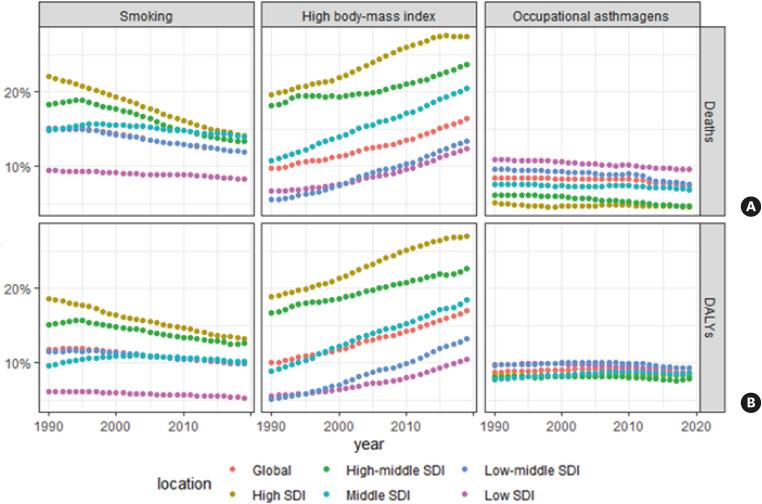
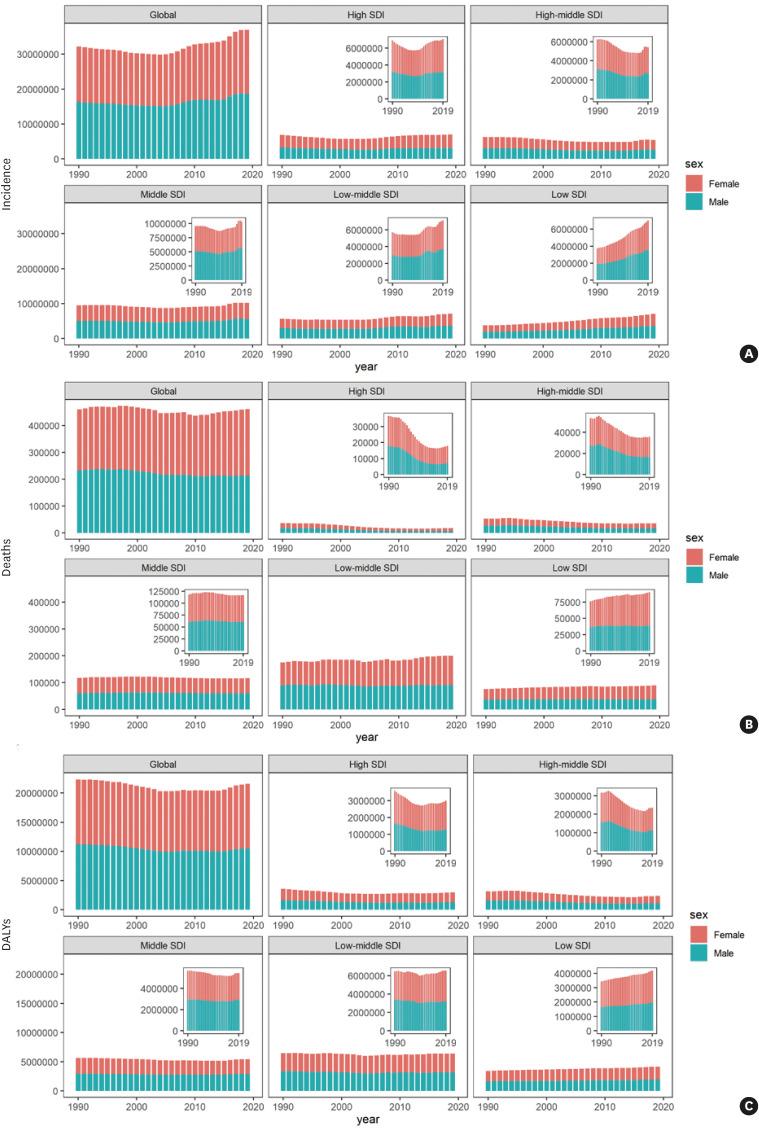
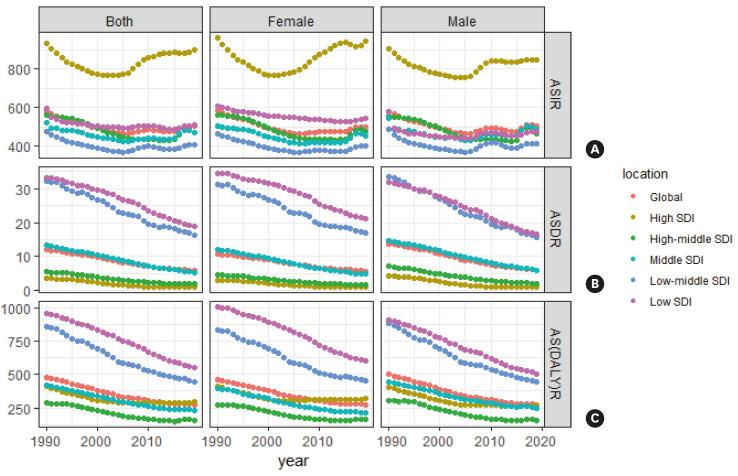
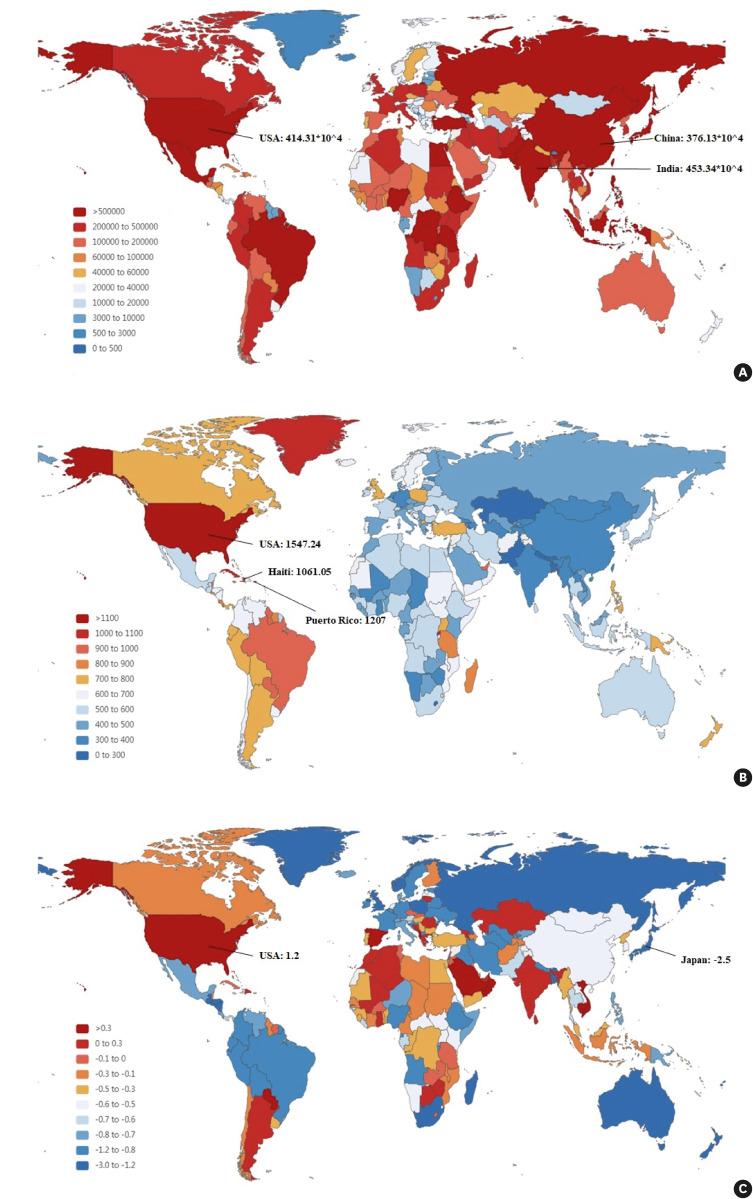
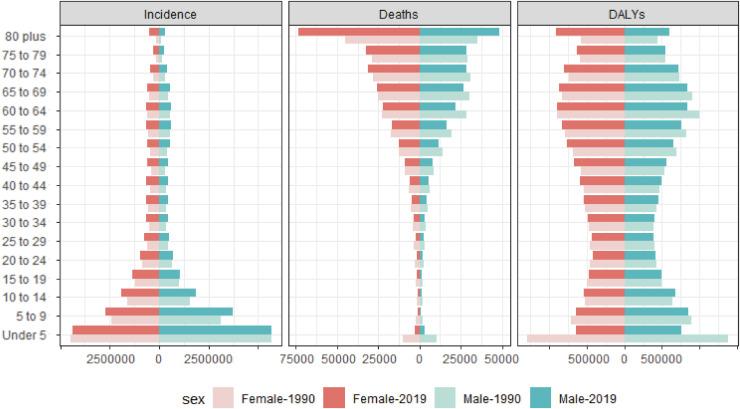
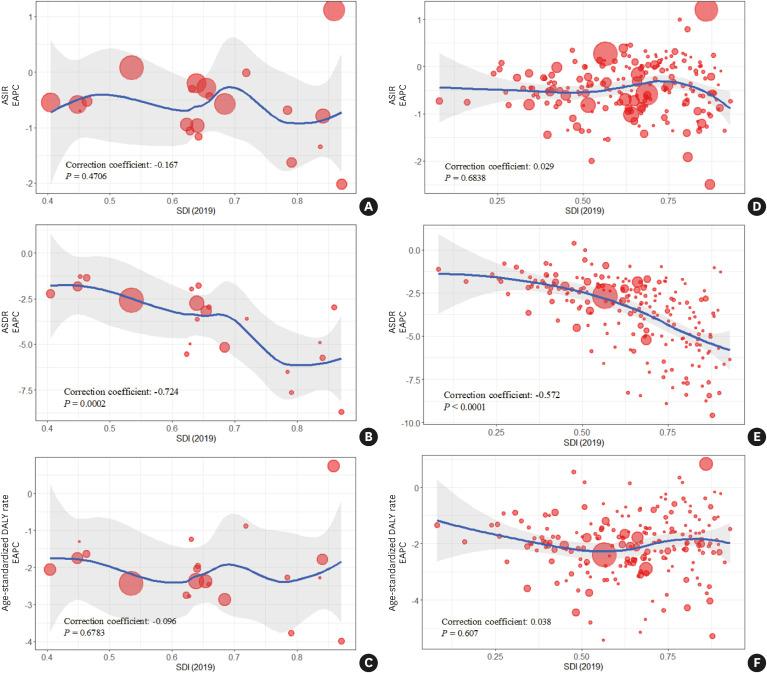
Globally, the asthma incidence increased by 15%, but deaths and DALYs decreased. The corresponding ASIR, ASDR, and age-standardized DALY rate also decreased. The high SDI region had the highest ASIR, and the low SDI region had the highest ASDR. The ASDR and age-standardized DALY rate were negatively correlated with the SDI. The low-middle SDI region, particularly South Asia, showed the highest asthma-related deaths and DALYs. The incidence peak was under 9 years old, and more than 70% of all deaths occurred in the population over 60 years old. Smoking, occupational asthmagens, and a high body mass index were the main risk factors for asthma-related mortality and DALYs, and their distributions varied between sexes.
CONCLUSIONS
Globally, the asthma incidence has increased since 1990. The greatest asthma burden is borne by the low-middle SDI region. The 2 groups that need special attention are those under 9 years old and those over 60 years old. Targeted strategies are needed to reduce the asthma burden based on geographic and sex-age characteristics. Our findings also provide a platform for further investigation into the asthma burden in the era of COVID-19.
目的
哮喘是一种常见的慢性炎症性呼吸道疾病,发病率和死亡率都很高。全球哮喘负担的趋势仍知之甚少,且在2019年全球冠状病毒病(COVID-19)大流行期间哮喘发病率有所上升。本研究旨在全面了解1990年至2019年全球哮喘负担的分布及其可归因的风险因素。
方法
基于2019年全球疾病负担研究数据库,根据年龄、性别、社会人口指数(SDI)五分位数和地理位置,分析哮喘发病率、死亡人数、伤残调整生命年(DALYs)、相应的年龄标准化发病率(ASIR)、年龄标准化死亡率(ASDR)、年龄标准化DALY率以及估计的年度百分比变化。还调查了导致哮喘死亡和DALYs的风险因素。
结果
在全球范围内,哮喘发病率上升了15%,但死亡人数和DALYs有所下降。相应的ASIR、ASDR和年龄标准化DALY率也有所下降。高SDI地区的ASIR最高,低SDI地区的ASDR最高。ASDR和年龄标准化DALY率与SDI呈负相关。中低SDI地区,尤其是南亚,显示出与哮喘相关的死亡人数和DALYs最高。发病高峰在9岁以下,超过70%的死亡发生在60岁以上人群中。吸烟、职业性哮喘诱发因素和高体重指数是与哮喘相关的死亡率和DALYs的主要风险因素,其分布因性别而异。
结论
自1990年以来,全球哮喘发病率有所上升。中低SDI地区承担着最大的哮喘负担。需要特别关注的两组人群是9岁以下儿童和60岁以上老人。需要根据地理和性别年龄特征制定有针对性的策略来减轻哮喘负担。我们的研究结果还为进一步调查COVID-19时代的哮喘负担提供了一个平台。

 Zotero 插件