
当前和未来的治疗策略:攻克和跨界生物膜。
Current and prospective therapeutic strategies: tackling and cross-kingdom biofilm.
机构信息
Fujian Key Laboratory of Oral Diseases and Fujian Provincial Engineering Research Center of Oral Biomaterial and Stomatological Key Lab of Fujian College and University, School and Hospital of Stomatology, Fujian Medical University, Fuzhou, China.
Department of Endodontics, Stomatological Hospital of Xiamen Medical College, Xiamen, China.
出版信息
Front Cell Infect Microbiol. 2023 May 11;13:1106231. doi: 10.3389/fcimb.2023.1106231. eCollection 2023.
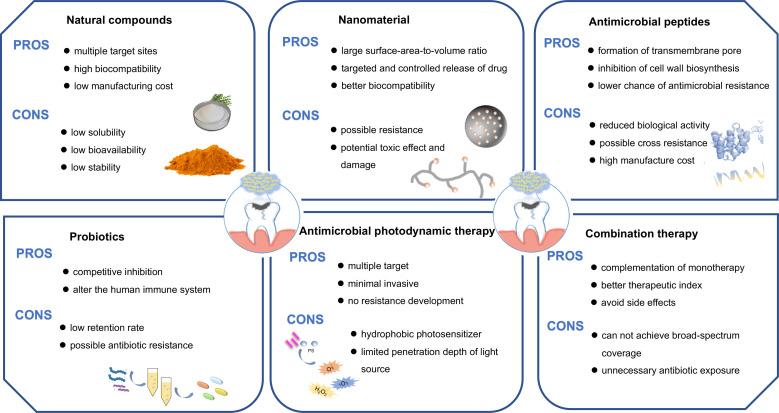
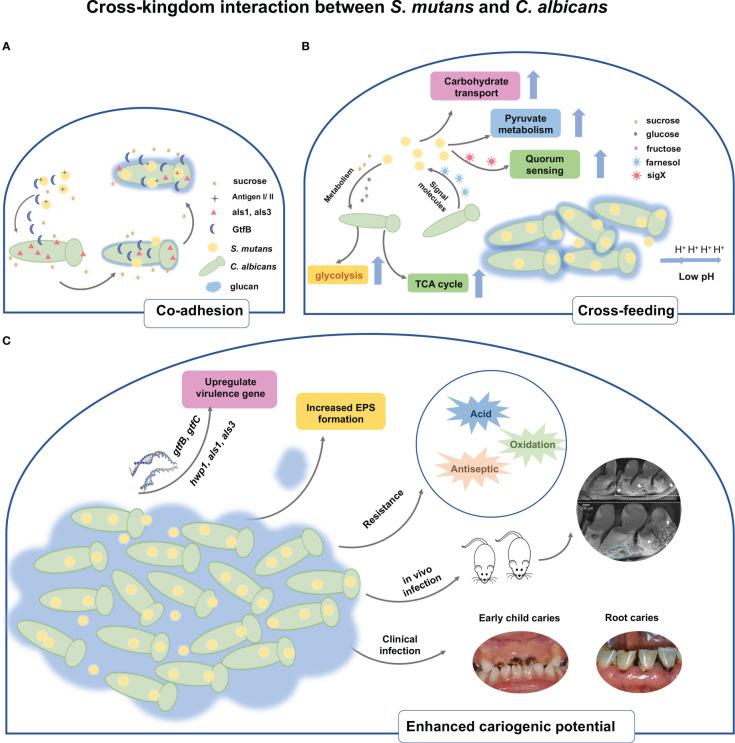
() is the most frequent strain associated with cross-kingdom infections in the oral cavity. Clinical evidence shows the co-existence of () and in the carious lesions especially in children with early childhood caries (ECC) and demonstrates the close interaction between them. During the interaction, both and have evolved a complex network of regulatory mechanisms to boost cariogenic virulence and modulate tolerance upon stress changes in the external environment. The intricate relationship and unpredictable consequences pose great therapeutic challenges in clinics, which indicate the demand for emergence of potential antimicrobial therapy with multi-targets or combinatorial therapies. In this article, we present an overview of the clinical significance, and cooperative network of the cross-kingdom interaction between and Furthermore, we also summarize the current strategies for targeting cross-kingdom biofilm.
()是口腔中最常见的与跨界感染相关的菌株。临床证据表明,()和()在龋病病变中同时存在,尤其是在患有幼儿龋(ECC)的儿童中,并表明它们之间存在密切的相互作用。在相互作用过程中,()和()都进化出了一个复杂的调控机制网络,以增强致龋毒力,并在外环境压力变化时调节耐受力。这种复杂的关系和不可预测的后果给临床带来了巨大的治疗挑战,这表明需要采用多靶点或联合治疗的潜在抗菌治疗方法。本文综述了()和()跨界相互作用的临床意义和合作网络。此外,我们还总结了目前针对跨界生物膜的靶向策略。
 Zotero 插件