
该规则的例外情况:疟原虫血期感染开始时的毒力基因表达。
The exception that proves the rule: Virulence gene expression at the onset of Plasmodium falciparum blood stage infections.
机构信息
Bernhard Nocht Institute for Tropical Medicine, Hamburg, Germany.
Centre for Structural Systems Biology, Hamburg, Germany, Hamburg, Germany.
出版信息
PLoS Pathog. 2023 Jun 29;19(6):e1011468. doi: 10.1371/journal.ppat.1011468. eCollection 2023 Jun.
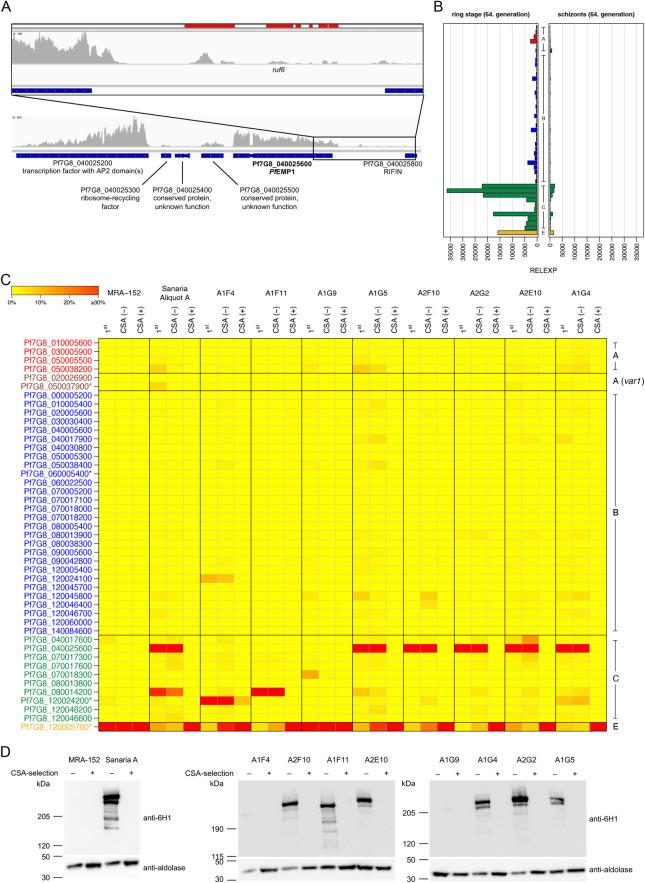
Controlled human malaria infections (CHMI) are a valuable tool to study parasite gene expression in vivo under defined conditions. In previous studies, virulence gene expression was analyzed in samples from volunteers infected with the Plasmodium falciparum (Pf) NF54 isolate, which is of African origin. Here, we provide an in-depth investigation of parasite virulence gene expression in malaria-naïve European volunteers undergoing CHMI with the genetically distinct Pf 7G8 clone, originating in Brazil. Differential expression of var genes, encoding major virulence factors of Pf, PfEMP1s, was assessed in ex vivo parasite samples as well as in parasites from the in vitro cell bank culture that was used to generate the sporozoites (SPZ) for CHMI (Sanaria PfSPZ Challenge (7G8)). We report broad activation of mainly B-type subtelomeric located var genes at the onset of a 7G8 blood stage infection in naïve volunteers, mirroring the NF54 expression study and suggesting that the expression of virulence-associated genes is generally reset during transmission from the mosquito to the human host. However, in 7G8 parasites, we additionally detected a continuously expressed single C-type variant, Pf7G8_040025600, that was most highly expressed in both pre-mosquito cell bank and volunteer samples, suggesting that 7G8, unlike NF54, maintains expression of some previously expressed var variants during transmission. This suggests that in a new host, the parasite may preferentially express the variants that previously allowed successful infection and transmission. Trial registration: ClinicalTrials.gov - NCT02704533; 2018-004523-36.
受控人体疟疾感染(CHMI)是一种在特定条件下研究寄生虫体内基因表达的有价值的工具。在以前的研究中,分析了感染恶性疟原虫(Pf)NF54 分离株的志愿者样本中的毒力基因表达,该分离株源自非洲。在这里,我们对在 CHMI 中接受具有遗传差异的 Pf 7G8 克隆(源自巴西)感染的疟疾初治欧洲志愿者进行了寄生虫毒力基因表达的深入研究。评估了寄生虫样本中的差异表达,以及用于 CHMI(Sanaria PfSPZ Challenge(7G8))生成孢子(SPZ)的体外细胞库培养物中的寄生虫的 var 基因表达,var 基因编码 Pf 的主要毒力因子 PfEMP1s。我们报告了在 naïve 志愿者中 7G8 血液期感染开始时,主要 B 型端粒定位 var 基因的广泛激活,与 NF54 表达研究相呼应,表明在从蚊子到人类宿主的传播过程中,毒力相关基因的表达通常会重置。然而,在 7G8 寄生虫中,我们还检测到一个连续表达的单一 C 型变体,Pf7G8_040025600,该变体在蚊前细胞库和志愿者样本中表达水平最高,表明 7G8 与 NF54 不同,在传播过程中维持一些先前表达的 var 变体的表达。这表明在新宿主中,寄生虫可能优先表达以前允许成功感染和传播的变体。试验注册:ClinicalTrials.gov-NCT02704533;2018-004523-36。


 Zotero 插件