
铜死亡相关 lncRNAs 特征的综合分析,以预测膀胱癌的预后。
Comprehensive analysis of cuproptosis-related lncRNAs signature to predict prognosis in bladder urothelial carcinoma.
机构信息
Department of Urology, Jining No. 1 People's Hospital, Jining, shandong, China.
Department of medical imaging center, The Second Hospital of Shandong University, Jinang, Shandong, China.
出版信息
BMC Urol. 2023 Jul 21;23(1):124. doi: 10.1186/s12894-023-01292-9.
BACKGROUND
Cuproptosis-related genes (CRGs) have been recently discovered to regulate the occurrence and development of various tumors by controlling cuproptosis, a novel type of copper ion-dependent cell death. Although cuproptosis is mediated by lipoylated tricarboxylic acid cycle proteins, the relationship between cuproptosis-related long noncoding RNAs (crlncRNAs) in bladder urothelial carcinoma (BLCA) and clinical outcomes, tumor microenvironment (TME) modification, and immunotherapy remains unknown. In this paper, we tried to discover the importance of lncRNAs for BLCA.
METHODS
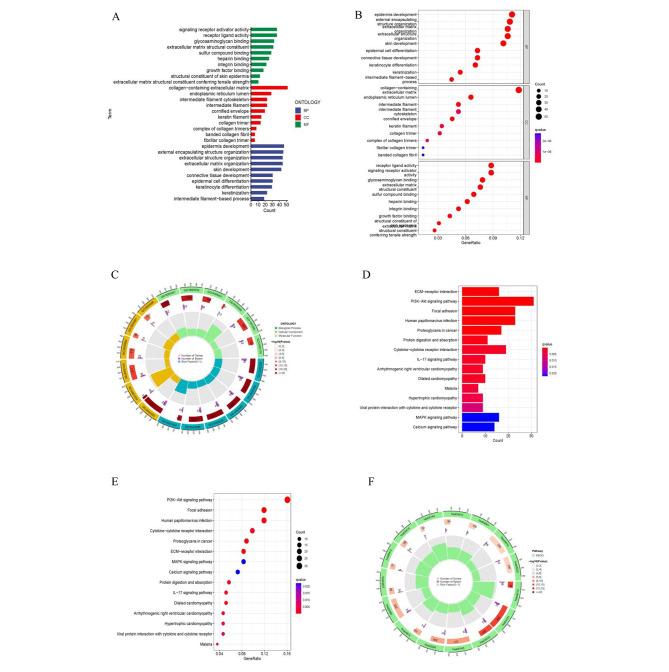
The BLCA-related lncRNAs and clinical data were first obtained from The Cancer Genome Atlas (TCGA). CRGs were obtained through Coexpression, Cox regression and Lasso regression. Besides, a prognosis model was established for verification. Meanwhile, Kyoto Encyclopedia of Genes and Genomes (KEGG) enrichment analysis, gene ontology (GO) analysis, principal component analysis (PCA), half-maximal inhibitory concentration prediction (IC50), immune status and drug susceptibility analysis were carried out.
RESULTS
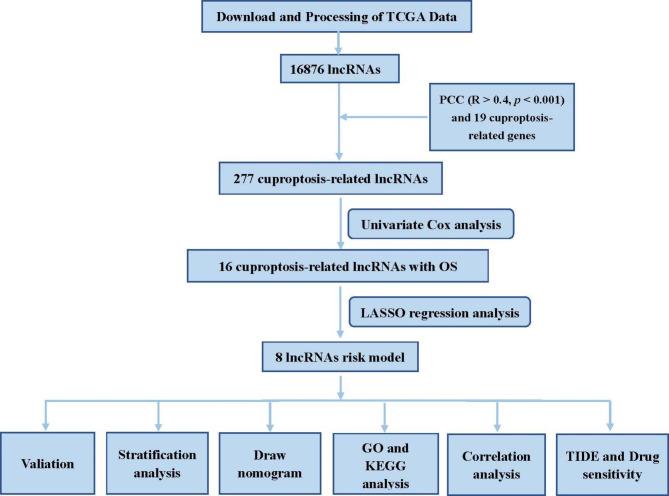
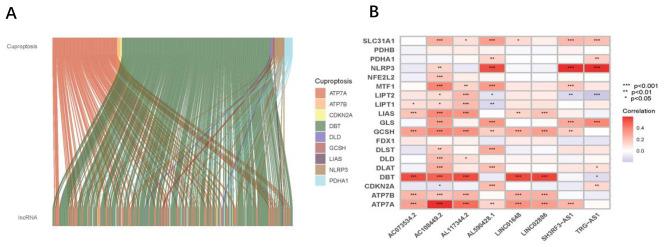
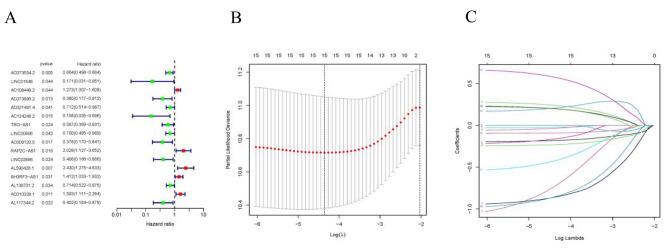
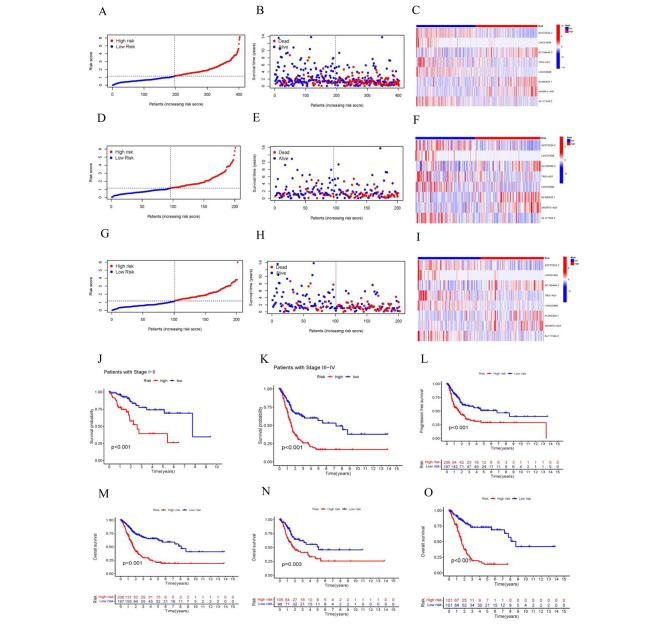
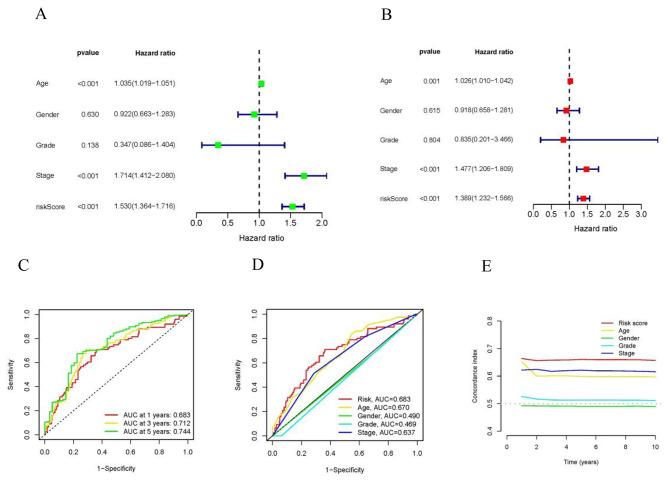
We identified 277 crlncRNAs and 16 survival-related lncRNAs. According to the 8-crlncRNA risk model, patients could be divided into high-risk group and low-risk group. Progression-Free-Survival (PFS), independent prognostic analysis, concordance index (C-index), receiver operating characteristic (ROC) curve and nomogram all confirmed the excellent predictive capability of the 8-lncRNA risk model for BLCA. During gene mutation burden survival analysis, noticeable differences were observed in high- and low-risk patients. We also found that the two groups of patients might respond differently to immune targets and anti-tumor drugs.
CONCLUSION
The nomogram with 8-lncRNA may help guide treatment of BLCA. More clinical studies are necessary to verify the nomogram.
背景
最近发现,铜死亡相关基因(CRGs)通过调控新型铜离子依赖性细胞死亡——铜死亡,调控各种肿瘤的发生和发展。虽然铜死亡是由脂酰化三羧酸循环蛋白介导的,但在膀胱癌(BLCA)中,铜死亡相关长非编码 RNA(crlncRNA)与临床结局、肿瘤微环境(TME)修饰和免疫治疗的关系尚不清楚。在本文中,我们试图发现 lncRNA 对 BLCA 的重要性。
方法
首先从癌症基因组图谱(TCGA)中获取 BLCA 相关 lncRNA 和临床数据。通过共表达、Cox 回归和 Lasso 回归获得 CRGs。此外,还建立了一个预后模型进行验证。同时进行京都基因与基因组百科全书(KEGG)富集分析、基因本体论(GO)分析、主成分分析(PCA)、半最大抑制浓度预测(IC50)、免疫状态和药物敏感性分析。
结果
我们鉴定出 277 个 crlncRNA 和 16 个与生存相关的 lncRNA。根据 8 个 lncRNA 风险模型,患者可分为高危组和低危组。无进展生存期(PFS)、独立预后分析、一致性指数(C-index)、接受者操作特征(ROC)曲线和列线图均证实了 8 个 lncRNA 风险模型对 BLCA 的优异预测能力。在基因突变负担生存分析中,高危和低危患者之间存在显著差异。我们还发现,这两组患者可能对免疫靶点和抗肿瘤药物的反应不同。
结论
具有 8 个 lncRNA 的列线图可能有助于指导 BLCA 的治疗。需要更多的临床研究来验证该列线图。



 Zotero 插件