
辛酸可促进抗生素耐受细胞的清除,并根除从复发性牛乳腺炎中分离出的生物膜。
Octanoic acid promotes clearance of antibiotic-tolerant cells and eradicates biofilms of isolated from recurrent bovine mastitis.
作者信息
Lin Wen-Chun, Hsu Kai-Chen, You Ming-Feng, Lee Kuo-Hua, Chi Chau-Hwa, Chen Jyh-Yih
机构信息
Marine Research Station, Institute of Cellular and Organismic Biology, Academia Sinica, 23-10 Dahuen Road, Jiaushi, Ilan, 262, Taiwan.
Department of Veterinary Medicine, National Taiwan University, Taipei, Taiwan.
出版信息
Biofilm. 2023 Aug 12;6:100149. doi: 10.1016/j.bioflm.2023.100149. eCollection 2023 Dec 15.
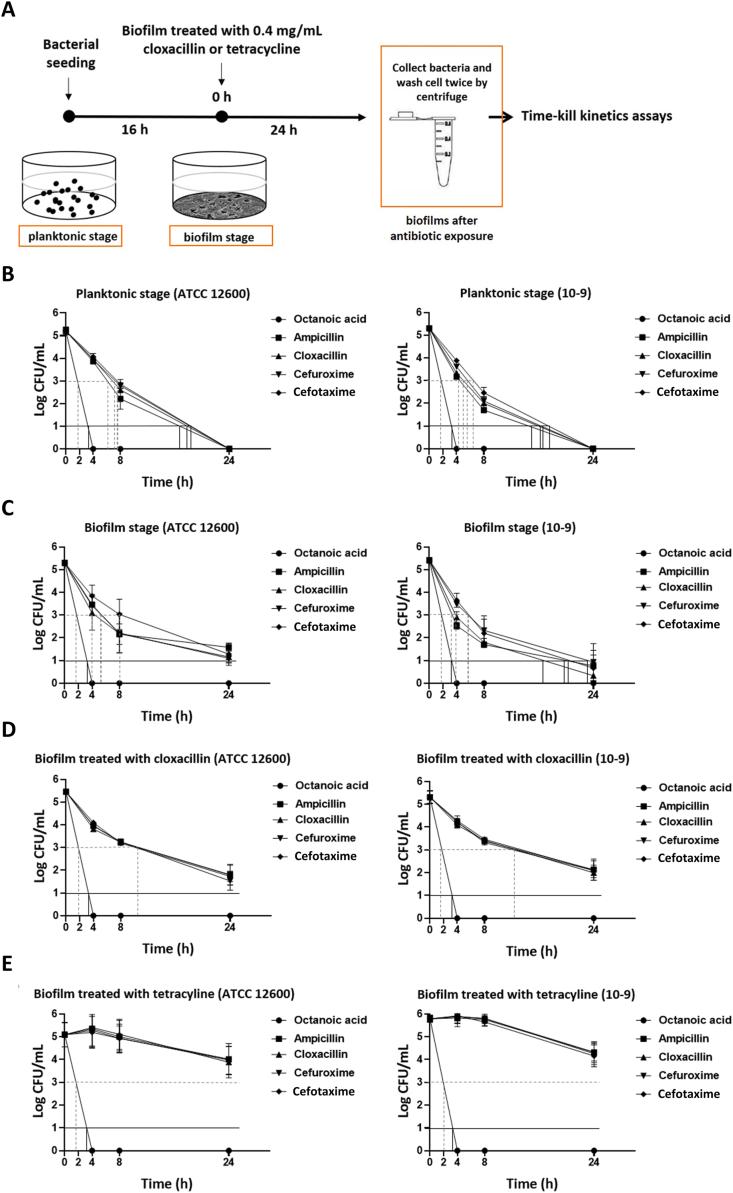
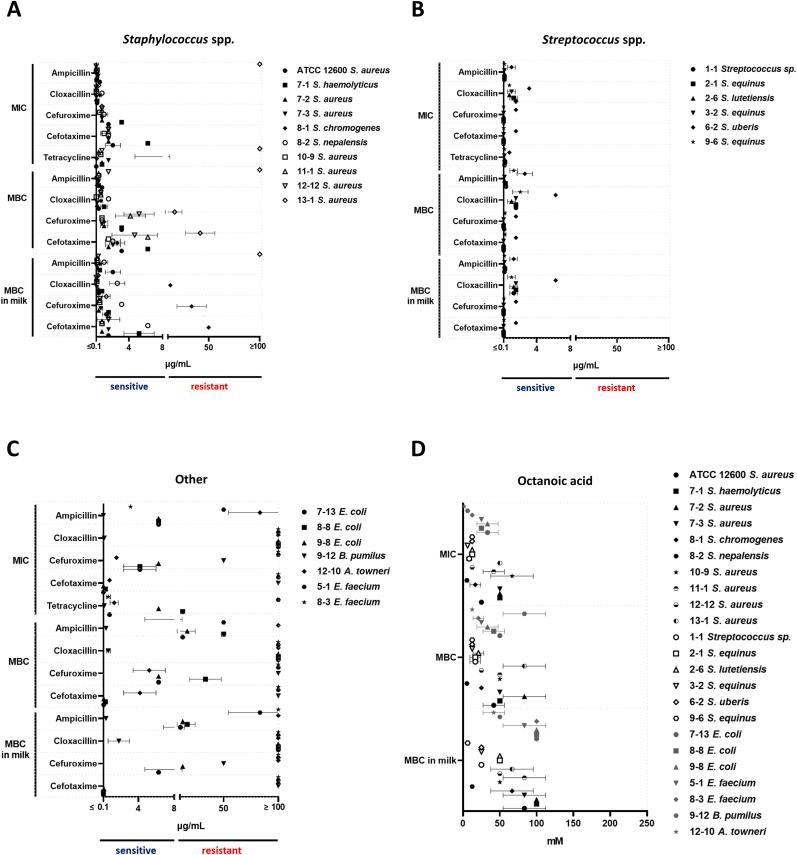
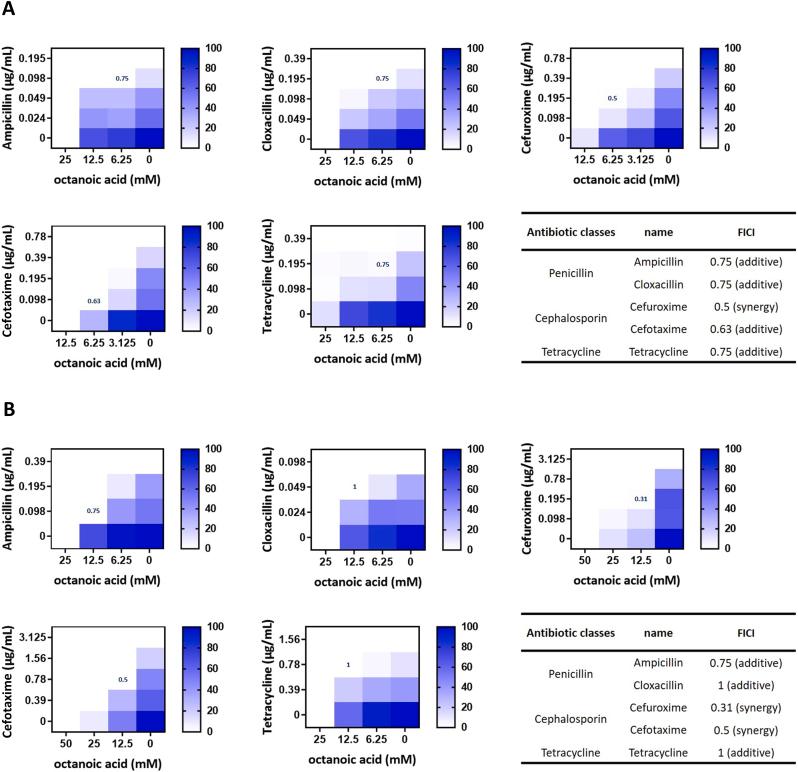
Antibiotic therapy is the primary treatment for bovine mastitis, but the drawbacks of this strategy include poor cure rate and economic losses from the need to discard milk with antibiotic residues. Unfortunately, few other treatment options are currently available for mastitis. Failure of antibiotic treatments is often attributed to formation of bacterial biofilms and abscesses in the mammary gland tissue, which lead to chronic infections that are difficult to eradicate and drive recurrent disease. A major mastitis-causing pathogen (MCP) associated with biofilms in bovine mastitis is . In this study, we demonstrate that octanoic acid has broad-spectrum microbicidal activity against MCPs and effectively inhibits biofilm formation in milk (>50% inhibition at 3.13 mM). Octanoic acid effectively clears biofilms (95% eradication at 1 minimum bactericidal concentration, MBC) and infrequently induces small colony variants (SCVs) that may cause recurrent mastitis. Additionally, octanoic acid rapidly kills persistent biofilm cells and cells with antibiotic tolerance (within 4 h). In contrast, antibiotics treated at >100 MBC cannot eradicate biofilms but do induce SCVs and antibiotic-tolerant cells. These effects may accelerate the transition from biofilm to chronic infection. Thus, octanoic acid exhibits bactericidal action against biofilms, and it is less likely than antibiotic therapy to induce persistent cells and pathogen tolerance. Moreover, octanoic acid acts additively with antibiotics against , and it attenuates tetracycline-induced virulence factor gene expression in cells. According to these data, octanoic acid may prevent the pathological progression of bovine mastitis and offer a new strategy for treating the condition.
抗生素疗法是治疗牛乳腺炎的主要方法,但该策略的缺点包括治愈率低以及因需要丢弃含有抗生素残留的牛奶而造成经济损失。不幸的是,目前针对乳腺炎几乎没有其他治疗选择。抗生素治疗失败通常归因于乳腺组织中细菌生物膜和脓肿的形成,这会导致难以根除的慢性感染并引发复发性疾病。与牛乳腺炎生物膜相关的一种主要致乳腺炎病原体(MCP)是……在本研究中,我们证明辛酸对MCP具有广谱杀菌活性,并能有效抑制牛奶中生物膜的形成(在3.13 mM时抑制率>50%)。辛酸能有效清除生物膜(在1个最低杀菌浓度,即MBC时清除率达95%),且很少诱导可能导致复发性乳腺炎的小菌落变体(SCV)。此外,辛酸能迅速杀死持久性生物膜细胞和具有抗生素耐受性的细胞(4小时内)。相比之下,以>100 MBC处理的抗生素无法根除生物膜,但会诱导SCV和抗生素耐受性细胞。这些作用可能会加速从生物膜到慢性感染的转变。因此,辛酸对……生物膜具有杀菌作用,并且比抗生素疗法更不容易诱导持久性细胞和病原体耐受性。此外,辛酸与抗生素对……起协同作用,并且能减弱四环素诱导的……细胞中致病因子基因的表达。根据这些数据,辛酸可能预防牛乳腺炎的病理进展,并为治疗该病提供一种新策略。


 Zotero 插件