
超支化聚合物:癌症光动力疗法的最新进展
Hyperbranched Polymers: Recent Advances in Photodynamic Therapy against Cancer.
作者信息
Chen Jie, Zhang Yichuan
机构信息
State Key Laboratory of Antiviral Drugs, School of Pharmacy, Henan University, Kaifeng 475004, China.
出版信息
Pharmaceutics. 2023 Aug 28;15(9):2222. doi: 10.3390/pharmaceutics15092222.
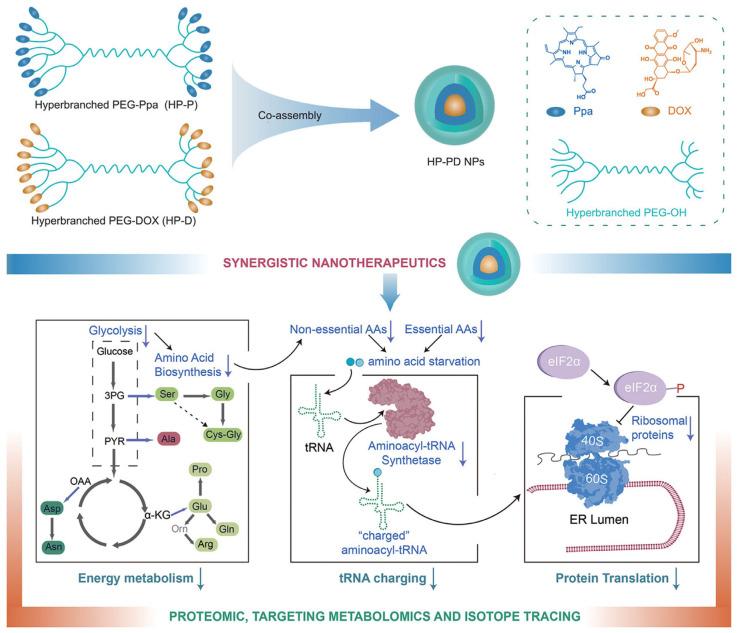
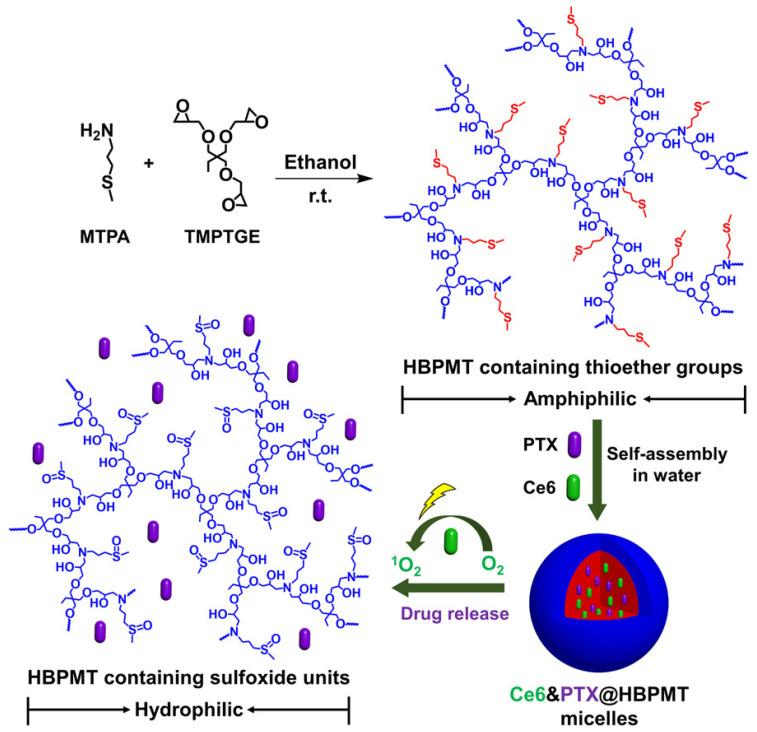
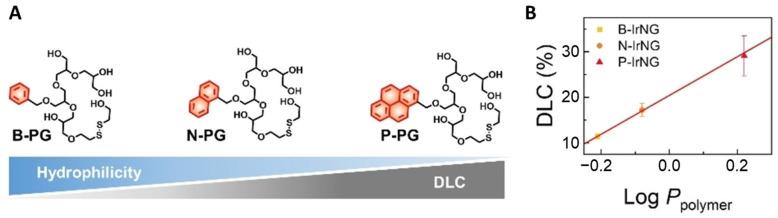
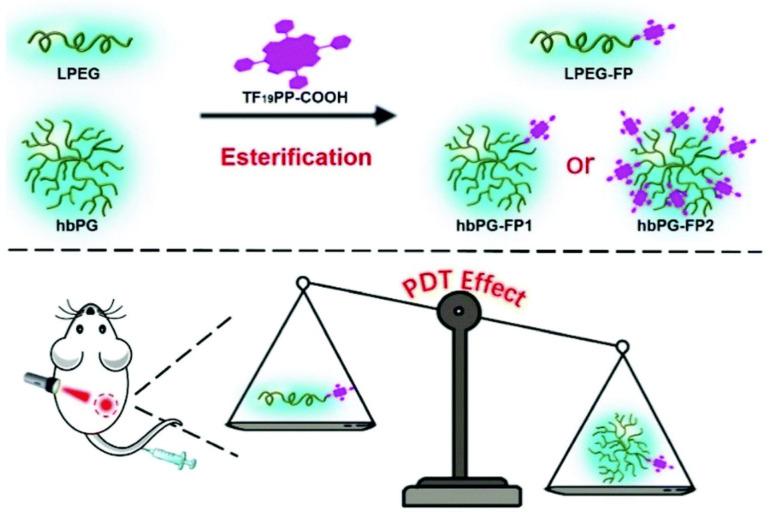
Hyperbranched polymers are a class of three-dimensional dendritic polymers with highly branched architectures. Their unique structural features endow them with promising physical and chemical properties, such as abundant surface functional groups, intramolecular cavities, and low viscosity. Therefore, hyperbranched-polymer-constructed cargo delivery carriers have drawn increasing interest and are being utilized in many biomedical applications. When applied for photodynamic therapy, photosensitizers are encapsulated in or covalently incorporated into hyperbranched polymers to improve their solubility, stability, and targeting efficiency and promote the therapeutic efficacy. This review will focus on the state-of-the-art studies concerning recent progress in hyperbranched-polymer-fabricated phototherapeutic nanomaterials with emphases on the building-block structures, synthetic strategies, and their combination with the codelivered diagnostics and synergistic therapeutics. We expect to bring our demonstration to the field to increase the understanding of the structure-property relationships and promote the further development of advanced photodynamic-therapy nanosystems.
超支化聚合物是一类具有高度支化结构的三维树枝状聚合物。它们独特的结构特征赋予其有前景的物理和化学性质,如丰富的表面官能团、分子内空腔和低粘度。因此,由超支化聚合物构建的药物递送载体已引起越来越多的关注,并被应用于许多生物医学领域。在光动力治疗中,光敏剂被包封在超支化聚合物中或与之共价结合,以提高其溶解度、稳定性和靶向效率,并提升治疗效果。本综述将聚焦于超支化聚合物制备的光治疗纳米材料的最新研究进展,重点关注其结构单元、合成策略,以及它们与联合递送的诊断试剂和协同治疗方法的结合。我们期望为该领域带来示范,以增进对结构-性能关系的理解,并推动先进光动力治疗纳米系统的进一步发展。




 Zotero 插件