
用于提高席夫碱基荧光化学传感器对有毒重金属选择性和灵敏度的策略。
Strategies for Improving Selectivity and Sensitivity of Schiff Base Fluorescent Chemosensors for Toxic and Heavy Metals.
机构信息
School of Chemistry and Chemical Engineering, Jiangsu University, Zhenjiang 212013, China.
Monash Suzhou Research Institute, Monash University, Suzhou Industrial Park, Suzhou 215000, China.
出版信息
Molecules. 2023 Oct 6;28(19):6960. doi: 10.3390/molecules28196960.
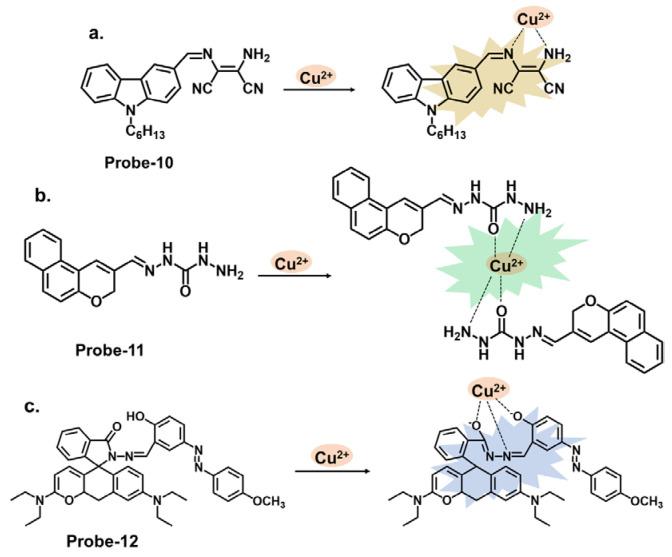
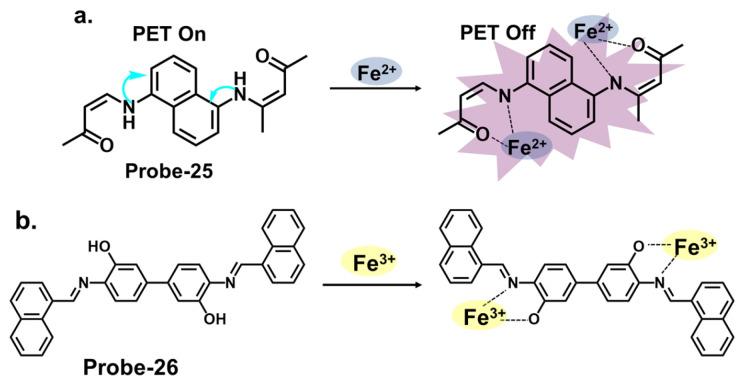
Toxic cations, including heavy metals, pose significant environmental and health risks, necessitating the development of reliable detection methods. This review investigates the techniques and approaches used to strengthen the sensitivity and selectivity of Schiff base fluorescent chemosensors designed specifically to detect toxic and heavy metal cations. The paper explores a range of strategies, including functional group variations, structural modifications, and the integration of nanomaterials or auxiliary receptors, to amplify the efficiency of these chemosensors. By improving selectivity towards targeted cations and achieving heightened sensitivity and detection limits, consequently, these strategies contribute to the advancement of accurate and efficient detection methods while increasing the range of end-use applications. The findings discussed in this review offer valuable insights into the potential of leveraging Schiff base fluorescent chemosensors for the accurate and reliable detection and monitoring of heavy metal cations in various fields, including environmental monitoring, biomedical research, and industrial safety.
有毒阳离子,包括重金属,对环境和健康构成重大风险,因此需要开发可靠的检测方法。本综述调查了用于增强专门设计用于检测有毒和重金属阳离子的席夫碱荧光化学传感器的灵敏度和选择性的技术和方法。本文探讨了一系列策略,包括官能团变化、结构修饰以及纳米材料或辅助受体的整合,以提高这些化学传感器的效率。通过提高对目标阳离子的选择性并实现更高的灵敏度和检测限,这些策略有助于开发准确高效的检测方法,并扩大其最终应用范围。本文讨论的研究结果为利用席夫碱荧光化学传感器在环境监测、生物医学研究和工业安全等各个领域准确可靠地检测和监测重金属阳离子提供了有价值的见解。






 Zotero 插件