
iPSCs 在疾病建模、药物筛选以及阿尔茨海默病的细胞治疗中的潜在应用。
Potential use of iPSCs for disease modeling, drug screening, and cell-based therapy for Alzheimer's disease.
机构信息
Department of Cytology and Histology, Faculty of Veterinary Medicine, Mansoura University, Mansoura, 35116, Egypt.
Biomedical Research Center, Qatar University, 2713, Doha, Qatar.
出版信息
Cell Mol Biol Lett. 2023 Nov 30;28(1):98. doi: 10.1186/s11658-023-00504-2.
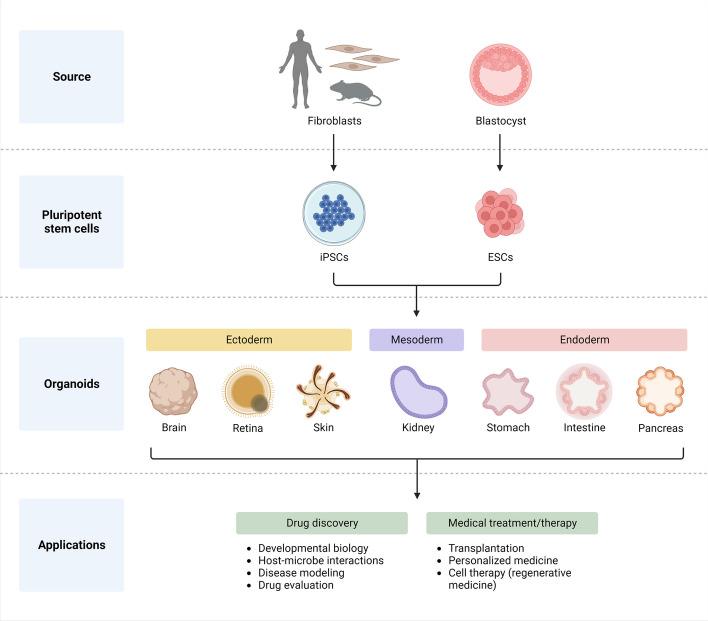
Alzheimer's disease (AD) is a chronic illness marked by increasing cognitive decline and nervous system deterioration. At this time, there is no known medication that will stop the course of Alzheimer's disease; instead, most symptoms are treated. Clinical trial failure rates for new drugs remain high, highlighting the urgent need for improved AD modeling for improving understanding of the underlying pathophysiology of disease and improving drug development. The development of induced pluripotent stem cells (iPSCs) has made it possible to model neurological diseases like AD, giving access to an infinite number of patient-derived cells capable of differentiating neuronal fates. This advance will accelerate Alzheimer's disease research and provide an opportunity to create more accurate patient-specific models of Alzheimer's disease to support pathophysiological research, drug development, and the potential application of stem cell-based therapeutics. This review article provides a complete summary of research done to date on the potential use of iPSCs from AD patients for disease modeling, drug discovery, and cell-based therapeutics. Current technological developments in AD research including 3D modeling, genome editing, gene therapy for AD, and research on familial (FAD) and sporadic (SAD) forms of the disease are discussed. Finally, we outline the issues that need to be elucidated and future directions for iPSC modeling in AD.
阿尔茨海默病(AD)是一种慢性疾病,其特征是认知能力逐渐下降和神经系统恶化。目前尚无已知的药物可以阻止阿尔茨海默病的进程;相反,大多数症状都需要治疗。新药临床试验失败率仍然很高,这突出表明迫切需要改进 AD 模型,以更好地了解疾病的潜在病理生理学,并改善药物开发。诱导多能干细胞(iPSC)的发展使得对 AD 等神经疾病进行建模成为可能,为获得能够分化为神经元命运的无限数量的患者来源细胞提供了机会。这一进展将加速阿尔茨海默病研究,并为创建更准确的针对患者的阿尔茨海默病模型提供机会,以支持病理生理学研究、药物开发和基于干细胞的治疗方法的潜在应用。本文综述了迄今为止关于使用 AD 患者的 iPSC 进行疾病建模、药物发现和基于细胞的治疗的研究进展。讨论了 AD 研究中的当前技术发展,包括 3D 建模、基因编辑、AD 的基因治疗以及家族性(FAD)和散发性(SAD)形式的疾病研究。最后,我们概述了需要阐明的问题和 AD 中 iPSC 建模的未来方向。



 Zotero 插件