
小行星撞击:星形胶质细胞调节类器官内人类神经网络的潜力。
Asteroid impact: the potential of astrocytes to modulate human neural networks within organoids.
作者信息
Lavekar S S, Patel M D, Montalvo-Parra M D, Krencik R
机构信息
Department of Neurosurgery, Center for Neuroregeneration, Houston Methodist Research Institute, Houston, TX, United States.
出版信息
Front Neurosci. 2023 Nov 22;17:1305921. doi: 10.3389/fnins.2023.1305921. eCollection 2023.
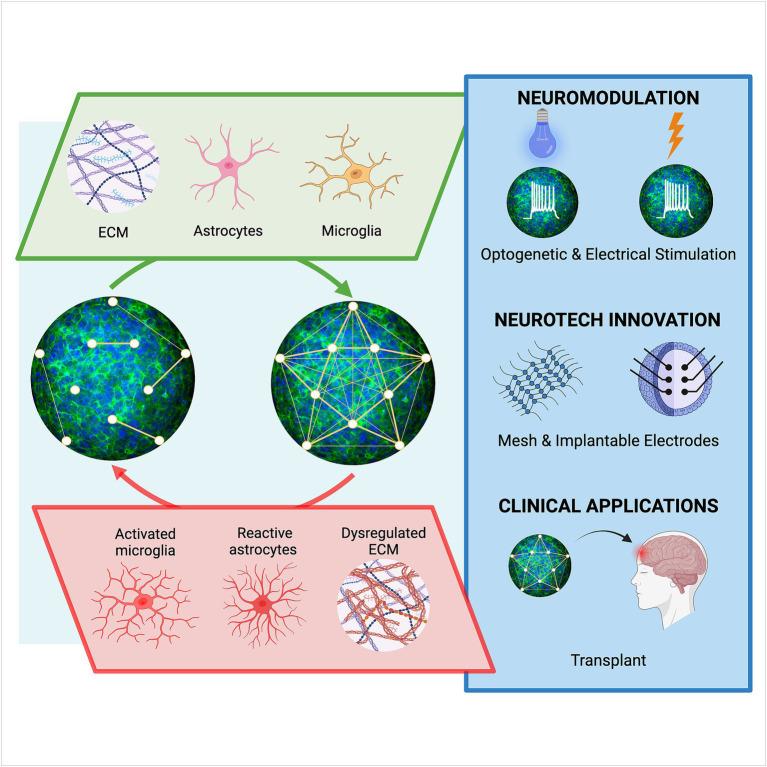
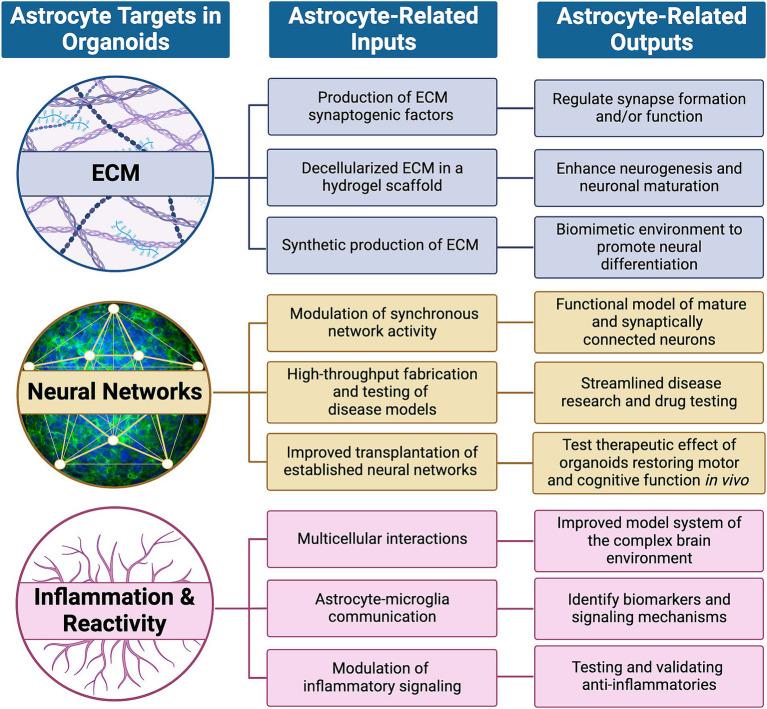
Astrocytes are a vital cellular component of the central nervous system that impact neuronal function in both healthy and pathological states. This includes intercellular signals to neurons and non-neuronal cells during development, maturation, and aging that can modulate neural network formation, plasticity, and maintenance. Recently, human pluripotent stem cell-derived neural aggregate cultures, known as neurospheres or organoids, have emerged as improved experimental platforms for basic and pre-clinical neuroscience compared to traditional approaches. Here, we summarize the potential capability of using organoids to further understand the mechanistic role of astrocytes upon neural networks, including the production of extracellular matrix components and reactive signaling cues. Additionally, we discuss the application of organoid models to investigate the astrocyte-dependent aspects of neuropathological diseases and to test astrocyte-inspired technologies. We examine the shortcomings of organoid-based experimental platforms and plausible improvements made possible by cutting-edge neuroengineering technologies. These advancements are expected to enable the development of improved diagnostic strategies and high-throughput translational applications regarding neuroregeneration.
星形胶质细胞是中枢神经系统的重要细胞组成部分,在健康和病理状态下都会影响神经元功能。这包括在发育、成熟和衰老过程中向神经元和非神经元细胞发送的细胞间信号,这些信号可以调节神经网络的形成、可塑性和维持。最近,与传统方法相比,人类多能干细胞衍生的神经聚集体培养物,即神经球或类器官,已成为基础和临床前神经科学更好的实验平台。在这里,我们总结了利用类器官进一步了解星形胶质细胞在神经网络上的机制作用的潜在能力,包括细胞外基质成分的产生和反应性信号线索。此外,我们讨论了类器官模型在研究神经病理疾病中星形胶质细胞依赖的方面以及测试受星形胶质细胞启发的技术方面的应用。我们研究了基于类器官的实验平台的缺点以及前沿神经工程技术可能带来的合理改进。这些进展有望推动有关神经再生的改进诊断策略和高通量转化应用的发展。
 Zotero 插件