
λ噬菌体 holin 介导的溶菌的时空控制
Spatial and temporal control of lysis by the lambda holin.
机构信息
Sandia National Labs, Albuquerque, New Mexico, USA.
Department of Biochemistry and Biophysics, Center of Phage Technology, Texas A&M University, College Station, Texas, USA.
出版信息
mBio. 2024 Feb 14;15(2):e0129023. doi: 10.1128/mbio.01290-23. Epub 2023 Dec 21.
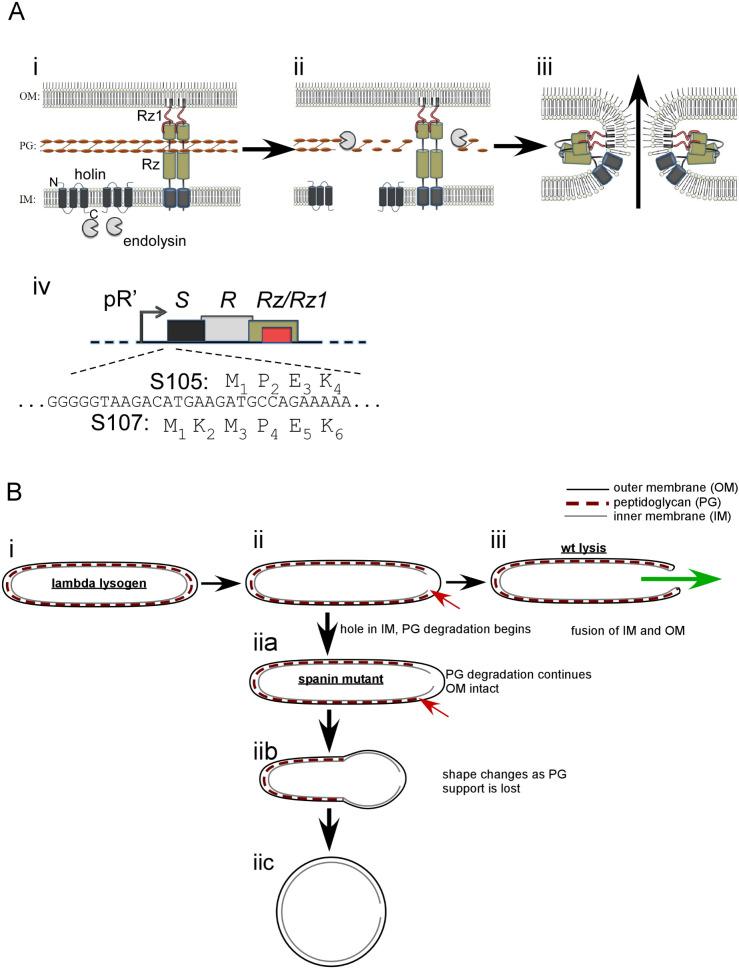
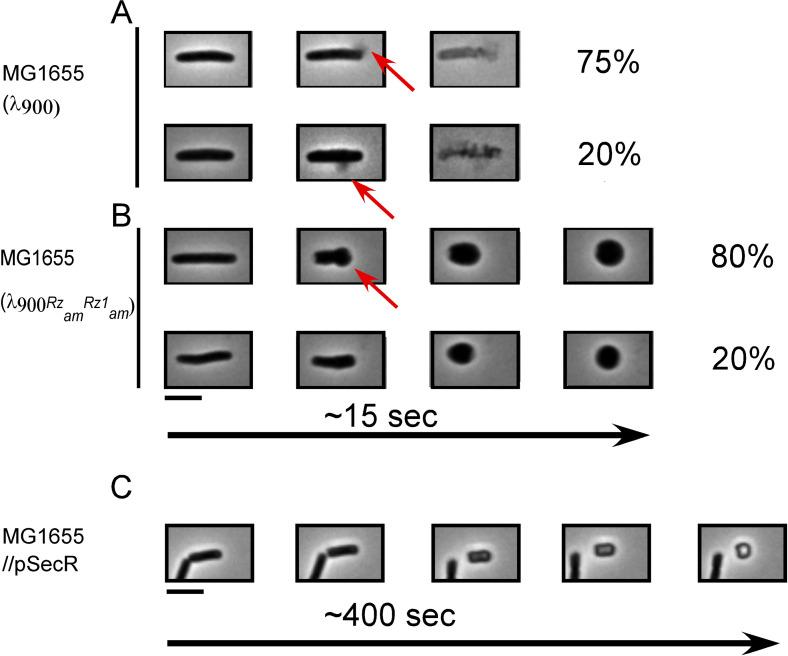
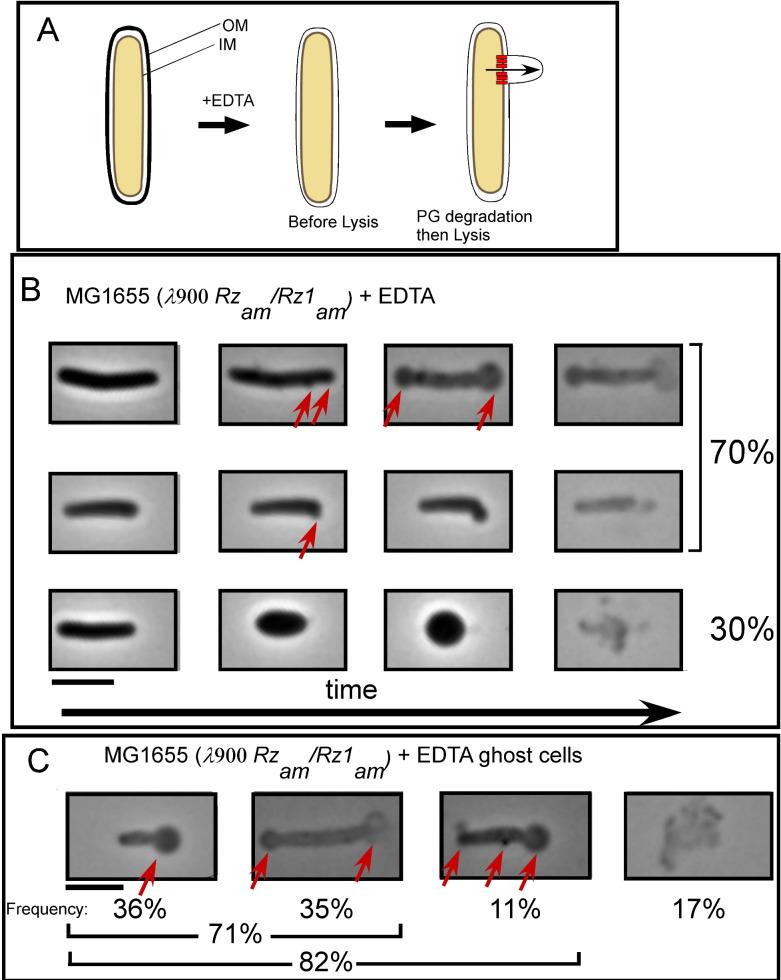
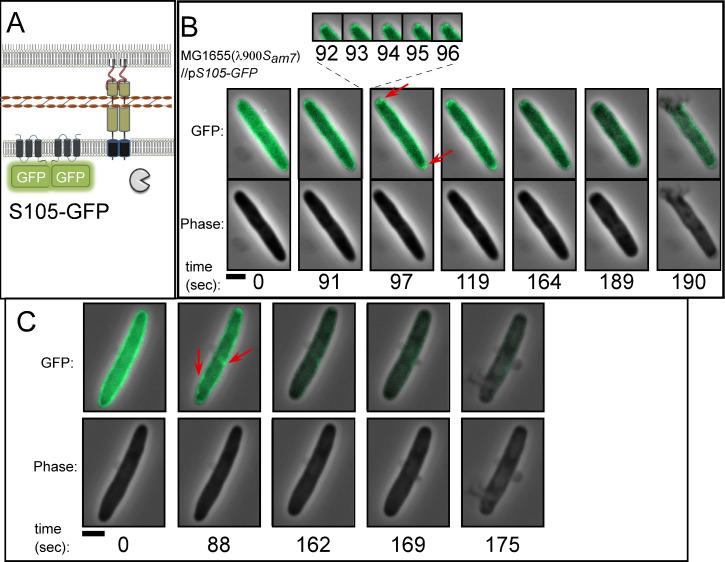
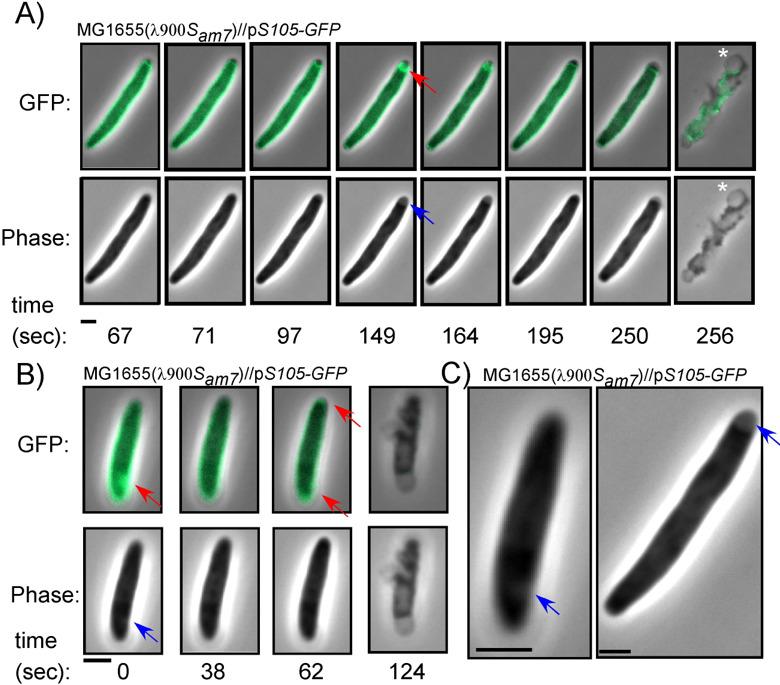
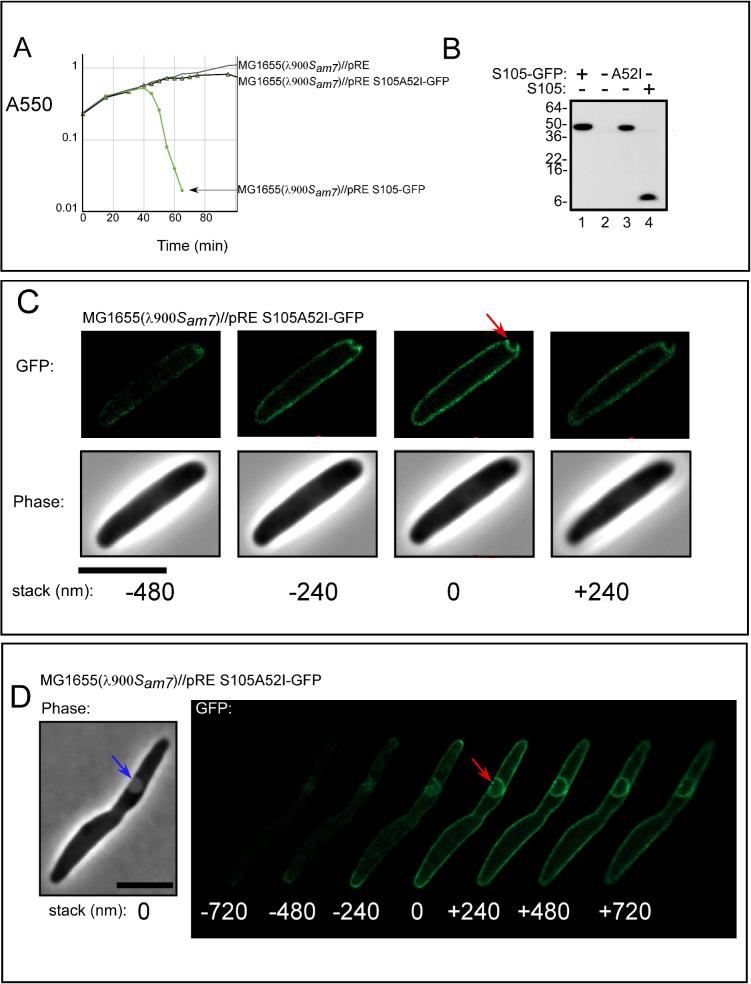
The infection cycle of phage λ terminates in lysis mediated by three types of lysis proteins, each disrupting a layer in the bacterial envelope: the S105 holin, the R endolysin, and the Rz/Rz1 spanin complex targeting the inner membrane, cell wall or peptidoglycan, and the outer membrane, respectively. Video microscopy has shown that in most infections, lysis occurs as a sudden, explosive event at a cell pole, such that the initial product is a less refractile ghost that retains rod-shaped morphology. Here, we investigate the molecular basis of polar lysis using time-lapse fluorescence microscopy. The results indicate that the holin determines the morphology of lysis by suddenly forming two-dimensional rafts at the poles about 100 s prior to lysis. Given the physiological and biochemical similarities between the lambda holin and other class I holins, dynamic redistribution and sudden concentration may be common features of holins, probably reflecting the fitness advantage of all-or-nothing lysis regulation.IMPORTANCEIn this study, we use fluorescent video microscopy to track -green fluorescent protein (GFP)-labeled holin in the minutes prior to phage lysis. Our work contextualizes prior genetic and biochemical data, showing when hole formation starts and where holin oligomers form in relation to the site of lytic rupture. Furthermore, prior work showed that the morphology of lambda-infected cells is characterized by an explosive event starting at the cell pole; however, the basis for this was not clear. This study shows that holin most often oligomerizes at cell poles and that the site of the oligomerization is spatially correlated with the site of lytic blowout. Therefore, the holin is the key contributor to polar lysis morphology for phage lambda.
噬菌体 λ 的感染周期以三种裂解蛋白介导的裂解而终止,每种蛋白都破坏细菌包膜的一层:S105 孔蛋白、R 内切酶和靶向内膜、细胞壁或肽聚糖的 Rz/Rz1 间隔蛋白复合物,以及外膜。视频显微镜已显示,在大多数感染中,裂解在细胞极处突然发生,呈爆炸式,最初产物是一个折射率较低的鬼影,保留杆状形态。在这里,我们使用延时荧光显微镜研究极裂解的分子基础。结果表明,孔蛋白通过在裂解前约 100 秒在极处突然形成二维筏来决定裂解的形态。鉴于 λ 噬菌体孔蛋白和其他 I 类孔蛋白在生理和生化上的相似性,动态再分配和突然浓缩可能是孔蛋白的共同特征,可能反映了全有或全无裂解调节的适应性优势。
重要性:在这项研究中,我们使用荧光视频显微镜在噬菌体裂解前几分钟追踪 GFP 标记的孔蛋白。我们的工作将以前的遗传和生化数据置于上下文中,显示孔形成何时开始以及孔蛋白寡聚体在与裂解破裂部位相关的位置形成。此外,先前的工作表明,被 λ 噬菌体感染的细胞的形态特征是从细胞极开始的爆炸事件;然而,其基础尚不清楚。这项研究表明,孔蛋白通常在细胞极处寡聚化,寡聚化的部位与裂解喷口的部位在空间上相关。因此,孔蛋白是噬菌体 λ 极裂解形态的关键贡献者。


 Zotero 插件