
一种用于组装和重新启动临床相关尾部噬菌体的合成生物学方法。
A synthetic biology approach to assemble and reboot clinically relevant tailed phages.
机构信息
Department of Civil and Environmental Engineering, Northwestern University, Evanston, Illinois, USA.
Division of Infectious Diseases, Department of Medicine, Feinberg School of Medicine, Northwestern University, Chicago, Illinois, USA.
出版信息
Microbiol Spectr. 2024 Mar 5;12(3):e0289723. doi: 10.1128/spectrum.02897-23. Epub 2024 Jan 31.
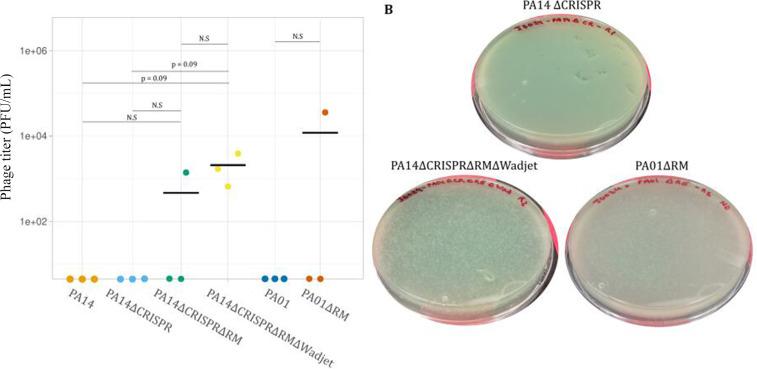
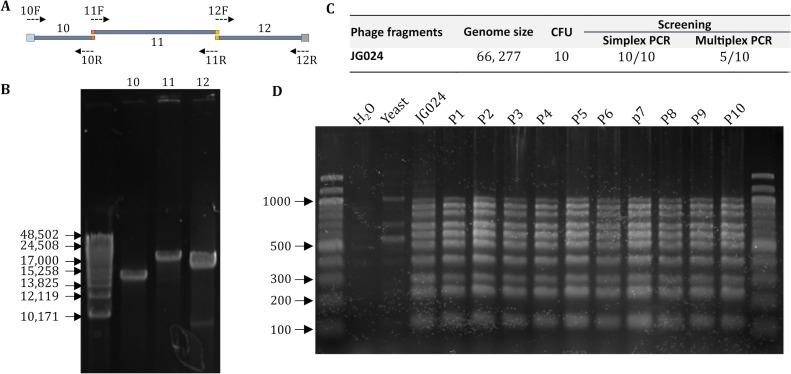
The rise in the frequency of antibiotic resistance has made bacterial infections, specifically , a cause for greater concern. Phage therapy is a promising solution that uses naturally isolated phages to treat bacterial infections. Ecological limitations, which stipulate a discrete host range and the inevitable evolution of resistance, may be overcome through a better understanding of phage biology and the utilization of engineered phages. In this study, we developed a synthetic biology approach to construct tailed phages that naturally target clinically relevant strains of . As proof of concept, we successfully cloned and assembled the JG024 and DMS3 phage genomes in yeast using transformation-associated recombination cloning and rebooted these two phage genomes in two different strains of . We identified factors that affected phage reboot efficiency like the phage species or the presence of antiviral defense systems in the bacterial strain. We have successfully extended this method to two other phage species and observed that the method enables the reboot of phages that are naturally unable to infect the strain used for reboot. This research represents a critical step toward the construction of clinically relevant, engineered phages.IMPORTANCE is a bacterium responsible for severe infections and a common major complication in cystic fibrosis. The use of antibiotics to treat bacterial infections has become increasingly difficult as antibiotic resistance has become more prevalent. Phage therapy is an alternative solution that is already being used in some European countries, but its use is limited by the narrow host range due to the phage receptor specificity, the presence of antiviral defense systems in the bacterial strain, and the possible emergence of phage resistance. In this study, we demonstrate the use of a synthetic biology approach to construct and reboot clinically relevant tailed phages. This method enables a significant expansion of possibilities through the construction of engineered phages for therapy applications.
抗生素耐药性的增加使得细菌感染,特别是,引起了更大的关注。噬菌体治疗是一种有前途的解决方案,它使用天然分离的噬菌体来治疗细菌感染。生态限制,规定了离散的宿主范围和不可避免的抗药性进化,可能通过更好地了解噬菌体生物学和利用工程噬菌体来克服。在这项研究中,我们开发了一种合成生物学方法来构建靶向临床相关株的有尾噬菌体。作为概念验证,我们成功地使用转化相关重组克隆在酵母中克隆和组装了 JG024 和 DMS3 噬菌体基因组,并在两种不同的菌株中重新启动了这两种噬菌体基因组。我们确定了影响噬菌体重新启动效率的因素,例如噬菌体种类或菌株中抗病毒防御系统的存在。我们已经成功地将这种方法扩展到另外两种噬菌体,并观察到该方法能够重新启动自然无法感染用于重新启动的菌株的噬菌体。这项研究是构建临床相关的、工程化的噬菌体的重要一步。
重要性是一种导致严重感染的细菌,也是囊性纤维化的常见主要并发症。随着抗生素耐药性的增加,抗生素治疗细菌感染变得越来越困难。噬菌体治疗是一种替代解决方案,已经在一些欧洲国家使用,但由于噬菌体受体特异性、菌株中抗病毒防御系统的存在以及噬菌体耐药性的出现,其使用受到限制。在这项研究中,我们展示了使用合成生物学方法构建和重新启动临床相关有尾噬菌体的方法。这种方法通过构建用于治疗应用的工程噬菌体,显著扩展了可能性。



 Zotero 插件