
IBV 感染的原代鸡胚成纤维细胞和永生化 DF-1 的差异分析。
Differential analysis of IBV-infected primary chicken embryonic fibroblasts and immortalized DF-1.
机构信息
Key Laboratory of Bio-Resources and Eco-Environment, Ministry of Education, College of Life Science, Sichuan University, Chengdu, China.
出版信息
Microbiol Spectr. 2024 Mar 5;12(3):e0240223. doi: 10.1128/spectrum.02402-23. Epub 2024 Feb 1.
UNLABELLED
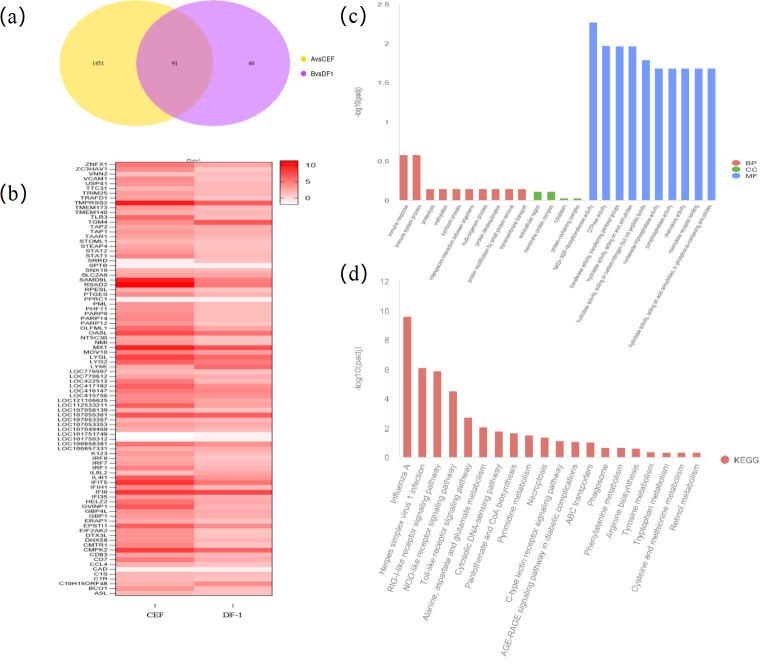
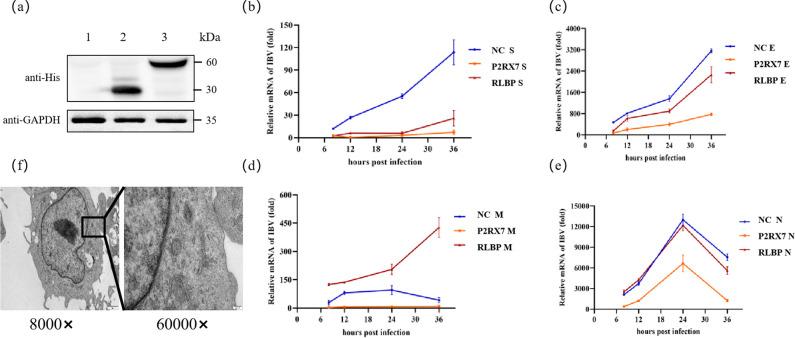
Infectious bronchitis virus (IBV), the causative agent of infectious bronchitis, is responsible for major economic losses in the poultry industry worldwide. While IBVs can usually be passaged in primary chicken embryonic fibroblasts (CEFs), most of the wild ones cannot adapt to passaged cell lines. In this study, the wild strain CK/CH/MY/2020 was used to infect primary CEF and immortalize DF-1 CEF cells. Results indicated that IBV was able to cause lesions and pass onto CEF, but not DF-1. Indeed, the virus could enter DF-1 cells and synthesize the associated structural gene but could not assemble into complete viral particles for release. Furthermore, transcriptome sequencing analysis showed significant differences in gene expression between CEF and DF-1 cells after viral infection, although the corresponding antiviral responses could be activated in both cell types. The biggest difference was in terms of the amino acid biosynthesis pathway and the cytokine receptor interaction pathway, which were significantly and specifically activated in CEF. This could actually explain why intact viruses can be assembled but not in DF-1. In addition, and affect the replication of IBV's structural genes to some extent. Overall, IBV can enter CEF and DF-1 cells, but the complex intracellular cytokine interactions affect the assembly and release of viral particles. The insight will be useful for the study of IBV through transmission and pathogenesis.
IMPORTANCE
Infectious bronchitis virus (IBV) is responsible for high morbidity and mortality as well as substantial economic losses worldwide. Transcriptome sequencing of IBV-infected chicken embryonic fibroblast and DF-1 cells revealed that the virus elicits antiviral immunity in cells after viral infection, but IBV cannot activate DF-1 cells to produce sufficient amounts of viral structures to assemble into complete virions, which may be caused by the interactions between cytokines. The study of IBV cellular adaptations is important for vaccine development and investigation of the pathogenesis of IBV.
未加标签
传染性支气管炎病毒(IBV)是传染性支气管炎的病原体,在世界范围内给家禽业造成了重大经济损失。虽然 IBV 通常可以在原代鸡胚成纤维细胞(CEF)中传代,但大多数野生型 IBV 不能适应传代细胞系。在本研究中,使用野生型 CK/CH/MY/2020 株感染原代 CEF 并永生化 DF-1 CEF 细胞。结果表明,IBV 能够引起病变并在 CEF 中传播,但不能在 DF-1 中传播。事实上,病毒可以进入 DF-1 细胞并合成相关的结构基因,但不能组装成完整的病毒颗粒进行释放。此外,转录组测序分析表明,病毒感染后 CEF 和 DF-1 细胞之间的基因表达存在显著差异,尽管两种细胞类型都可以激活相应的抗病毒反应。最大的差异在于氨基酸生物合成途径和细胞因子受体相互作用途径,这在 CEF 中被显著且特异性地激活。这实际上可以解释为什么完整的病毒可以组装,但在 DF-1 中不能。此外, 和 对 IBV 结构基因的复制有一定的影响。总体而言,IBV 可以进入 CEF 和 DF-1 细胞,但复杂的细胞内细胞因子相互作用影响病毒颗粒的组装和释放。该研究结果将有助于研究 IBV 通过 传播和发病机制。
重要性
传染性支气管炎病毒(IBV)在世界范围内可引起高发病率和死亡率,并造成巨大的经济损失。IBV 感染鸡胚成纤维细胞和 DF-1 细胞的转录组测序表明,病毒感染后细胞会引发抗病毒免疫反应,但 IBV 不能激活 DF-1 细胞产生足够数量的病毒结构来组装成完整的病毒粒子,这可能是由于细胞因子之间的相互作用所致。对 IBV 细胞适应性的研究对于疫苗开发和 IBV 发病机制的研究很重要。




 Zotero 插件