
肠道通透性、肠道炎症和肠道免疫系统反应与肠道微生物组组成的衰老相关变化有关:一项雌性小鼠的研究。
Intestinal Permeability, Gut Inflammation, and Gut Immune System Response Are Linked to Aging-Related Changes in Gut Microbiota Composition: A Study in Female Mice.
机构信息
Faculty of Pharmacy and Nutrition, Department of Nutrition, Food Science, and Physiology, University of Navarra, Pamplona, Spain.
Center for Nutrition Research, University of Navarra, Pamplona, Spain.
出版信息
J Gerontol A Biol Sci Med Sci. 2024 Apr 1;79(4). doi: 10.1093/gerona/glae045.
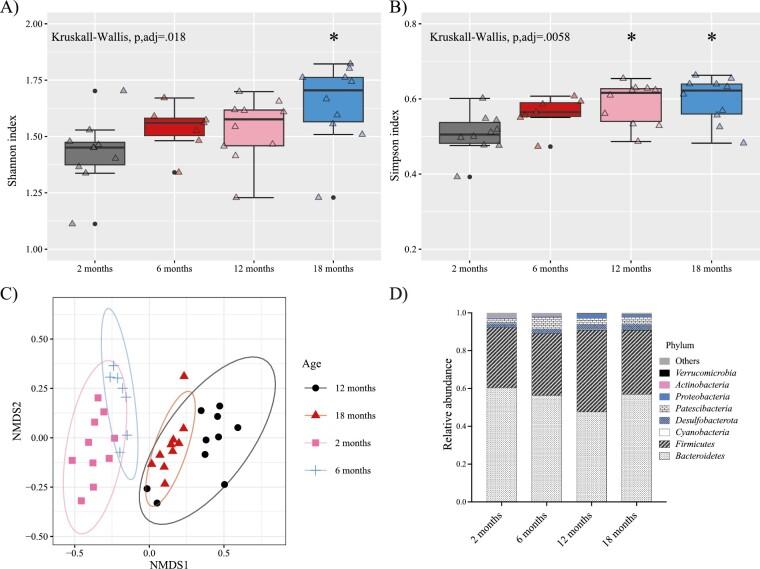
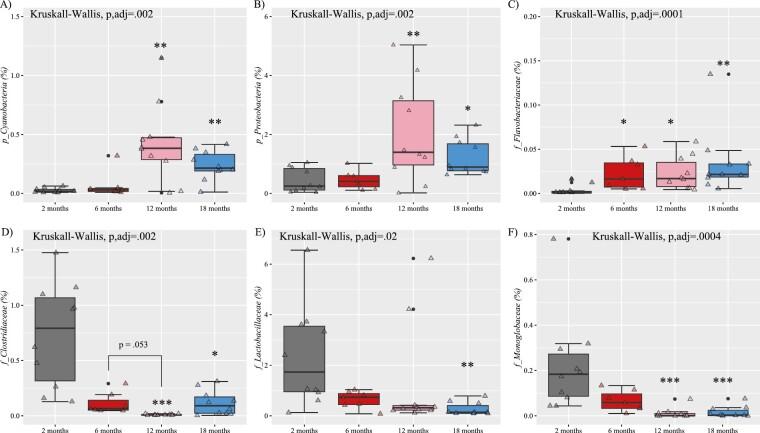
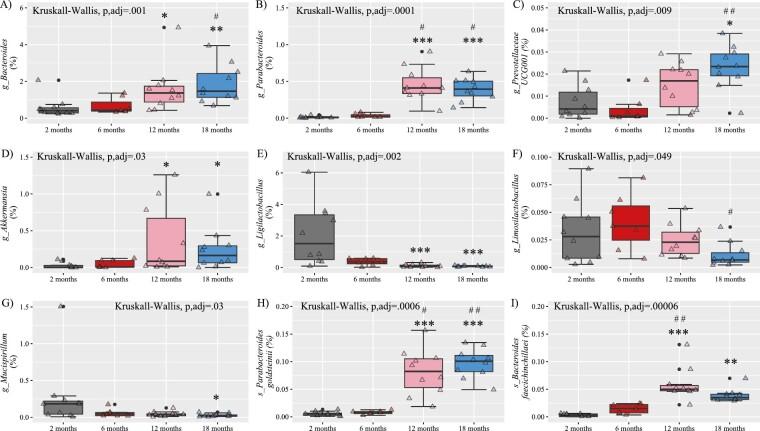
Aging entails changes at the cellular level that increase the risk of various pathologies. An association between gut microbiota and age-related diseases has also been attributed. This study aims to analyze changes in fecal microbiota composition and their association with genes related to immune response, gut inflammation, and intestinal barrier impairment. Fecal samples of female mice at different ages (2 months, 6 months, 12 months, and 18 months) and gene expression in colon tissue were analyzed. Results showed that the older mice group had a more diverse microbiota than the younger group. Additionally, the abundance of Cyanobacteria, Proteobacteria, Flavobacteriaceae, Bacteroides, Parabacteroides, Prevotellaceae_UCG-001, Akkermansia, and Parabacteroides goldsteinii increased with age. In contrast, there was a notable decline in Clostridiaceae, Lactobacillaceae, Monoglobaceae, Ligilactobacillus, Limosilactobacillus, Mucispirillum, and Bacteroides faecichinchillae. These bacteria imbalances were positively correlated with increased inflammation markers in the colon, including Tnf-α, Ccl2, and Ccl12, and negatively with the expression of tight junction genes (Jam2, Tjp1, and Tjp2), as well as immune response genes (Cd4, Cd72, Tlr7, Tlr12, and Lbp). In conclusion, high levels of diversity did not result in improved health in older mice; however, the imbalance in bacteria abundance that occurs with aging might contribute to immune senescence, inflammation, and leaky gut disease.
衰老是指在细胞水平上发生的变化,增加了各种病理学的风险。也有人认为肠道微生物群与与年龄相关的疾病之间存在关联。本研究旨在分析粪便微生物群组成的变化及其与免疫反应、肠道炎症和肠道屏障损伤相关的基因的关系。分析了不同年龄(2 个月、6 个月、12 个月和 18 个月)雌性小鼠的粪便样本和结肠组织中的基因表达。结果表明,老年小鼠组的微生物群多样性比年轻组更丰富。此外,蓝细菌、变形菌、黄杆菌科、拟杆菌、副拟杆菌、普雷沃氏菌科_UCG-001、阿克曼氏菌和副拟杆菌属_goldsteinii 的丰度随年龄增长而增加。相比之下,梭菌科、乳杆菌科、单球菌科、Ligilactobacillus、Limosilactobacillus、Mucispirillum 和粪拟杆菌属_faecichinchillae 的数量显著下降。这些细菌失衡与结肠中炎症标志物(包括 Tnf-α、Ccl2 和 Ccl12)的增加呈正相关,与紧密连接基因(Jam2、Tjp1 和 Tjp2)以及免疫反应基因(Cd4、Cd72、Tlr7、Tlr12 和 Lbp)的表达呈负相关。总之,高多样性水平并未导致老年小鼠健康状况改善;然而,随着年龄的增长而发生的细菌丰度失衡可能导致免疫衰老、炎症和肠漏病。

 Zotero 插件