
严重急性呼吸综合征冠状病毒2(SARS-CoV-2)结构蛋白在肺损伤中的多方面作用
Multifaceted role of SARS-CoV-2 structural proteins in lung injury.
作者信息
Zheng Guoping, Qiu Guanguan, Qian Huifeng, Shu Qiang, Xu Jianguo
机构信息
Shaoxing Second Hospital, Shaoxing, Zhejiang, China.
The Children's Hospital of Zhejiang University School of Medicine and National Clinical Research Center for Child Health, Hangzhou, Zhejiang, China.
出版信息
Front Immunol. 2024 Feb 5;15:1332440. doi: 10.3389/fimmu.2024.1332440. eCollection 2024.
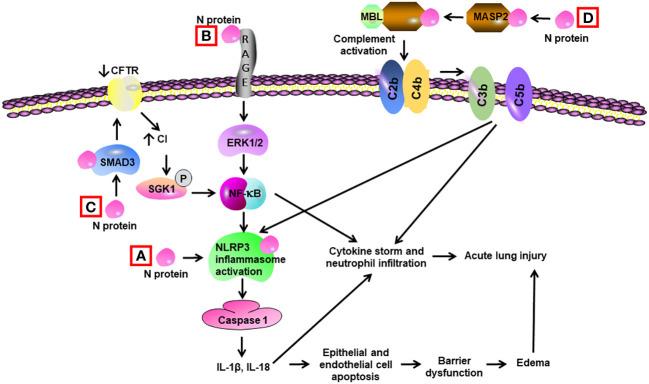
Severe acute respiratory syndrome coronavirus 2 (SARS-CoV-2) is the third human coronavirus to cause acute respiratory distress syndrome (ARDS) and contains four structural proteins: spike, envelope, membrane, and nucleocapsid. An increasing number of studies have demonstrated that all four structural proteins of SARS-CoV-2 are capable of causing lung injury, even without the presence of intact virus. Therefore, the topic of SARS-CoV-2 structural protein-evoked lung injury warrants more attention. In the current article, we first synopsize the structural features of SARS-CoV-2 structural proteins. Second, we discuss the mechanisms for structural protein-induced inflammatory responses . Finally, we list the findings that indicate structural proteins themselves are toxic and sufficient to induce lung injury . Recognizing mechanisms of lung injury triggered by SARS-CoV-2 structural proteins may facilitate the development of targeted modalities in treating COVID-19.
严重急性呼吸综合征冠状病毒2(SARS-CoV-2)是第三种导致急性呼吸窘迫综合征(ARDS)的人类冠状病毒,它包含四种结构蛋白:刺突蛋白、包膜蛋白、膜蛋白和核衣壳蛋白。越来越多的研究表明,即使不存在完整病毒,SARS-CoV-2的所有四种结构蛋白都能够导致肺损伤。因此,SARS-CoV-2结构蛋白引发的肺损伤这一主题值得更多关注。在本文中,我们首先概述SARS-CoV-2结构蛋白的结构特征。其次,我们讨论结构蛋白诱导炎症反应的机制。最后,我们列出表明结构蛋白本身具有毒性且足以诱导肺损伤的研究结果。认识到由SARS-CoV-2结构蛋白引发的肺损伤机制可能有助于开发治疗COVID-19的靶向方法。


 Zotero 插件