
荧光颗粒酶A底物可实现适应性免疫细胞活性的实时成像。
Fluorogenic Granzyme A Substrates Enable Real-Time Imaging of Adaptive Immune Cell Activity.
作者信息
Cheng Zhiming, Thompson Emily J, Mendive-Tapia Lorena, Scott Jamie I, Benson Sam, Kitamura Takanori, Senan-Salinas Ana, Samarakoon Youhani, Roberts Edward W, Arias Maykel A, Pardo Julian, Galvez Eva M, Vendrell Marc
机构信息
Centre for Inflammation Research The University of Edinburgh Edinburgh UK.
MRC Centre for Reproductive Health The University of Edinburgh Edinburgh UK.
出版信息
Angew Chem Weinheim Bergstr Ger. 2023 Feb 13;135(8):e202216142. doi: 10.1002/ange.202216142. Epub 2023 Jan 16.
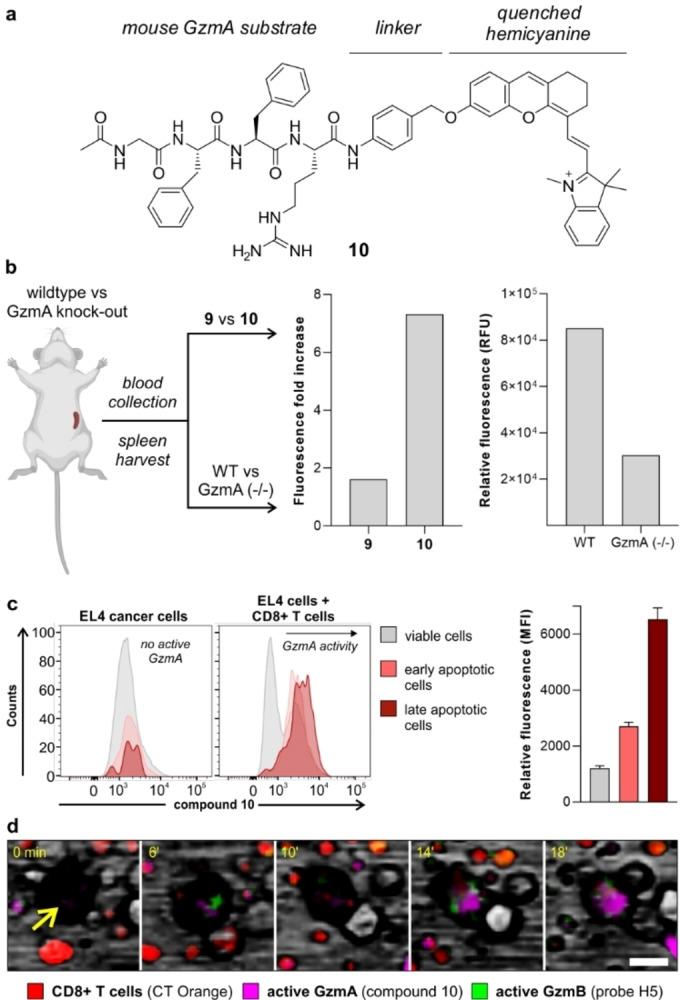
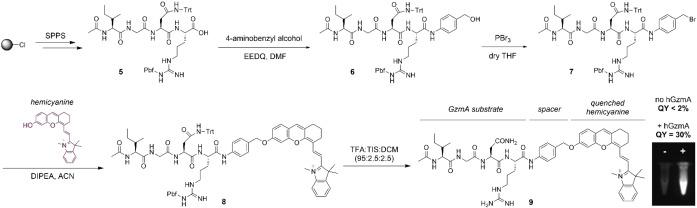
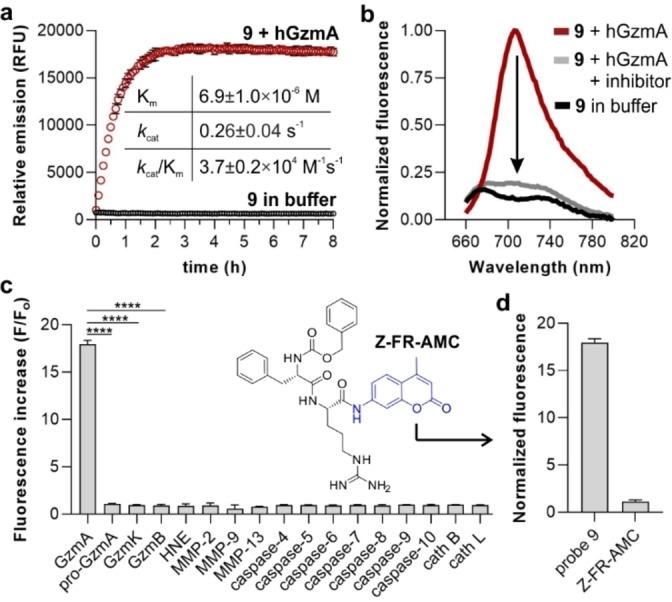
Cytotoxic immune cells, including T lymphocytes (CTLs) and natural killer (NK) cells, are essential components of the host response against tumors. CTLs and NK cells secrete granzyme A (GzmA) upon recognition of cancer cells; however, there are very few tools that can detect physiological levels of active GzmA with high spatiotemporal resolution. Herein, we report the rational design of the near-infrared fluorogenic substrates for human GzmA and mouse GzmA. These activity-based probes display very high catalytic efficiency and selectivity over other granzymes, as shown in tissue lysates from wild-type and GzmA knock-out mice. Furthermore, we demonstrate that the probes can image how adaptive immune cells respond to antigen-driven recognition of cancer cells in real time.
细胞毒性免疫细胞,包括T淋巴细胞(CTL)和自然杀伤(NK)细胞,是宿主抗肿瘤反应的重要组成部分。CTL和NK细胞在识别癌细胞后会分泌颗粒酶A(GzmA);然而,能够以高时空分辨率检测活性GzmA生理水平的工具非常少。在此,我们报告了针对人GzmA和小鼠GzmA的近红外荧光底物的合理设计。如在野生型和GzmA基因敲除小鼠的组织裂解物中所示,这些基于活性的探针相对于其他颗粒酶显示出非常高的催化效率和选择性。此外,我们证明这些探针可以实时成像适应性免疫细胞如何对抗原驱动的癌细胞识别做出反应。



 Zotero 插件