
PI3K/Akt信号通路对铁死亡的调控:癌症中一个有前景的治疗靶点
Regulation of ferroptosis by PI3K/Akt signaling pathway: a promising therapeutic axis in cancer.
作者信息
Su Hua, Peng Chao, Liu Yang
机构信息
Xingyi People's Hospital, Xinyi, China.
The Second Affiliated Hospital of Zhengzhou University, Zhengzhou, China.
出版信息
Front Cell Dev Biol. 2024 Mar 18;12:1372330. doi: 10.3389/fcell.2024.1372330. eCollection 2024.
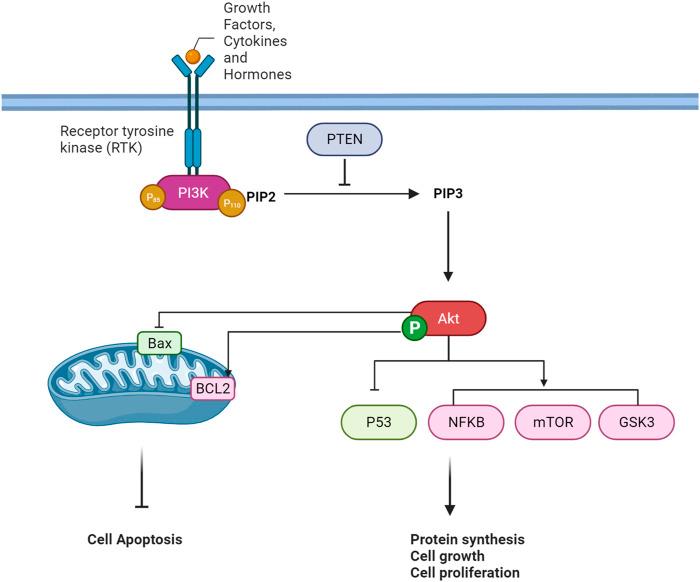
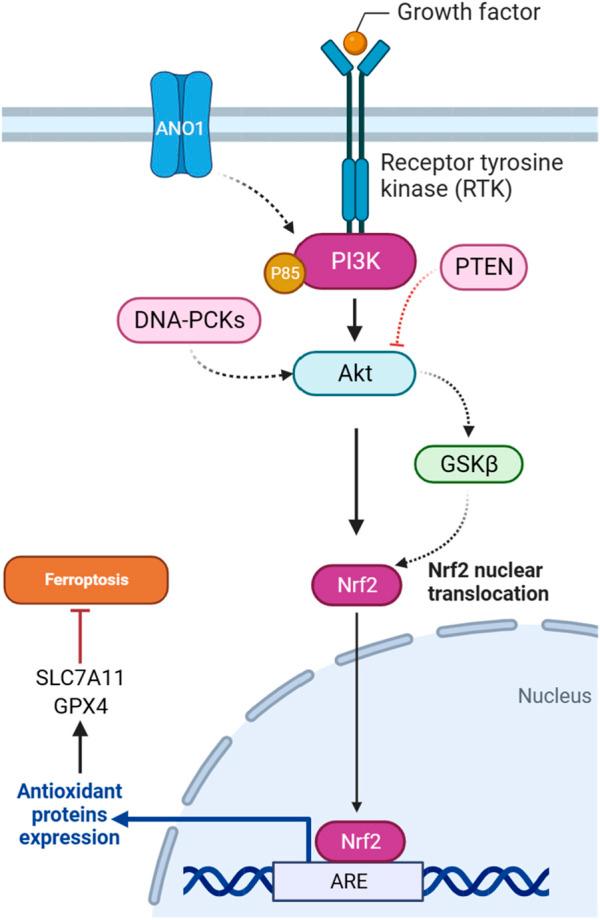
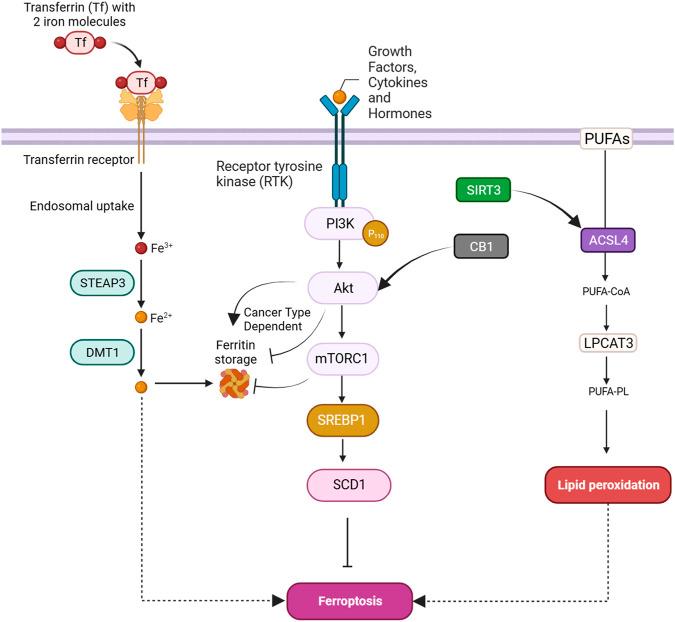
The global challenge posed by cancer, marked by rising incidence and mortality rates, underscores the urgency for innovative therapeutic approaches. The PI3K/Akt signaling pathway, frequently amplified in various cancers, is central in regulating essential cellular processes. Its dysregulation, often stemming from genetic mutations, significantly contributes to cancer initiation, progression, and resistance to therapy. Concurrently, ferroptosis, a recently discovered form of regulated cell death characterized by iron-dependent processes and lipid reactive oxygen species buildup, holds implications for diseases, including cancer. Exploring the interplay between the dysregulated PI3K/Akt pathway and ferroptosis unveils potential insights into the molecular mechanisms driving or inhibiting ferroptotic processes in cancer cells. Evidence suggests that inhibiting the PI3K/Akt pathway may sensitize cancer cells to ferroptosis induction, offering a promising strategy to overcome drug resistance. This review aims to provide a comprehensive exploration of this interplay, shedding light on the potential for disrupting the PI3K/Akt pathway to enhance ferroptosis as an alternative route for inducing cell death and improving cancer treatment outcomes.
癌症带来的全球挑战,表现为发病率和死亡率不断上升,凸显了创新治疗方法的紧迫性。PI3K/Akt信号通路在各种癌症中经常扩增,在调节基本细胞过程中起核心作用。其失调通常源于基因突变,显著促进癌症的发生、发展以及对治疗的耐药性。同时,铁死亡是最近发现的一种受调控的细胞死亡形式,其特征是铁依赖性过程和脂质活性氧的积累,与包括癌症在内的多种疾病有关。探索失调的PI3K/Akt通路与铁死亡之间的相互作用,揭示了驱动或抑制癌细胞中铁死亡过程的分子机制的潜在见解。有证据表明,抑制PI3K/Akt通路可能使癌细胞对铁死亡诱导敏感,为克服耐药性提供了一种有前景的策略。本综述旨在全面探讨这种相互作用,阐明破坏PI3K/Akt通路以增强铁死亡作为诱导细胞死亡和改善癌症治疗结果的替代途径的潜力。



 Zotero 插件