
细胞代谢调节 T 细胞亚群的分化和功能。
Cellular metabolism regulates the differentiation and function of T-cell subsets.
机构信息
Key Laboratory of Immune Response and Immunotherapy, Center for Advanced Interdisciplinary Science and Biomedicine of IHM, School of Basic Medical Sciences, Division of Life Sciences and Medicine, University of Science and Technology of China, Hefei, 230601, China.
出版信息
Cell Mol Immunol. 2024 May;21(5):419-435. doi: 10.1038/s41423-024-01148-8. Epub 2024 Apr 2.
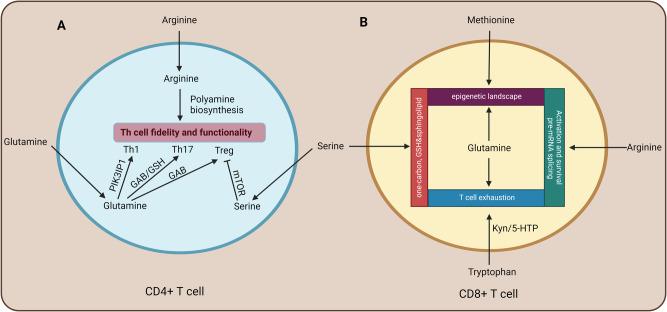
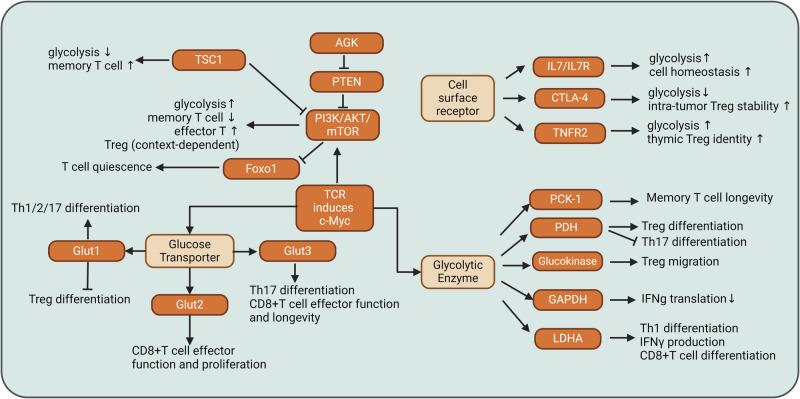
T cells are an important component of adaptive immunity and protect the host from infectious diseases and cancers. However, uncontrolled T cell immunity may cause autoimmune disorders. In both situations, antigen-specific T cells undergo clonal expansion upon the engagement and activation of antigens. Cellular metabolism is reprogrammed to meet the increase in bioenergetic and biosynthetic demands associated with effector T cell expansion. Metabolites not only serve as building blocks or energy sources to fuel cell growth and expansion but also regulate a broad spectrum of cellular signals that instruct the differentiation of multiple T cell subsets. The realm of immunometabolism research is undergoing swift advancements. Encapsulating all the recent progress within this concise review in not possible. Instead, our objective is to provide a succinct introduction to this swiftly progressing research, concentrating on the metabolic intricacies of three pivotal nutrient classes-lipids, glucose, and amino acids-in T cells. We shed light on recent investigations elucidating the roles of these three groups of metabolites in mediating the metabolic and immune functions of T cells. Moreover, we delve into the prospect of "editing" metabolic pathways within T cells using pharmacological or genetic approaches, with the aim of synergizing this approach with existing immunotherapies and enhancing the efficacy of antitumor and antiinfection immune responses.
T 细胞是适应性免疫的重要组成部分,可保护宿主免受传染病和癌症的侵害。然而,不受控制的 T 细胞免疫可能会导致自身免疫性疾病。在这两种情况下,抗原特异性 T 细胞在与抗原结合和激活后会经历克隆扩增。细胞代谢被重新编程,以满足与效应 T 细胞扩增相关的生物能量和生物合成需求的增加。代谢物不仅作为构建块或能源来为细胞生长和扩增提供燃料,而且还调节广泛的细胞信号,指导多种 T 细胞亚群的分化。免疫代谢研究领域正在迅速发展。在这个简洁的综述中包含所有最近的进展是不可能的。相反,我们的目标是为这个快速发展的研究提供一个简洁的介绍,重点介绍三类关键营养物质——脂质、葡萄糖和氨基酸——在 T 细胞中的代谢复杂性。我们阐明了这些三组代谢物在调节 T 细胞代谢和免疫功能中的作用的最新研究。此外,我们深入探讨了使用药理学或遗传学方法在 T 细胞中“编辑”代谢途径的前景,以期与现有的免疫疗法协同作用,并增强抗肿瘤和抗感染免疫反应的疗效。

 Zotero 插件