
下肢外骨骼能否在不使用拐杖的情况下辅助体弱老年人完成从坐到站的动作?一项结合最优控制与动作捕捉技术的研究。
Can lower-limb exoskeletons support sit-to-stand motions in frail elderly without crutches? A study combining optimal control and motion capture.
作者信息
Lau Jan C L, Mombaur Katja
机构信息
CERC Human-Centred Robotics and Machine Intelligence, Systems Design Engineering and Mechanical and Mechatronics Engineering, University of Waterloo, Waterloo, ON, Canada.
BioRobotics Lab, Optimization and Biomechanics for Human Centred Robotics, Institute of Anthropomatics and Robotics (IAR), Karlsruhe Institute of Technology (KIT), Karlsruhe, Germany.
出版信息
Front Neurorobot. 2024 Apr 4;18:1348029. doi: 10.3389/fnbot.2024.1348029. eCollection 2024.
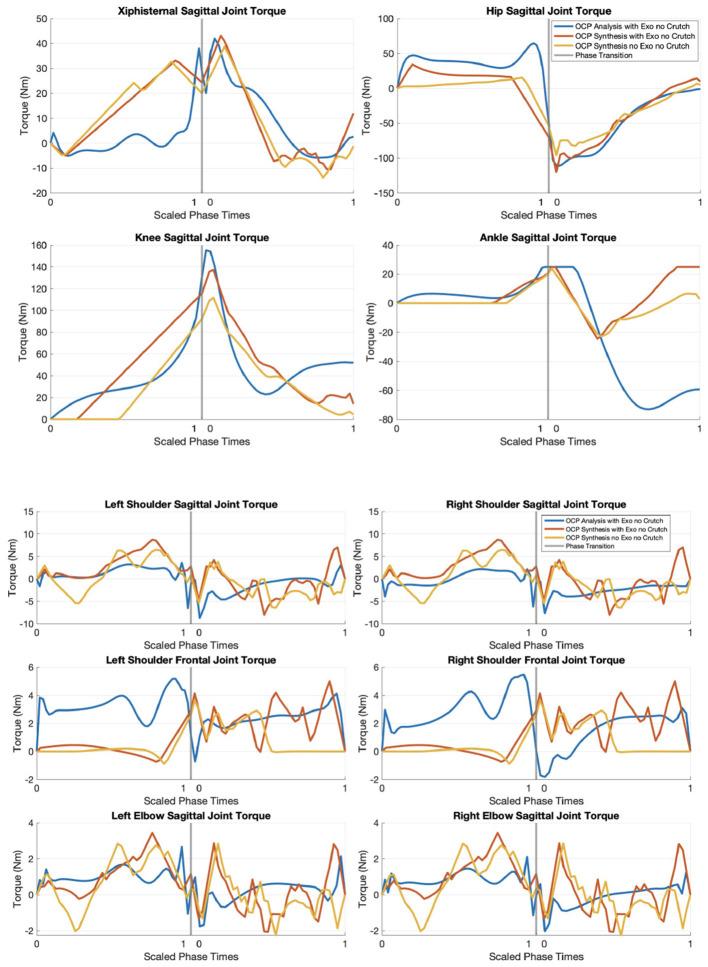
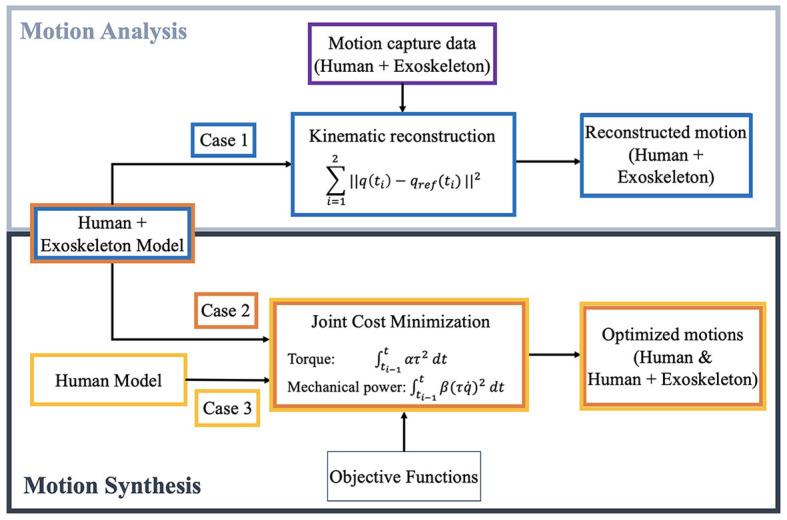
With the global geriatric population expected to reach 1.5 billion by 2050, different assistive technologies have been developed to tackle age-associated movement impairments. Lower-limb robotic exoskeletons have the potential to support frail older adults while promoting activities of daily living, but the need for crutches may be challenging for this population. Crutches aid safety and stability, but moving in an exoskeleton with them can be unnatural to human movements, and coordination can be difficult. Frail older adults may not have the sufficient arm strength to use them, or prolonged usage can lead to upper limb joint deterioration. The research presented in this paper makes a contribution to a more detailed study of crutch-less exoskeleton use, analyzing in particular the most challenging motion, sit-to-stand (STS). It combines motion capture and optimal control approaches to evaluate and compare the STS dynamics with the TWIN exoskeleton with and without crutches. The results show trajectories that are significantly faster than the exoskeleton's default trajectory, and identify the motor torques needed for full and partial STS assistance. With the TWIN exoskeleton's existing motors being able to support 112 Nm (hips) and 88 Nm (knees) total, assuming an ideal contribution from the device and user, the older adult would need to contribute a total of 8 Nm (hips) and 50 Nm (knees). For TWIN to provide full STS assistance, it would require new motors that can exert at least 121 Nm (hips) and 140 Nm (knees) total. The presented optimal control approaches can be replicated on other exoskeletons to determine the torques required with their mass distributions. Future improvements are discussed and the results presented lay groundwork for eliminating crutches when moving with an exoskeleton.
预计到2050年全球老年人口将达到15亿,人们已开发出各种辅助技术来应对与年龄相关的运动障碍。下肢机器人外骨骼有潜力为体弱的老年人提供支持,同时促进日常生活活动,但使用拐杖对这一人群来说可能具有挑战性。拐杖有助于安全和稳定,但穿着外骨骼使用拐杖可能不符合人体自然运动,而且协调起来可能很困难。体弱的老年人可能没有足够的手臂力量使用拐杖,或者长时间使用会导致上肢关节退化。本文提出的研究有助于更详细地研究无拐杖外骨骼的使用,特别分析了最具挑战性的动作——从坐姿到站姿(STS)。它结合了动作捕捉和最优控制方法,以评估和比较使用和不使用拐杖时TWIN外骨骼的STS动力学。结果显示轨迹明显比外骨骼的默认轨迹更快,并确定了完全和部分STS辅助所需的电机扭矩。假设设备和使用者能理想配合,TWIN外骨骼现有的电机总共能够提供112牛米(髋部)和88牛米(膝盖)的扭矩,那么老年人总共需要提供8牛米(髋部)和50牛米(膝盖)的扭矩。要让TWIN提供完全的STS辅助,就需要新的电机,其总共至少能产生121牛米(髋部)和140牛米(膝盖)的扭矩。所提出的最优控制方法可以在其他外骨骼上复制,以根据其质量分布确定所需的扭矩。文中讨论了未来的改进方向,所呈现的结果为在外骨骼辅助下行走时消除拐杖奠定了基础。



 Zotero 插件