
1990 - 2019年慢性铅暴露与心血管疾病负担:全球疾病负担研究的系统分析
Chronic lead exposure and burden of cardiovascular disease during 1990-2019: a systematic analysis of the global burden of disease study.
作者信息
Dang Peizhu, Tang Manyun, Fan Heze, Hao Junjun
机构信息
Department of Cardiovascular Medicine, The First Affiliated Hospital of Xi'an Jiaotong University, Xi'an, China.
Department of Hepatobiliary Surgery, The First Affiliated Hospital of Xi'an Jiaotong University, Xi'an, China.
出版信息
Front Cardiovasc Med. 2024 Apr 9;11:1367681. doi: 10.3389/fcvm.2024.1367681. eCollection 2024.
BACKGROUND
Cardiovascular diseases (CVD) are the leading causes of death and disability worldwide. Lead exposure is an important risk factor for CVD. In our study, we aimed to estimate spatial and temporal trends in the burden of cardiovascular disease associated with chronic lead exposure.
METHODS
The data collected for our study were obtained from Global Burden of Disease (GBD) study 2019 and analyzed by age, sex, cause, and location. To assess the temporal trends in burden of CVD attributable to chronic lead exposure over 30 years, we used Joinpoint regression analysis.
RESULTS
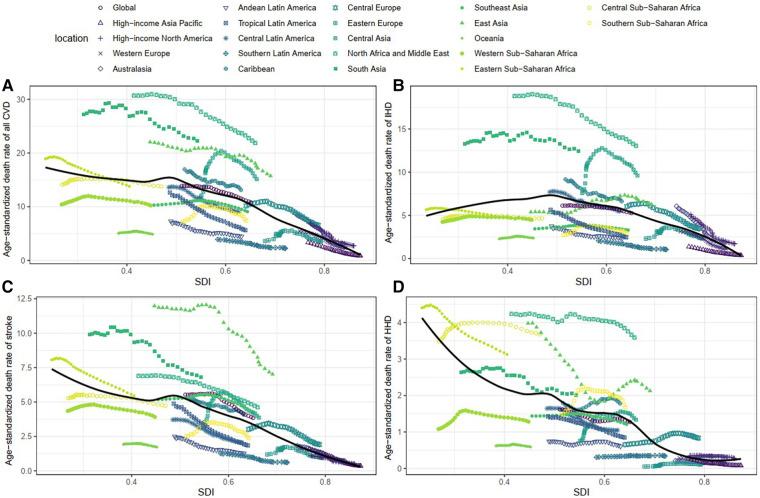
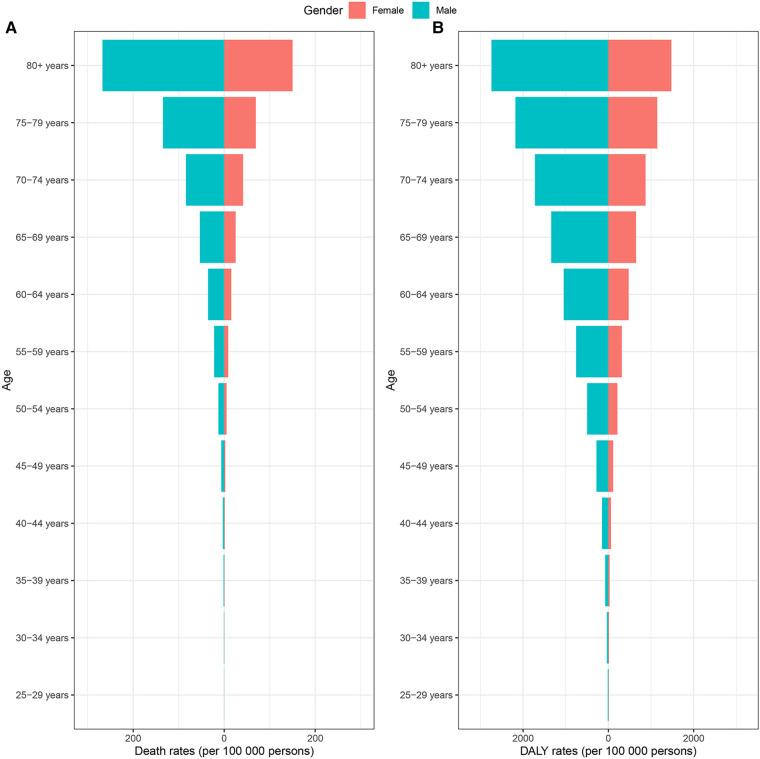
In 2019, the number of lead exposure-attributable CVD deaths and disability-adjusted life-years (DALYs) were 0.85 and 17.73 million, 1.7 and 1.4 times more than those observed in 1990, respectively. However, the corresponding age-standardized rates (ASR) of death and DALY gradually decreased from 1990 to 2019, especially from 2013 to 2019. Over the last 30 years, among 21 GBD regions and 204 countries and territories, the High-income Asia Pacific and the Republic of Korea experienced the largest reductions in age-standardized DALY and death rates, while Central Asia and Afghanistan experienced the largest increases. Males and the elderly population suffered higher death rates and DALY burdens than females and the young population. Furthermore, we observed that higher socio-demographic index (SDI) regions demonstrated lower ASR of death and DALY rates. In 2019, the low and low-middle SDI regions, especially South Asia, exhibited the highest burden of CVD attributable to lead exposure.
CONCLUSION
Our study provides a thorough understanding of the burden of CVD attributable to chronic lead exposure. The findings confirm the significance of implementing lead mitigation strategies and increasing investment in CVD prevention and treatment. These measures are crucial in reducing the burden of CVD and promoting public health on a global scale.
背景
心血管疾病(CVD)是全球死亡和残疾的主要原因。铅暴露是心血管疾病的一个重要风险因素。在我们的研究中,我们旨在估计与慢性铅暴露相关的心血管疾病负担的时空趋势。
方法
我们研究收集的数据来自2019年全球疾病负担(GBD)研究,并按年龄、性别、病因和地点进行分析。为了评估30年来慢性铅暴露所致心血管疾病负担的时间趋势,我们使用了Joinpoint回归分析。
结果
2019年,铅暴露所致心血管疾病死亡人数和伤残调整生命年(DALY)分别为85万和1773万,分别是1990年观察值的1.7倍和1.4倍。然而,相应的年龄标准化死亡率(ASR)和DALY从1990年到2019年逐渐下降,尤其是从2013年到2019年。在过去30年中,在21个GBD区域以及204个国家和地区中,高收入亚太地区和韩国的年龄标准化DALY和死亡率下降幅度最大,而中亚和阿富汗的上升幅度最大。男性和老年人口的死亡率和DALY负担高于女性和年轻人口。此外,我们观察到社会人口指数(SDI)较高的地区的死亡ASR和DALY率较低。2019年,低和低中SDI地区,尤其是南亚,铅暴露所致心血管疾病负担最高。
结论
我们的研究全面了解了慢性铅暴露所致心血管疾病的负担。研究结果证实了实施铅减排战略以及增加心血管疾病预防和治疗投资的重要性。这些措施对于在全球范围内减轻心血管疾病负担和促进公众健康至关重要。



 Zotero 插件