
2型糖尿病患者皮肤自发荧光水平与心血管风险及糖尿病并发症之间的关联。
Associations between Skin Autofluorescence Levels with Cardiovascular Risk and Diabetes Complications in Patients with Type 2 Diabetes.
作者信息
Reurean-Pintilei Delia, Pantea Stoian Anca, Salmen Teodor, Stoica Roxana-Adriana, Mititelu-Tartau Liliana, Lazăr Sandra, Timar Bogdan
机构信息
Doctoral School of Medicine and Pharmacy, "Victor Babes" University of Medicine and Pharmacy, 300041 Timisoara, Romania.
Centre for Molecular Research in Nephrology and Vascular Disease, "Victor Babes" University of Medicine and Pharmacy, 300041 Timisoara, Romania.
出版信息
Biomedicines. 2024 Apr 17;12(4):890. doi: 10.3390/biomedicines12040890.
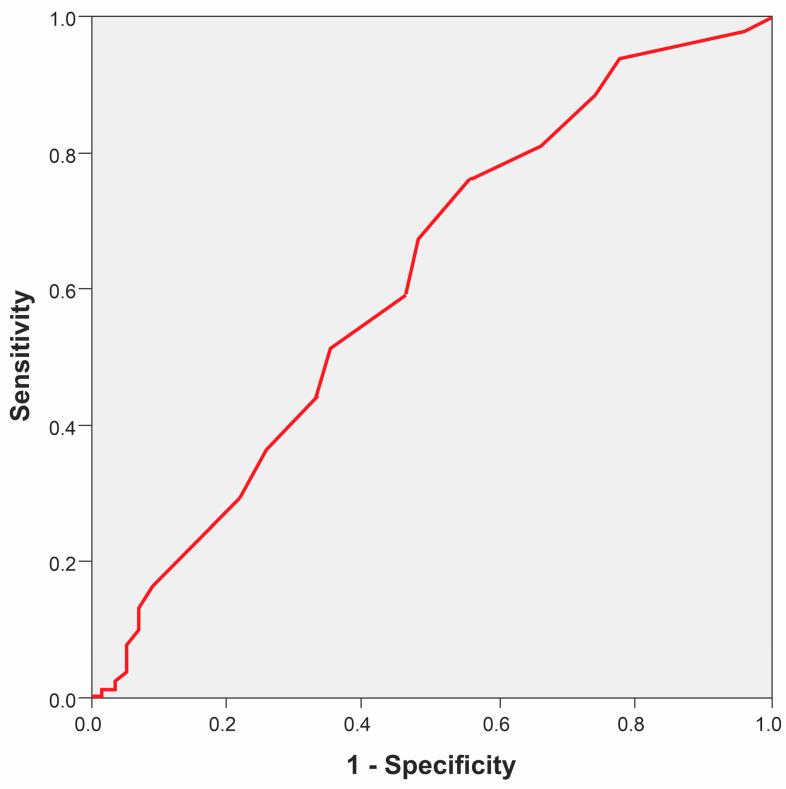
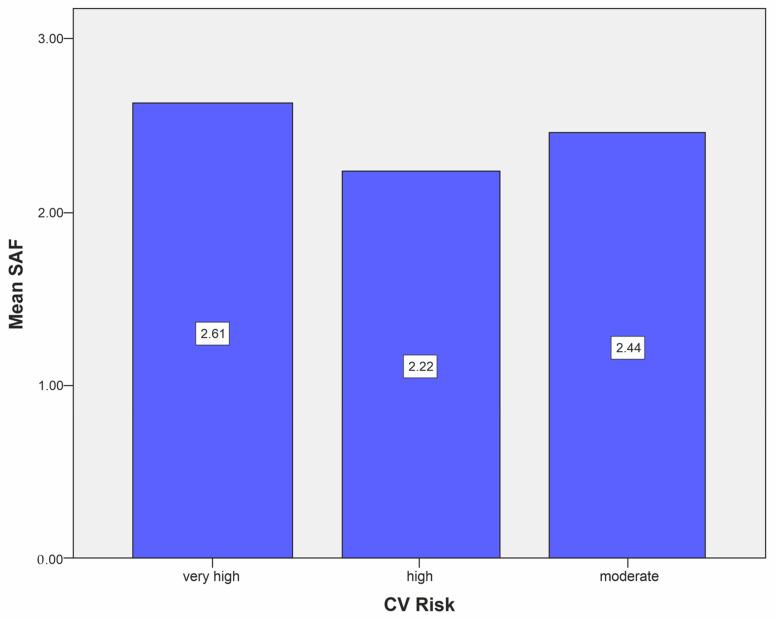
Advanced Glycation End Products (AGEs) contribute to the pathophysiology of type 2 diabetes mellitus (T2DM) and cardiovascular (CV) diseases (CVDs), making their non-invasive assessment through skin autofluorescence (SAF) increasingly important. This study aims to investigate the relationship between SAF levels, cardiovascular risk, and diabetic complications in T2DM patients. We conducted a single-center, cross-sectional study at Consultmed Hospital in Iasi, Romania, including 885 T2DM patients. The assessment of SAF levels was performed with the AGE Reader™, (Diagnoptics, Groningen, The Netherlands). CVD prevalence was 13.9%, and according to CV risk category distribution, 6.1% fell into the moderate-risk, 1.13% into the high-risk, and 92.77% into the very-high-risk category. The duration of DM averaged 9.0 ± 4.4 years and the mean HbA1c was 7.1% ± 1.3. After adjusting for age and eGFR, HbA1c values showed a correlation with SAF levels in the multivariate regression model, where a 1 SD increase in HbA1c was associated with a 0.105 SD increase in SAF levels (Nagelkerke R = 0.110; < 0.001). For predicting very high risk with an SAF cut-off of 2.35, sensitivity was 67.7% and specificity was 56.2%, with an AUC of 0.634 (95% CI 0.560-0.709, = 0.001). In T2DM, elevated SAF levels were associated with higher CV risk and HbA1c values, with 2.35 identified as the optimal SAF cut-off for very high CV risk.
晚期糖基化终末产物(AGEs)在2型糖尿病(T2DM)和心血管(CV)疾病(CVDs)的病理生理学中起作用,使得通过皮肤自发荧光(SAF)进行非侵入性评估变得越来越重要。本研究旨在调查T2DM患者中SAF水平、心血管风险和糖尿病并发症之间的关系。我们在罗马尼亚雅西的Consultmed医院进行了一项单中心横断面研究,纳入了885例T2DM患者。使用AGE Reader™(荷兰格罗宁根的Diagnoptics公司)对SAF水平进行评估。CVD患病率为13.9%,根据心血管风险类别分布,6.1%属于中度风险,1.13%属于高风险,92.77%属于极高风险类别。糖尿病病程平均为9.0±4.4年,平均糖化血红蛋白(HbA1c)为7.1%±1.3。在调整年龄和估算肾小球滤过率(eGFR)后,在多变量回归模型中,HbA1c值与SAF水平显示出相关性,其中HbA1c每增加1个标准差,SAF水平增加0.105个标准差(Nagelkerke R = 0.110;P<0.001)。以SAF临界值2.35预测极高风险时,敏感性为67.7%,特异性为56.2%,曲线下面积(AUC)为0.634(95%可信区间0.560 - 0.709,P = 0.001)。在T2DM中,升高的SAF水平与更高的心血管风险和HbA1c值相关,2.35被确定为极高心血管风险的最佳SAF临界值。


 Zotero 插件